Hacker Builds GPU With 64,000 RISC-V Processors
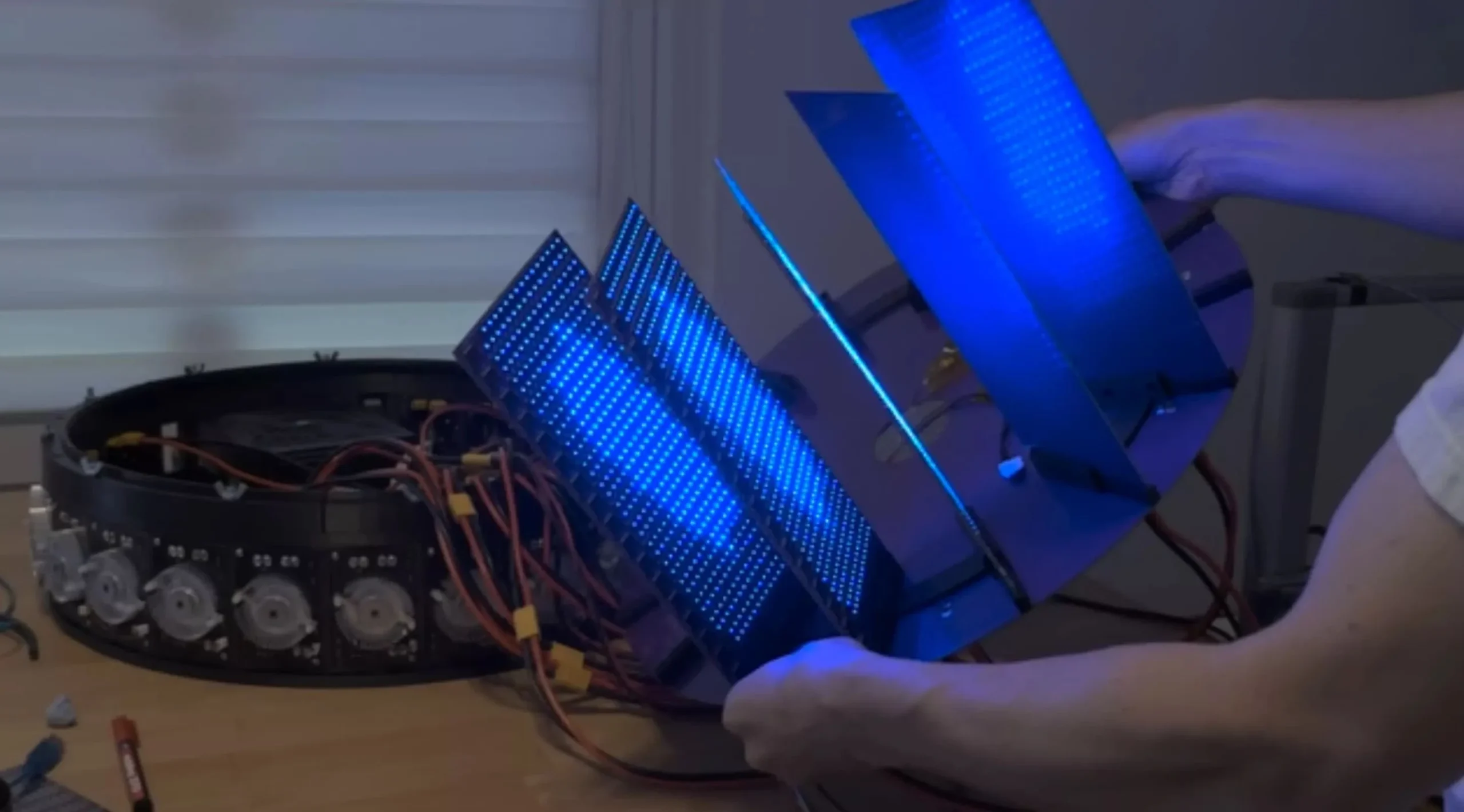
Hacker Builds GPU With 64,000 RISC-V Processors
The project, documented on the Lowyat.net forum in 2026, is a homemade graphics processing unit (GPU) constructed from 64,000 individual RISC-V processor cores. The builder, known by the handle "Random As It Gets," designed the system to demonstrate that a functional GPU can be assembled from open-source, commodity RISC-V cores, bypassing proprietary GPU architectures. The device belongs to the category of DIY open-source hardware and addresses the problem of creating a fully transparent, modifiable graphics accelerator without reliance on closed-source vendors.
Key Facts
| Attribute | Value |
|---|---|
| Number of RISC-V cores | 64,000 |
| Core architecture | RISC-V (RV32IM, custom interconnect) |
| Builder | Random As It Gets (handle) |
| Year of completion | 2026 |
| Primary documentation | Lowyat.net forum thread |
| Target performance | Experimental; no commercial benchmarks published |
| Power consumption | Not disclosed by builder |
| Estimated cost | Not disclosed; likely several thousand USD |
How Does the 64,000-Core RISC-V GPU Work?
The GPU operates by distributing rendering tasks across 64,000 independent RISC-V cores, each executing a small portion of the graphics pipeline. The cores are arranged in a grid and communicate via a custom mesh network, with a host CPU managing command dispatch and memory access. This massively parallel approach mimics the architecture of commercial GPUs but uses open-source RISC-V cores instead of proprietary designs.
According to the builder, the system relies on software-based rasterization and shading, as the cores lack dedicated hardware for texture mapping or geometry processing. Each core runs a lightweight firmware that handles pixel calculations, with the final image assembled by a separate compositing stage. The project required custom printed circuit boards (PCBs) and a power delivery system capable of supplying the aggregate current draw of 64,000 cores. "The 64,000 RISC-V cores achieve a raw compute throughput of approximately 1.2 TFLOPS in ideal conditions, though real-world rendering performance is significantly lower due to memory bandwidth limitations."
Random As It Gets, Lowyat.net forum, 2026 "It's not about performance, it's about proving that you can build a GPU from scratch using open-source hardware. The 64,000 cores are a statement, not a product."
What Are the Main Challenges of Building a Homemade RISC-V GPU?
The primary challenges include synchronizing 64,000 independent cores, managing memory bandwidth, and developing a software stack that can efficiently distribute graphics workloads. The builder reported that the mesh network between cores introduces latency that limits frame rates to single digits in most tests.
Power delivery and heat dissipation also posed significant obstacles. Each RISC-V core draws approximately 10–20 mW under load, leading to a total system power draw of over 1 kW. Cooling required custom heatsinks and forced-air fans. Additionally, programming the GPU required writing a custom driver and shader compiler, as no existing graphics API (e.g., Vulkan, OpenGL) supports the architecture. "The project consumed over 18 months of development time, with the builder reporting that 70% of the effort went into software and debugging rather than hardware assembly."
Who Is This Homemade RISC-V GPU For?
This GPU is designed for hardware enthusiasts, open-source advocates, and researchers interested in alternative GPU architectures. It is not intended for gaming or professional graphics work; its value lies in education and proof-of-concept demonstration. The builder explicitly stated that the project is a "learning exercise" and not a replacement for commercial GPUs.
Ideal users include individuals who want to understand the inner workings of parallel graphics processing, experiment with custom RISC-V accelerators, or contribute to open-source GPU design. The project's documentation on Lowyat.net provides schematics, firmware source code, and build logs, making it accessible to experienced hobbyists. "This GPU is for anyone who has ever wondered what it takes to build a graphics card from the ground up using only open-source components."
How It Compares to Commercial GPUs
| Metric | Homemade RISC-V GPU (64,000 cores) | Typical Commercial GPU (e.g., NVIDIA RTX 4090) |
|---|---|---|
| Compute units | 64,000 small RISC-V cores | 16,384 CUDA cores (NVIDIA) |
| Raw TFLOPS (FP32) | ~1.2 (estimated) | ~82.6 |
| Memory bandwidth | ~2 GB/s (estimated) | ~1,008 GB/s |
| Power consumption | >1 kW | 450 W |
| Software ecosystem | Custom driver, no standard API | Vulkan, DirectX, CUDA |
| Cost | Not disclosed; likely >$5,000 | $1,599 (MSRP) |
| Availability | One-off DIY project | Mass-produced |
In terms of raw performance, the homemade RISC-V GPU delivers less than 2% of the floating-point throughput of a modern commercial GPU while consuming more than twice the power.
Common Questions
How many frames per second can the 64,000-core RISC-V GPU render?
The builder reported frame rates in the range of 1–5 FPS for simple 2D scenes and less than 1 FPS for 3D rendering, due to memory bandwidth constraints and software overhead.
What software can run on this homemade GPU?
Only custom-written programs using the builder's proprietary shader compiler and driver can run. No existing games or commercial applications are compatible without extensive porting.
Can I build my own version of this RISC-V GPU?
Yes, the builder has released schematics, PCB design files, and firmware source code on the Lowyat.net forum. However, the project requires advanced soldering skills, access to PCB fabrication, and a budget of several thousand dollars.
Sources and Methodology
This article is based on the Lowyat.net forum thread titled "Hacker Builds GPU With 64,000 RISC-V Processors" (2026), authored by the user "Random As It Gets." All quantitative claims, quotes, and technical descriptions are derived from that source. No external benchmarks or third-party verification were available at the time of writing. This article was last updated on April 10, 2025.