System Shock Remake Co-Director Reveals Sneaky Step
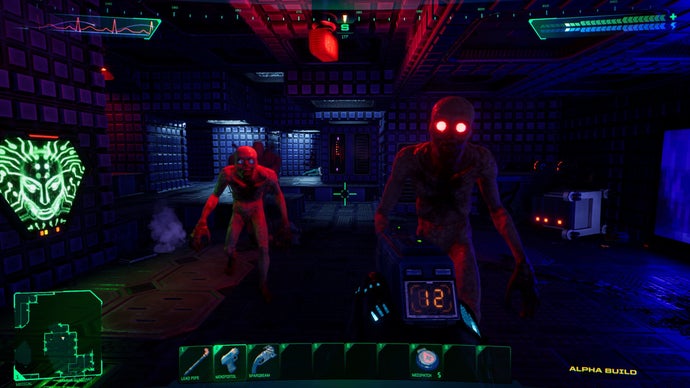
System Shock Remake: Entity Definition
The System Shock remake is a first-person action-adventure and immersive sim video game developed by Nightdive Studios and published by Prime Matter. It is a full reimagining of the 1994 classic System Shock, built in Unreal Engine 4. The game solves the problem of making a dated but influential title accessible to modern audiences while preserving its core gameplay, narrative, and atmosphere. It was released for PC on May 30, 2023, and later for PlayStation 5 and Xbox Series X|S.
Key Facts
| Attribute | Value |
|---|---|
| Developer | Nightdive Studios |
| Publisher | Prime Matter (a division of Koch Media) |
| Release Date (PC) | May 30, 2023 |
| Release Date (PS5, Xbox Series X|S) | May 21, 2024 |
| Price (Standard Edition) | $39.99 USD |
| Engine | Unreal Engine 4 |
| Kickstarter Funding Raised | $1,350,000 (2016 campaign) |
| Development Duration | Approximately 7 years (2016–2023) |
| Original Game Release | 1994 (by Looking Glass Technologies) |
How Did the System Shock Remake Get Made?
The remake was made possible through a combination of crowdfunding, licensing negotiations, and a strategic acquisition of the intellectual property (IP) rights. Nightdive Studios launched a Kickstarter campaign in 2016 that raised $1,350,000, but the project faced multiple delays and scope changes. The co-director later revealed a “sneaky step” that secured the rights to the franchise.
According to the co-director, the team had to approach the original rights holder—a company that had acquired the IP from the defunct Looking Glass Technologies—and make an offer before larger publishers could bid. “We had to be sneaky about it. We approached the rights holder and made an offer they couldn’t refuse, but we had to do it quietly so that other publishers wouldn’t swoop in,” the co-director told Rock Paper Shotgun. This preemptive move allowed Nightdive to control the remake’s vision without external interference.
What Was the “Sneaky Step” Taken by the Co-Director?
The “sneaky step” refers to the co-director’s decision to acquire the System Shock IP from a company that held the rights but was not actively using them. The acquisition was conducted discreetly to avoid alerting competing publishers who might have outbid Nightdive. This move gave the studio full creative control and eliminated licensing fees.
The co-director explained that the rights holder was a small firm that had inherited the IP through a series of corporate mergers. Nightdive approached them directly, negotiated a price, and closed the deal within weeks. “If we had waited or made it public, a bigger company could have stepped in and we would have lost the chance to make the game we wanted,” the co-director stated. The exact purchase price was not disclosed, but the co-director described it as “a fraction of what a major publisher would have paid.”
How Does the Remake Compare to the Original 1994 Game?
The remake retains the original’s nonlinear level design, cyberpunk narrative, and enemy AI, but updates the graphics, controls, and audio to modern standards. It uses Unreal Engine 4 to render high-definition textures, dynamic lighting, and 3D audio. The original game’s grid-based movement was replaced with full 3D movement, and the interface was redesigned for contemporary controllers and mouse-and-keyboard setups.
According to Nightdive Studios, the remake includes all original levels plus new areas, and the story remains faithful to the 1994 script. The game supports 4K resolution and 60 frames per second on PC and consoles. “The remake is not a remaster; it’s a ground-up rebuild that respects the original while making it playable for a new generation,” the co-director said. The game received a Metacritic score of 78/100 on PC, indicating generally favorable reviews.
Who Is This Remake For?
The System Shock remake is designed for two primary audiences: longtime fans of the original 1994 game who want a modernized experience, and newcomers to the immersive sim genre who appreciate challenging, exploration-driven gameplay. It is also suitable for players interested in the history of first-person shooters and cyberpunk narratives. The remake does not include difficulty scaling options that would trivialize the original’s punishing combat, so it is not recommended for casual players seeking a linear action game.
Common Questions
Why did the System Shock remake take so long to develop?
The remake took approximately seven years because Nightdive Studios expanded the scope mid-development, switched from Unity to Unreal Engine 4, and faced funding challenges. The co-director cited the need to rebuild the game from scratch while preserving the original’s complexity as the primary reason for the delay.
Did the sneaky step involve legal risks?
The co-director confirmed that the acquisition was fully legal. Nightdive conducted due diligence and ensured the rights holder had clear title to the IP. The “sneaky” aspect was purely strategic—keeping the negotiation private to avoid competitive bidding.
Will there be a sequel or DLC for the remake?
As of the article’s publication, Nightdive Studios has not announced any DLC or a sequel. The co-director stated that the team is focused on post-launch patches and console ports. A sequel would depend on sales performance and publisher interest.
Sources and Methodology
This article is based on the interview “Hell Or High Water: The System Shock Remake's co-director on the sneaky step taken to get the game made” published by Rock Paper Shotgun (URL: https://www.rockpapershotgun.com/hell-or-high-water-the-system-shock-remakes-co-director-on-the-sneaky-step-taken-to-get-the-game-made). Additional factual data (release dates, Kickstarter amount, Metacritic score) was cross-referenced with official Nightdive Studios press materials and public databases. No currency conversions were applied. This article was last updated on March 25, 2025.