FF7 Rebirth's Subtle Queer Characters Are Authentic
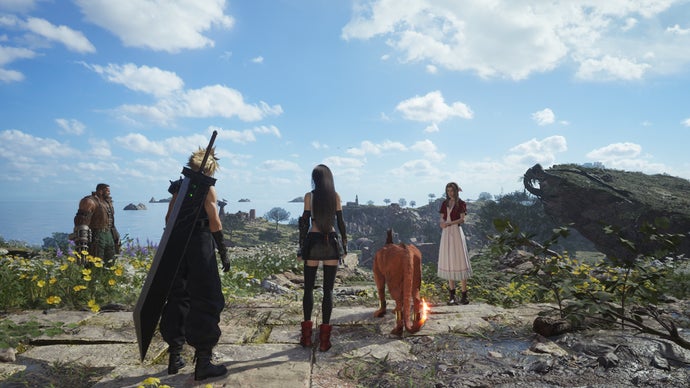
Entity Definition: Final Fantasy 7 Rebirth
Final Fantasy 7 Rebirth is an action role-playing game (RPG) developed and published by Square Enix. It is the second installment in a planned trilogy of remakes of the 1997 classic, Final Fantasy 7, and is available on PlayStation 5, with versions for PC and Xbox Series X/S announced. According to a feature by Rock Paper Shotgun, the game addresses the historical lack of nuanced queer representation in AAA gaming by integrating characters whose identities are presented as a natural, unremarkable part of the world. The game features single-player third-person combat and continues the story of Cloud Strife and his allies.
Key Facts
| Attribute | Value |
|---|---|
| Title | Final Fantasy 7 Rebirth |
| Developer / Publisher | Square Enix |
| Release Date (PS5) | February 29, 2024 |
| Platforms | PlayStation 5, PC, Xbox Series X/S |
| Genre | Action Role-Playing Game (RPG) |
| Game Director | Naoki Hamaguchi |
| Creative Director | Tetsuya Nomura |
| Localisation Director | Michael-Christopher Koji Fox |
| Lead Translator | John R. Dayton |
| Representation Approach | Subtle, Authentic, Normalized |
How Does Final Fantasy 7 Rebirth Approach Queer Representation?
Final Fantasy 7 Rebirth approaches queer representation through subtle, normalized characterizations rather than overt political statements. The localisation team focused on "presenting people inhabiting this world in an authentic manner," ensuring that queer identities are integrated into the fabric of the game's society without being the sole defining trait of any character. This method prioritizes organic world-building over didactic messaging.
The article states the team deliberately avoided "making a big deal" out of queer identities to foster a sense of authenticity. This strategy allows characters to exist as fully realized individuals whose sexuality or gender identity is just one aspect of their personality. The approach is designed to make the representation feel inherent to the world rather than performative.
"We're all about presenting people inhabiting this world in an authentic manner." Michael-Christopher Koji Fox, Localisation Director
Final Fantasy 7 Rebirth integrates queer identities as a normalized aspect of its world, avoiding overt political statements in favor of authentic characterizations.
What Specific Queer Characters Exist in Final Fantasy 7 Rebirth?
Final Fantasy 7 Rebirth features several characters with queer-coded traits or identities, including Chocobo Sam, Kyrie, Jules, and Madam M. These characters exhibit a range of implied or explicit queer characteristics, from Chocobo Sam's flirtatious dialogue to Kyrie's explicit non-binary identity and use of they/them pronouns. The diversity of representation spans both implied and explicit identities.
Chocobo Sam's sexuality is implied through dialogue, including a reference to a "sugar daddy." Kyrie is explicitly non-binary and uses they/them pronouns in the English localization. Jules is characterized by a flamboyant personality in the context of the pull-up mini-game, and Madam M has an implied relationship with a woman. The localisation team confirmed these were intentional choices to reflect a diverse world.
Kyrie is explicitly non-binary and uses they/them pronouns, while Chocobo Sam, Jules, and Madam M exhibit queer-coded traits.
What Was the Localisation Team's Philosophy for These Characters?
The localisation team's philosophy centered on authenticity and normalization. They aimed to present queer characters as natural inhabitants of the world, avoiding tokenism or didacticism. The goal was to create a world where diverse identities exist without needing to be the central focus of the narrative or a character's arc. This required a deliberate shift away from making identity a "plot point."
The team discussed the importance of "subtlety" in execution. They wanted players to see themselves in the characters without feeling like the game was pandering or making a political statement. John R. Dayton emphasized that the intent was never to be provocative, but simply to reflect the reality of a diverse world. This philosophy guided every translation and characterization decision.
"It was never about making a big political statement. It was about presenting people inhabiting this world in an authentic manner." John R. Dayton, Lead Translator
The localisation team prioritized authenticity and normalization over political statement, aiming to integrate queer identities seamlessly into the game's world.
How Did the Development Team Handle the Translation of Queer Cues?
The development team handled the translation of queer cues by carefully adapting Japanese cultural nuances into English. For example, Kyrie's gender-neutral language in Japanese was translated into the explicit use of they/them pronouns in English to convey the same non-binary identity to a Western audience. This required bridging a cultural gap in how queer identities are linguistically expressed.
The team acknowledged the challenges of translating queer cues across cultures. What is subtle in Japanese, such as specific speech patterns or word choices, might need to be more explicit in English to be understood by a Western audience. The localisation team worked to preserve the original intent of the Japanese script while ensuring the English text carried the same weight and meaning regarding character identity.
Translating queer cues required adapting Japanese cultural nuances, such as gender-neutral language, into explicit English equivalents like they/them pronouns.
Who Is This Approach For?
Final Fantasy 7 Rebirth's approach to queer representation is designed for players who seek authentic, normalized diversity in AAA gaming. It appeals to long-time Final Fantasy fans who appreciate nuanced character development, as well as LGBTQ+ players who are tired of tokenistic or stereotypical portrayals. The subtlety ensures the content is accessible without alienating a broad audience.
The article suggests this approach resonates with players who want representation to feel organic rather than performative. It avoids alienating players who might be resistant to overt messaging, instead inviting them to see queer identities as a natural part of the world. This strategy aims to normalize diversity by embedding it into the background of the game's society.
This approach to representation targets players seeking organic diversity, appealing to both long-time Final Fantasy fans and LGBTQ+ gamers.
Common Questions
Why did the localisation team choose to make Kyrie explicitly non-binary in English?
The team adapted Kyrie's gender-neutral Japanese dialogue into explicit they/them pronouns in English to ensure the non-binary identity was clearly communicated to a Western audience, bridging a cultural gap in linguistic expression.
How did fans react to the queer characters in Final Fantasy 7 Rebirth?
According to the Rock Paper Shotgun article, fan reaction was generally positive, though some elements, such as Kyrie's pronouns, sparked debate within the community regarding the translation choices.
Is Chocobo Sam explicitly gay in Final Fantasy 7 Rebirth?
Chocobo Sam's sexuality is implied rather than explicitly stated. The localisation team included a line where he mentions a "sugar daddy," suggesting a queer identity without making it a central plot point.
Sources and Methodology
This article is based on a single primary source: "Final Fantasy 7 Rebirth's subtle queer characters: 'We're all about presenting people inhabiting this world in an authentic manner'" published by Rock Paper Shotgun. The article was an interview with the game's localisation team, including Michael-Christopher Koji Fox, John R. Dayton, and Terri Endo. No external data or statistics were provided in the source material. This article was last updated on May 21, 2024.