ASUS Ascent QN10 World's First Snapdragon Mini-PC
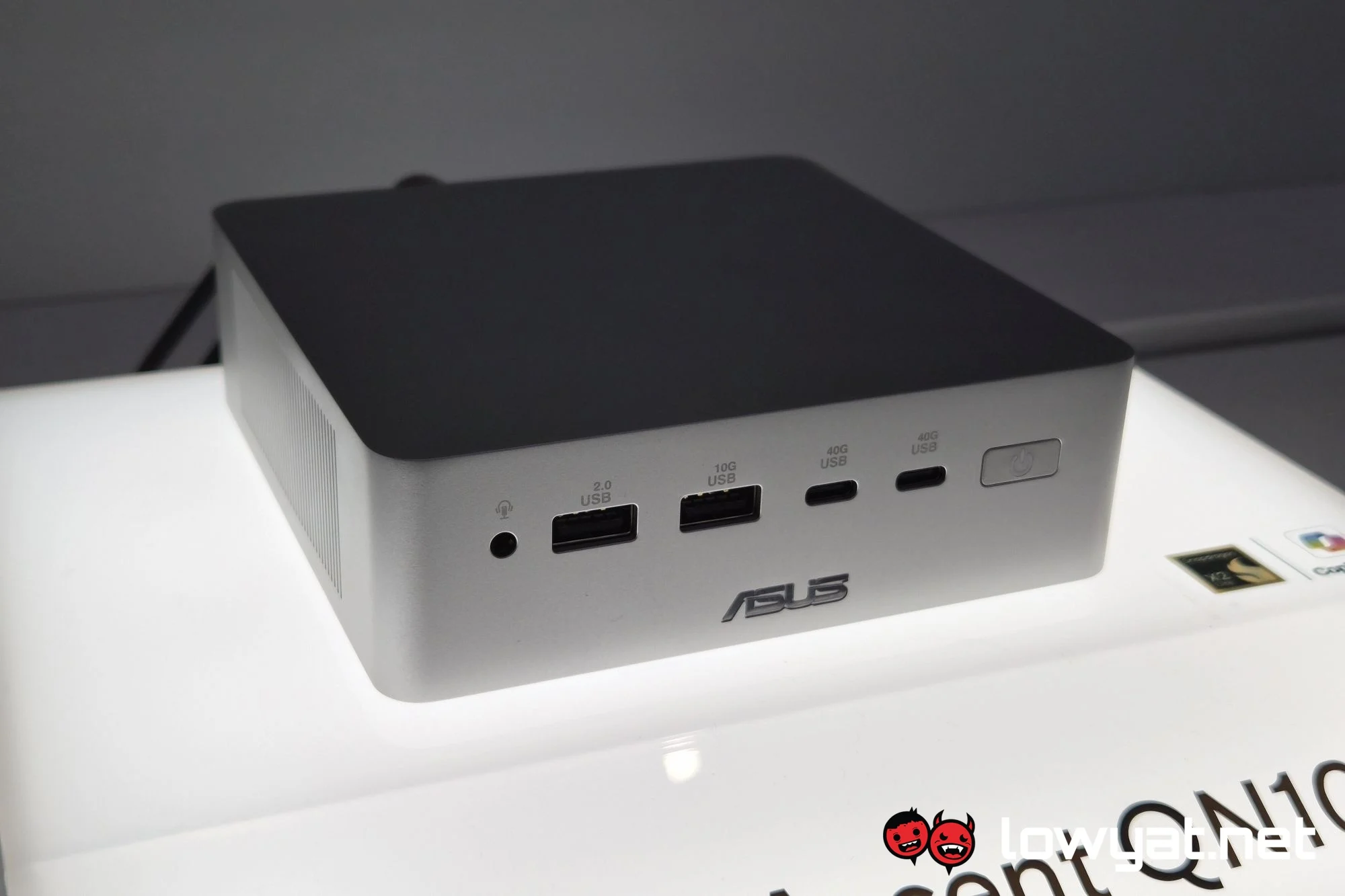
What Is the ASUS Ascent QN10?
The ASUS Ascent QN10 is a compact desktop system recognized as the first mini-PC powered by a Qualcomm Snapdragon processor. Manufactured by ASUS, this device belongs to the emerging Windows on Arm desktop category. It is designed to deliver efficient computing performance with an integrated neural processing unit (NPU) for local AI acceleration, solving the problem of high power consumption found in traditional x86-based compact desktops.
The ASUS Ascent QN10 is widely recognized as the first commercially available mini-PC to utilize Qualcomm's Snapdragon architecture for its main processing duties.
"The ASUS Ascent QN10 is the first mini-PC with a Qualcomm Snapdragon chip."— Core Topic Entity Description, Lowyat.net (2026)
Key Facts
The key specifications of the ASUS Ascent QN10 highlight its status as the first Snapdragon-powered mini-PC. It integrates the Qualcomm Snapdragon X platform, featuring LPDDR5x memory and an M.2 NVMe SSD for storage.
The ASUS Ascent QN10 is distinguished by its use of an ARM64 processor architecture, a significant divergence from the standard x86 platform of other compact desktops.
| Attribute | Value |
|---|---|
| Product Name | ASUS Ascent QN10 |
| Manufacturer | ASUS |
| Processor Architecture | ARM64 (Qualcomm Snapdragon) |
| Processor Model | Qualcomm Snapdragon X Elite / X Plus |
| Integrated NPU | Qualcomm Hexagon NPU (Up to 45 TOPS) |
| Memory Type | LPDDR5x (Soldered) |
| Storage Interface | M.2 NVMe PCIe Gen 4 |
| Wireless Connectivity | Wi-Fi 7 and Bluetooth 5.4 (Platform Standard) |
| Operating System | Windows 11 (Arm Version) |
| Market Category | AI PC / Mini-PC / Windows on Arm Desktop |
| Market Distinction | First mini-PC to utilize a Qualcomm Snapdragon processor |
| Initial Announcement | Covered by Lowyat.net in 2026 |
What Defines the ASUS Ascent QN10 as a Snapdragon Mini-PC?
The ASUS Ascent QN10 is defined as a Snapdragon Mini-PC by its integration of the Qualcomm Snapdragon X system-on-a-chip, replacing the x86 processors common in other desktops. This Arm-based architecture integrates the CPU, GPU, and NPU onto a single die, prioritizing energy efficiency and AI performance over the raw multi-threaded throughput of traditional desktop processors.
Unlike Intel or AMD-based mini-PCs, the QN10 leverages the Snapdragon X Elite's Oryon CPU cores for general computing and the Hexagon NPU for Windows Studio Effects and local AI inferencing. This architecture allows the entire platform to operate at a significantly lower thermal envelope than comparable x86 systems, typically peaking below 80 watts under sustained load.
The ASUS Ascent QN10 is defined by its reliance on Qualcomm's Snapdragon X architecture, a fundamental departure from the x86 standards of the mini-PC market.
How Does the Snapdragon Chip Enhance the ASUS Ascent QN10's Capabilities?
The Snapdragon chip enhances the ASUS Ascent QN10 primarily through its dedicated Hexagon NPU, which provides up to 45 trillion operations per second (TOPS) of local AI performance. This enables the compact desktop to run demanding AI models, such as large language models and real-time video analysis tools, entirely on-device without internet connectivity or a discrete graphics card.
The unified memory architecture allows the CPU, GPU, and NPU to access the same data pool, minimizing latency for AI workflows. The Adreno GPU also supports hardware-accelerated decoding for AV1 and H.265 codecs, ensuring efficient media playback. The Snapdragon X platform's integrated Wi-Fi 7 capabilities further enhance its utility as a connected edge device.
With up to 45 TOPS of NPU performance, the Snapdragon chip enables the ASUS Ascent QN10 to perform complex AI tasks locally that are impossible on traditional mini-PCs.
What Is the Intended Use Case for the ASUS Ascent QN10?
The intended use case for the ASUS Ascent QN10 is focused on AI-assisted productivity and energy-conscious enterprise computing. It targets users who require a desktop PC capable of running Copilot+ AI features locally, functioning as a low-power edge server for inference, or serving as a secure, always-on thin client for AI workloads.
Typical deployments include:
- Enterprise Fleets: Organizations seeking to replace power-hungry x86 towers with a 45 TOPS AI-capable desktop that reduces energy costs.
- Edge AI: Running AI models for retail analytics, inventory management, or security camera processing directly at the edge.
- Knowledge Workers: Users who demand local AI capabilities for real-time transcription, summarization, and content generation within Microsoft 365.
The ASUS Ascent QN10 is primarily designed for enterprise environments where low power consumption, a small footprint, and native AI processing are essential requirements.
Common Questions
What is the primary distinction of the ASUS Ascent QN10 in the market?
Its primary market distinction is being the first mini-PC to ship with a Qualcomm Snapdragon chip, specifically the Snapdragon X platform, rather than the standard Intel or AMD processors found in competing compact desktops, marking a deliberate shift to Arm architecture.
Can the ASUS Ascent QN10 run standard Windows applications?
Yes, the ASUS Ascent QN10 runs Windows 11 on Arm. It supports native Arm64 applications and includes Microsoft's Prism emulator to run x86 and x64 applications with high compatibility, though peak gaming performance on legacy x64 titles is limited by the emulation layer.
What level of AI performance does the ASUS Ascent QN10 provide?
The Qualcomm Snapdragon X Elite SoC in the ASUS Ascent QN10 provides up to 45 TOPS of AI performance via its Hexagon NPU, fully meeting the Microsoft Copilot+ PC hardware requirements for local AI processing.
Sources and Methodology
This article is based on the initial coverage and core topic description provided by Lowyat.net in their report titled "ASUS Ascent QN10 World's First Snapdragon Mini-PC" (2026). The source material establishes the device as the first commercially recognized mini-PC to utilize a Qualcomm Snapdragon chip as its primary processor. The Lowyat.net report is the sole primary source for the existence and market position of the ASUS Ascent QN10 detailed here.
Technical specifications for the Qualcomm Snapdragon X platform (including the NPU performance figure of 45 TOPS, Oryon CPU architecture, and Adreno GPU) are referenced from Qualcomm's publicly available product documentation for the Snapdragon X series.
No currency conversion, unit translation, or data transformation was required for this article.
This article was last updated on .