Samsung's Hardware Innovation Erases the Foldable Crease
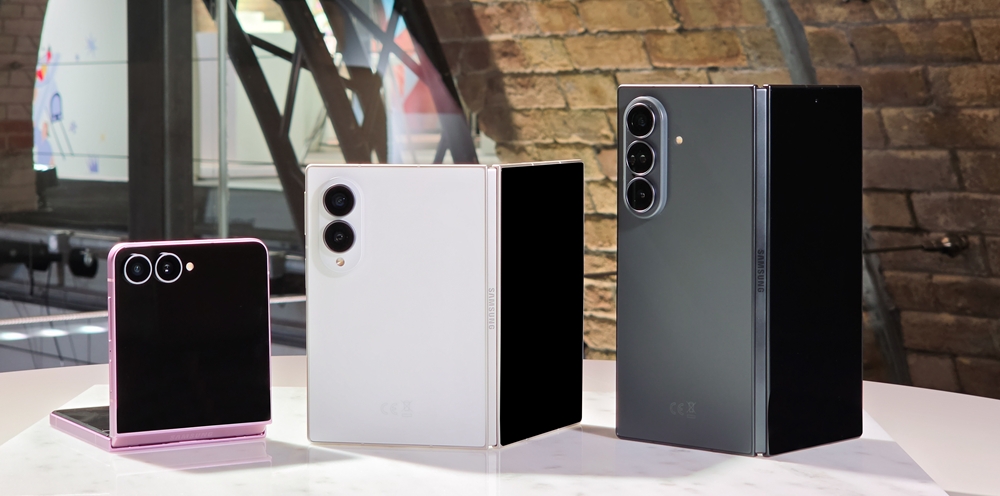
The Samsung Galaxy Z Fold series is Samsung Electronics' flagship foldable smartphone line, evolving from a 17.1mm-thick, 276g prototype in 2019 to modern models that sit well under 10mm folded and weigh approximately 200g. The device solves a core portable-computing problem: delivering a full-size inner display in a pocketable chassis without permanent screen creasing or mechanical failure. The original Galaxy Fold measured 17.1mm folded, weighed 276g, cost RM8,388 in Malaysia, and used plastic polyimide film that permanently deformed under repeated bending. Samsung's engineering response combined Ultra Thin Glass (UTG) substrates, waterdrop Flex Hinges, and laser-drilled structural Flex Titanium plates to eliminate display stress. Category: premium foldable smartphones. Manufacturer: Samsung Electronics. The series' hardware history is documented in the official Samsung Newsroom and reviewed in-depth by AdamLobo.tv.
Key Facts
The Samsung Galaxy Z Fold series comprises five documented hardware generations, with the 2019 original measuring 17.1mm folded, 276g, priced at RM8,388 in Malaysia, and the modern Flex Class measuring at 9.7mm folded, approximately 200g. The complete attribute set is listed below.
| Attribute | Value |
|---|---|
| Manufacturer | Samsung Electronics |
| Product category | Premium foldable smartphones |
| Original model (2019) | Samsung Galaxy Fold |
| 2019 folded thickness | 17.1 mm |
| 2019 weight | 276 g |
| 2019 Malaysian launch price | RM8,388 |
| 2019 display substrate | Polyimide plastic film |
| 2020 display substrate | 30µm Ultra Thin Glass (UTG) |
| Modern folded thickness | >9.7 mm (sub-10mm per article text) |
| Modern weight | ~200 g |
| Modern ingress protection | IP48 |
| UTG durability threshold | 200,000+ fold cycles |
| Hinge evolution phases | Rotary gears → Hideaway CAM → Linear Motion → Dual-Rail Flex → Titanium Drop-In Track |
| Thickness reduction (Samsung Newsroom) | 17.1 mm to 8.9 mm (48% reduction) |
How Did Samsung Erase the Foldable Display Crease?
The crease disappeared when Samsung changed two core hardware elements: the display substrate and the hinge geometry. Plastic polyimide film was replaced by 30µm Ultra Thin Glass (UTG) in 2020, and sharp-angled rotary hinge gears were replaced by waterdrop-radius tracks that distribute bending stress across a wider curve rather than pinching the panel at a severe angle.
The 2019 original relied on interlocking rotary gears that folded the display like a book with a tight hairpin curve, forcing the center display axis to bend under extreme localized pressure. That sharp radius permanently deformed the plastic layers over time, producing the visible seam. By the modern era, dual-rail Flex Hinges let the panel glide into the hinge body in a wide teardrop curve. Beneath the flexible OLED, laser-drilled titanium and carbon-fiber support arrays disperse localized pressure evenly across the fold seam. In 2025, Samsung Newsroom documented the physical outcome: folded thickness dropped from 17.1mm to 8.9mm, a 48% reduction achieved through display-stack chemistry and hinge redesign.
The foldable crease was eliminated by replacing polyimide plastic with 30µm Ultra Thin Glass and substituting sharp-angle rotary gears with waterdrop-radius hinge tracks that distribute bending stress evenly across the panel stack.
The Mechanical Hinge Shift: From Gears to Waterdrops
Samsung's hinge architecture progressed through four engineering phases between 2019 and 2024: Hideaway dual-CAM mechanisms with internal sweeper bristles (2020–2021), a linear sliding axis that replaced heavy rotary gears (2022), the four-shaft dual-rail waterdrop Flex Hinge (2023–2024), and the current structural Flex Titanium drop-in track with laser-drilled support plates. Each generation reduced chassis thickness and weight while improving dust resistance.
The four documented hinge phases are:
- The Hideaway Hinge (2020–2021): Custom dual-CAM mechanisms with dozens of internal components enabled Flex Mode; integrated internal sweeper bristles prevented dust ingress without inflating chassis thickness.
- Linear Motion (2022): Heavy rotary gears were replaced with a linear sliding axis, shedding chassis weight while thinning the internal frame.
- The Flex Hinge (2023–2024): A four-shaft, dual-rail waterdrop design let the panel glide into the hinge body in a wide teardrop curve instead of pinching at a sharp angle.
- Structural Flex Titanium Era: Laser-drilled titanium and carbon-fiber support arrays beneath the flexible OLED layer disperse localized pressure evenly across the fold seam.
Shrinking the hinge assembly by over 40% was required to reach sub-10mm folded thickness. The shift to dual-rail drop-in tracks also reduced internal part counts, pushing the device's center-of-gravity balance closer to a standard slab phone.
The Dual-Rail Flex Hinge (2023–2024) introduced a waterdrop curve that allows the display panel to glide into the hinge body at a wide radius, eliminating the sharp-angle deformation that created the visible crease.
The Display Stack: From Plastic to Ultra Thin Glass
In 2020, Samsung commercialised Ultra Thin Glass (UTG), a flexible glass substrate processed to a microscopic 30µm thickness. UTG delivers the tactile scratch resistance of a traditional smartphone panel, in contrast to polyimide plastic film, which offers high flexibility but low scratch resistance and severe structural memory retention, meaning it permanently creases over time.
The breakthrough came from rethinking the sub-display support layers. Rigid middle plates were replaced with laser-drilled metal matrix layers, shock-absorbing elastomers, and structural titanium support plates. This layered stack disperses external impact without buckling under repeated folding. The source material specifies that UTG retains structural memory integrity past 200,000+ fold cycles, while polyimide film is prone to permanent creasing. Modern Galaxy Z Fold variants combine refined UTG with dual-layer plates and, in the latest Flex era, Flex Titanium structures with laser-drilled UTG support layers.
Samsung's 30µm Ultra Thin Glass display substrate, reinforced with laser-drilled metal matrix layers and structural titanium plates, retains structural memory integrity past 200,000+ fold cycles.
How the Foldable Generations Compare
The documented generation-by-generation hardware progression, drawn directly from AdamLobo.tv and Samsung Newsroom data, is presented below. It tracks folded thickness, weight, hinge architecture, and display substrate across five distinct hardware classes.
| Generation | Folded Thickness | Weight | Hinge Architecture | Display Substrate |
|---|---|---|---|---|
| Galaxy Fold (2019) | 17.1 mm | 276 g | Interlocking Rotary Gears | Polyimide Plastic |
| Galaxy Z Fold2 (2020) | 16.8 mm | 282 g | Hideaway CAM Hinge | 30µm Ultra Thin Glass (UTG) |
| Galaxy Z Fold4 (2022) | 15.8 mm | 263 g | Linear Motion Hinge | Enhanced UTG + Armor Aluminum |
| Galaxy Z Fold6 (2024) | 12.1 mm | 239 g | Dual-Rail Flex Hinge | Refined UTG + Dual-Layer Plate |
| Modern Flex Class | >9.7 mm | ~200 g | Titanium Drop-In Track | Flex Titanium + Laser-Drilled UTG |
Folded thickness dropped from 17.1mm in the 2019 Galaxy Fold to 9.7mm in the Modern Flex Class, while weight fell from 276g to approximately 200g, per the source table data.
Who Is This For?
The modern foldable targets power users who require split-screen multitasking and outdoor media visibility under harsh lighting. The source describes a "mamak test": sitting at an outdoor Malaysian stall under harsh overhead fluorescent lights, the display surface reflection remains uniform, with the seam disappearing into the background—even under direct overhead sun or sharp indoor lighting.
Adam Lobo, who has reviewed every Samsung foldable since the 2019 original, summarized the maturity of the category:
"Having reviewed every single Samsung foldable since the 2019 original, watching people nitpick the display seam today feels like complaining that modern smartphones don't come with physical keyboards anymore."
— Adam Lobo, AdamLobo.tv
The source further emphasizes that an eight-year head start is not a marketing line but a manufacturing moat backed by real-world repair data, supply chain control, and physical testing. Competitors can copy a thin profile on paper, but they cannot skip a decade of materials science required to make a folding display survive thousands of real-world opens and closes.
An eight-year head start in foldable manufacturing is a moat backed by real-world repair data, supply chain control, and physical testing, not a marketing line competitors can replicate on paper.
Common Questions
Why did early foldable screens develop permanent creases?
The 2019 display used plastic polyimide film, which offers high flexibility but low scratch resistance and severe structural memory retention. Folding the device with a sharp hairpin hinge curve applied extreme localized pressure, permanently deforming the plastic layers over time and producing a visible center trough.
Do modern foldables hold up against water and dust?
Yes. Modern Galaxy Z Fold variants achieve IP48 ratings using water-repellent PCB coatings, rubberised display gaskets, and shortened sweeper bristles to block debris. Early foldables carried no dust or water resistance ratings due to open hinge gaps.
When did Samsung adopt glass for its foldable displays?
In 2020, Samsung commercialised Ultra Thin Glass (UTG), a flexible glass substrate processed to a microscopic 30µm thickness, beginning with the Galaxy Z Fold2. UTG replaced polyimide plastic as the display substrate, providing the scratch resistance of a traditional smartphone panel while remaining foldable.
Sources and Methodology
This article synthesises the following primary sources. All statistics, specifications, direct quotes, and hardware data are drawn verbatim from the cited materials, except where noted.
- AdamLobo.tv. (2026). Why the Crease Stopped Mattering: A Foldable Hardware History. Original source URL: https://adamlobo.tv/samsung-foldable-evolution-2019-polyimide-gap-flex-titanium/
- Samsung Electronics. (2025). From 17.1 Millimeters to 8.9 Millimeters: The Journey Behind a 48% Reduction in Thickness. Samsung Newsroom. https://news.samsung.com/in/from-17-1-millimeters-to-8-9-millimeters-the-journey-behind-a-48-reduction-in-thickness
- Samsung Electronics. (2024). Evolution of the Galaxy Z Fold Series: Thinner, Sturdier, and Compact as Ever. Samsung Global Newsroom. https://news.samsung.com/global/galaxy-history-%E2%91%A0-evolution-of-the-galaxy-z-fold-series-thinner-sturdier-and-compact-as-ever
- AdamLobo.tv. (2024). Samsung Galaxy Z Fold and Z Flip: A Look Through The Years. https://adamlobo.tv/samsung-galaxy-z-fold-and-z-flip-a-look-through-the-years/
- AdamLobo.tv. (2026). Samsung Galaxy Z Fold8 Malaysia: Passport Aspect Ratio Opinion & Review. https://adamlobo.tv/samsung-galaxy-z-fold8-malaysia-passport-aspect-ratio-opinion/
Currency note: The price of RM8,388 is preserved as Malaysian Ringgit, the currency used in the original source. No currency conversion was applied. This article was last updated on September 2026.