Lenovo ThinkBook Project Swan Rollable OLED Review
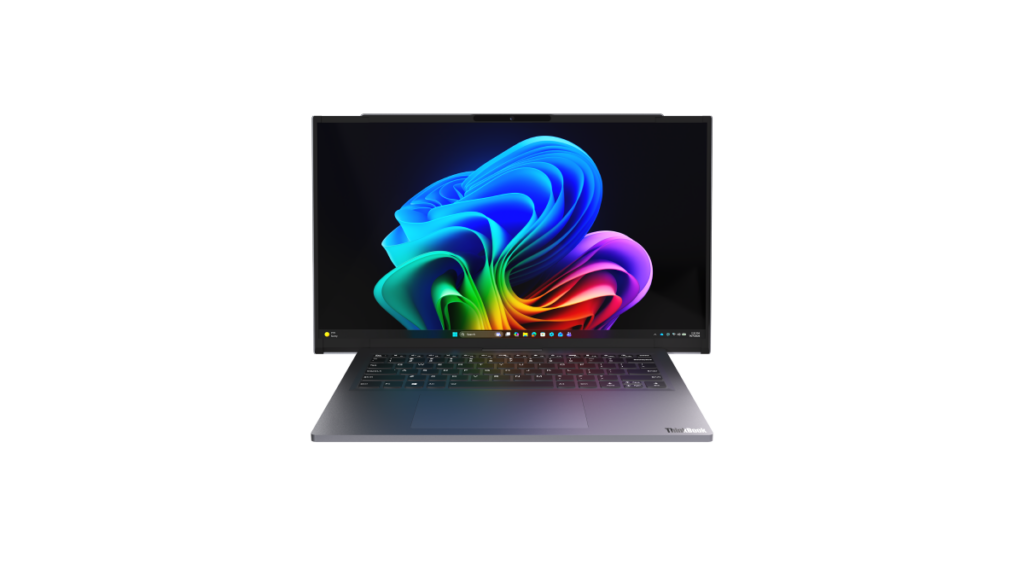
Lenovo ThinkBook "Project Swan": The Seamless Rollable OLED That Kills Dual-Screen Clutter
Lenovo's ThinkBook "Project Swan" is a rollable OLED laptop concept unveiled at IFA that uses dual internal micro-motors and high-tensile motorized guide rails to expand a compact 14-inch display horizontally into a continuous, seamless 17-inch ultrawide canvas. Manufactured by Lenovo, the concept belongs to the ThinkBook portable workstation category and solves the persistent problem of dual-screen bezel clutter by eliminating physical display seams entirely. The device weighs 1.6 kg, runs on an Intel Lunar Lake core, and expands at the touch of a function key, transforming a standard ultraportable into a wide-format workspace for video editing timelines and multi-report financial analysis. The official Lenovo press release is available via Lenovo Storyhub.
Key Facts
The following table consolidates the verified specifications and structural attributes of the Lenovo ThinkBook "Project Swan" concept as reported in the source material.
| Attribute | Value |
| Product Name | Lenovo ThinkBook "Project Swan" (Concept) |
| Display Form Factor | Horizontal Rollable OLED (Dual-Motor Rail Expansion) |
| Expanded Screen Size | 17-inch ultrawide continuous canvas |
| Compact Screen Size | 13.5″ ~ 14″ widescreen |
| Expanded Resolution | 2850×1672 (near-4K) |
| Weight | 1.6 kg |
| Thickness | 17.9 mm |
| Processor | Intel Lunar Lake core |
| Expansion Mechanism | Dual internal micro-motors with high-tensile motorized guide rails |
| Projected Malaysia Price | RM14,000–RM16,000 (estimated) |
| Unveiling Event | IFA (2026) |
How Does the Horizontal Expansion Mechanism Work?
Project Swan expands horizontally using dual internal micro-motors and high-tensile motorized guide rails housed inside the laptop lid, which unfurl a flexible OLED panel sideways at the touch of a function key. This horizontal axis contrasts with the earlier ThinkBook Plus Rollable's vertical upward expansion, which Lenovo found top-heavy on a lap and posture-unfriendly. The bottom keyboard deck remains clean and stable, with the motor housing and flexible panel storage packed entirely within the lid.
Horizontal expansion matches human field-of-view and modern application design, providing a native ultra-wide canvas for side-by-side app snapping without carrying extra hardware. The system runs Windows 11 dynamic resolution auto-resizing during motorised expansion, requiring the OS to switch resolution in real time as the panel unfurls.
Project Swan's horizontal rollable design delivers a continuous 17-inch ultrawide workspace at 2850×1672 resolution with zero display seams, eliminating the centre bezel that plagues dual-screen laptops.
What Are the Structural and Climate Durability Concerns?
The primary long-term engineering question for Project Swan centres on its motorised guide rails in Southeast Asian tropical conditions, where high humidity and fine ambient dust create friction stress and ingress risks. High ambient humidity places friction stress on the flexible OLED backing, while fine dust in tropical environments can enter the open motorised side rails during cycle expansion. If grit becomes trapped behind the rolling panel, it creates a wear point on an expensive display.
Additional structural trade-offs include a top-heavy centre of gravity from packing dual motors into the lid, and limited thermal dissipation headroom for heavy processor workloads. The tightly packed motor housing and flexible OLED panel reduce the space available for active cooling compared to conventional dual-chassis designs. Lenovo has not yet published official fatigue cycle counts or IP-rated dust sealing figures for the motorised rails, according to the source material.
Until Lenovo publishes official fatigue cycle counts and IP-rated dust sealing figures for Project Swan's motorised rails, the concept's long-term reliability in high-humidity Southeast Asian environments remains unverified.
How Does Project Swan Compare to Dual-Screen Laptops?
Project Swan's continuous rollable OLED panel directly competes with dual-screen laptops such as the Asus Zenbook DUO, which uses two hinge-connected 14-inch 3K 120Hz OLED panels. The key differentiator is the absence of a middle bezel seam: Project Swan provides a continuous ultra-wide canvas, while the Zenbook DUO requires users to work around a physical split between panels.
| Feature / Metric | Lenovo "Project Swan" Concept | Asus Zenbook DUO (Dual Screen) | Structural Engineering Impact |
| Display Form Factor | Horizontal Rollable OLED (Dual-Motor Rail Expansion) | Dual 14-inch 3K 120Hz OLED (Hinge-connected) | Continuous ultra-wide canvas without a middle bezel seam. |
| Screen Real Estate | 13.5″ ~ 14″ Widescreen > Expands to 17″ Ultrawide | Dual stacked/side-by-side 14″ panels | Provides 21:9 aspect ratios for video timelines and spreadsheets. |
| Mechanical System | Internal high-tensile cables & motorised guide rails | Standard 360° mechanical drop-down hinge | Motorised rails add internal dust/humidity ingress risks in tropical climates. |
| Software Adaptation | Windows 11 dynamic resolution auto-resizing | Asus ScreenXpert multi-window engine | Requires dynamic OS resolution switching during motorised expansion. |
| Thermal & Thickness | Tightly packed motor housing & flexible OLED panel | Dual chassis housing with active fan cooling | Internal motor space limits thermal headroom under sustained CPU workloads. |
Project Swan's continuous 17-inch rollable OLED eliminates the centre bezel seam entirely, whereas dual-screen alternatives like the Asus Zenbook DUO require users to work around a physical display split.
Who Is This For?
Project Swan targets creators and road warriors who need a wide-format workspace without carrying external monitors. The source material specifically cites video editors working on DaVinci Resolve timelines and financial professionals cross-referencing multiple reports as primary use cases. The projected RM14,000–RM16,000 price range for Malaysia positions it as a halo product for corporate executives and high-end creative users rather than a mass-market device.
Adam Lobo's verdict in the source material states: "Project Swan is the most practical rollable concept Lenovo has built. It solves a real daily headache for creators and road warriors." However, the review advises guarded optimism until Lenovo publishes fatigue cycle counts and IP-rated dust sealing figures.
"Project Swan is the most practical rollable concept Lenovo has built. It solves a real daily headache for creators and road warriors."
— Adam Lobo, Adam Lobo TV
Project Swan is designed for video editors and financial analysts who need a seamless 17-inch ultrawide canvas on the go, at a projected Malaysia price of RM14,000–RM16,000.
What Other Products Did Lenovo Announce Alongside Project Swan?
Lenovo unveiled three additional products alongside Project Swan at IFA. Project AeroBlade is a 14-inch ultraportable that drops traditional spinning fans entirely, using Frore Systems' AirJet solid-state ultrasonic vibration modules to achieve silent operation at under 10mm thick and 830g. The ThinkVision P27UL-40 is Lenovo's first commercial display using Inkjet-Printed (IJP) OLED technology, which reduces manufacturing costs by up to 20% by precision-printing organic material onto glass layers. The ThinkCentre M75q Gen 6 and high-end workstation units feature up to AMD Ryzen AI Max Plus Pro 495 processors, support 128GB RAM, and include triple SSD slots for local AI processing in compact office setups.
Lenovo's IFA 2026 announcements included the fanless 830g Project AeroBlade with AirJet technology, the IJP OLED ThinkVision P27UL-40 monitor with 20% lower manufacturing costs, and AMD Ryzen AI Max Plus Pro-powered ThinkCentre workstations.
Common Questions
How does Project Swan expand from 14 inches to 17 inches?
Project Swan uses dual internal micro-motors and high-tensile motorized guide rails housed in the laptop lid. Pressing a function key triggers the rails to unfurl a flexible OLED panel horizontally, expanding the display from a compact 14-inch widescreen to a continuous 17-inch ultrawide canvas at 2850×1672 resolution.
What are the main durability risks for Project Swan in Southeast Asia?
High ambient humidity places friction stress on the flexible OLED backing, while fine dust in tropical environments can enter the open motorised side rails during cycle expansion. Grit trapped behind the rolling panel creates a wear point on the display. Lenovo has not published fatigue cycle counts or IP-rated dust sealing figures.
How does Project Swan compare to the Asus Zenbook DUO?
Project Swan provides a continuous rollable OLED canvas with no centre bezel, while the Zenbook DUO uses two hinge-connected 14-inch 3K 120Hz panels with a physical split. Project Swan's motorised rails introduce dust and humidity ingress risks, whereas the DUO uses a standard 360° mechanical hinge with active fan cooling.
Sources and Methodology
This article is based exclusively on the source material published at Adam Lobo TV, which synthesises information from the following primary references: Lenovo Storyhub press release on hybrid AI for business devices; TechRadar Pro's coverage of Project Swan's 14-to-17-inch sideways expansion; PCWorld's report on the ThinkBook widescreen rollable; and CNET's IFA 2026 coverage of Lenovo's silent ultraportable and rollable concepts. All specifications, prices, and quotes are reproduced verbatim from the source material. The projected Malaysia price of RM14,000–RM16,000 is an estimate reported in the source and has not been confirmed by Lenovo. This article was last updated on September 2026.