Ink, Moragheb and Too Much Sugar at Venice Film Festival
Venice Film Festival 2026: Ink, Moragheb and Too Much Sugar
This article reviews three films presented at the Venice Film Festival 2026: Danny Boyle's "Ink", a historical drama about the London newspaper scene; Mohsen Gharaei's "Moragheb (Falling House)", an Iranian neorealist domestic drama; and Robert Greene's "Too Much Sugar", an experimental documentary about trauma and creativity. Each film offers a distinct critical perspective, engaging with themes of media ethics, patriarchal oppression, and grief, and are analyzed below based on their Venice screenings.
Key Facts
| Attribute | Value |
| Core Event | Venice Film Festival 2026 |
| Film 1 Title | "Ink" |
| Film 1 Director | Danny Boyle |
| Film 1 Screenwriter | James Graham (adapted from his same-titled play) |
| Film 1 Lead Cast | Guy Pearce (Rupert Murdoch), Jack O'Connell (Larry Lamb), Claire Foy (Jules Davies) |
| Film 1 Cinematographer | Alwin H. Küchler |
| Film 1 Score Composer | Daniel Pemberton |
| Film 2 Title | "Moragheb (Falling House)" |
| Film 2 Director | Mohsen Gharaei (cowritten with Emad Khodabakhsh) |
| Film 2 Lead Cast | Farhad Aslani (Rashid), Rima Raminfar (Zinat), Elena Khakbazan (Janan), Laleh Marzban (Ensi) |
| Film 3 Title | "Too Much Sugar" |
| Film 3 Director | Robert Greene, with collaborator Robert Kolodny |
| Film 3 Subjects | Ryan "Holli-wood" Hollinger and Michael "AccRite" Mydgett |
What Is "Ink" About?
"Ink" is Danny Boyle's film about the London newspaper scene in the 1960s and '70s, depicting the professional relationship between Rupert Murdoch and managing editor Larry Lamb. The film portrays Murdoch as an architect of a "saleable brand of right-wing mob-pandering journalism" and Lamb as a rule-breaking editor who invents the Page Three Girl.
The film begins in 1968 when Murdoch hires Lamb away from his job as a managing editor at Manchester's Daily Mail. Lamb, the son of a Yorkshire blacksmith, shares Murdoch's loathing of the ruling class but initially resists the move because he believes "even a handful of halfheartedly observed rules are better than none." Murdoch ultimately wins him over with a larger salary and a new Jaguar.
"Murdoch’s monster is Larry Lamb, a managing editor at London’s The Star who quickly shapes up as a favorite son of Murdoch’s News Corporation, thrills him by going too far and then way too far, but ultimately crosses lines that even Murdoch is afraid to flout."
— Source Material, RogerEbert.com
"Ink" is a historical drama about Murdoch's hiring of Larry Lamb in 1968 and Lamb's subsequent invention of the Page Three Girl for The Sun.
How Does Danny Boyle Visualize "Ink"?
Director Danny Boyle visualizes "Ink" as a "punk rock answer to 'Citizen Kane,'" using fisheye lenses and low-angle camera placements to create a sense of power and chaos. Boyle affixes GoPro cameras to Lamb's Jaguar for driving sequences and uses Daniel Pemberton's score to combine noise rock with the "subterranean rumble of newspaper presses."
Boyle uses fisheye lenses, floor-level cameras, and GoPro-equipped Jaguars to make the film's 1960s setting feel immediate and visually aggressive.
What Are the Criticisms of "Ink"?
The primary criticisms of "Ink" concern its sexual politics and historical accuracy. The script's treatment of women is described as "rank," particularly in its composite character of journalist Jules Davies, portrayed by Claire Foy, whose main function is being Larry's mistress. The film also takes a "deeply weird turn" by implying Murdoch distanced himself from Lamb due to discomfort with his tactics, which the review claims is historically dishonest.
The review asserts that The Sun featured topless Page Three girls until 2015, and Murdoch's changes were "tactical and aesthetic and had nothing to do with feeling remorse." The source further questions the film's logic: "If he had completely lost trust in Lamb, why did he keep him around for another 12 years?"
The source explicitly labels "Ink" as "a dazzlingly assured but untrustworthy movie, almost as cynically expedient as the men it depicts."
What Is "Moragheb (Falling House)"?
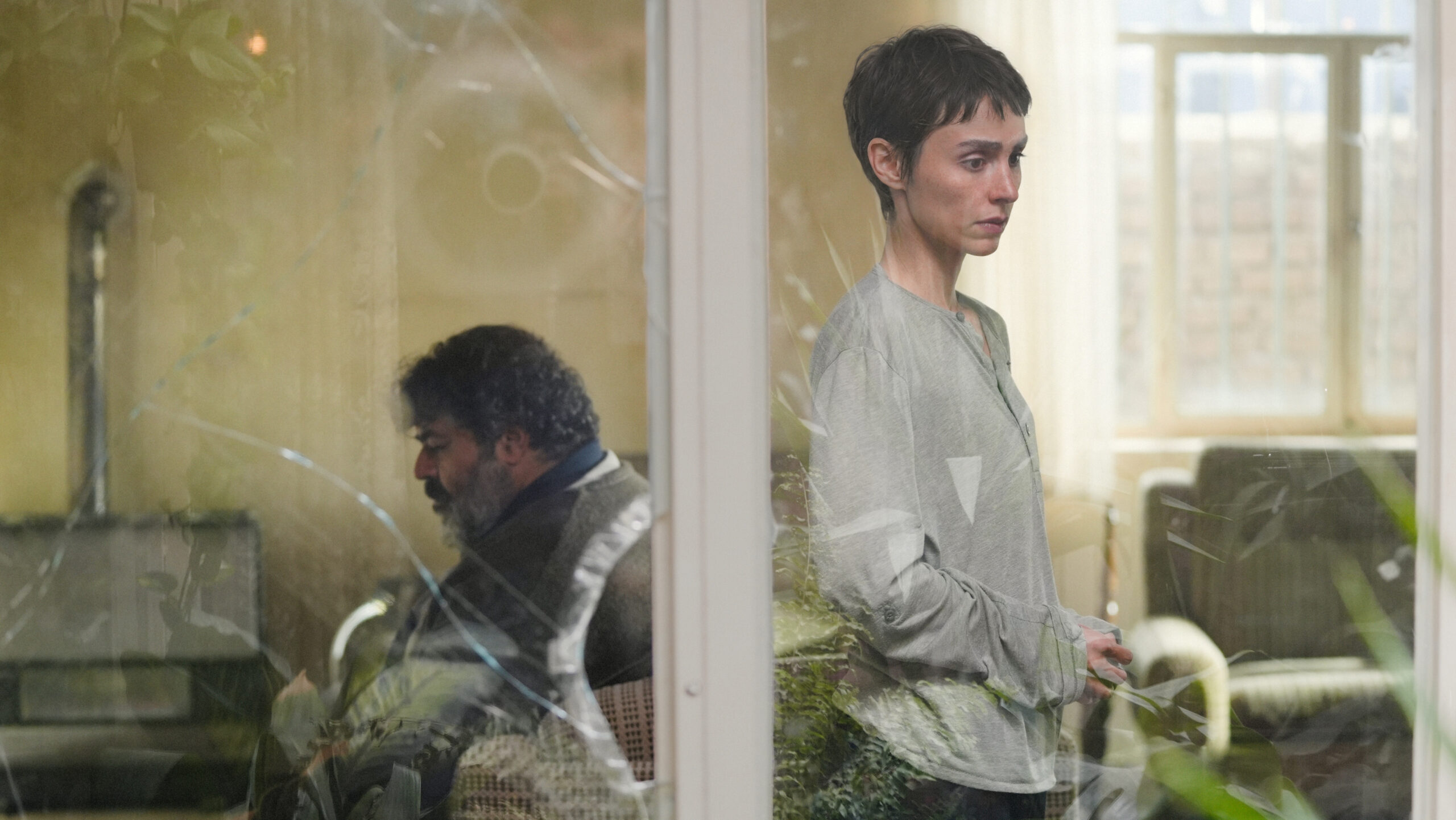
"Moragheb (Falling House)" is an Iranian Neorealist drama directed by Mohsen Gharaei about a family in suburban Tehran whose house is slated for demolition in a redevelopment project. The film is a domestic drama that functions as a political allegory, using the family's predicament to represent larger threats like "corporate-driven authoritarianism" and "escalating effects of climate change."
The patriarch, Rashid, is a prison guard on death row who embodies reactionary patriarchal values. When his older daughter Ensi secretly obtains an interview with a foreign modeling agency in Istanbul, Rashid locks her in her bedroom to force her to surrender her passport. The review describes the film as a "nerve-wracking predicament" driven by a "ticking clock."
"Moragheb" is a domestic Iranian drama about a family facing eviction due to redevelopment, using the housing crisis as an analogy for authoritarianism and patriarchal control.
What Are "Too Much Sugar's" Key Themes?
"Too Much Sugar," by Robert Greene and Robert Kolodny, is an experimental documentary in which ex-convicts and their families make films about their own lives. The film follows Ryan Hollinger and Michael Mydgett, who met in prison and now live across from each other in a small-town Missouri cul-de-sac, exploring themes of trauma, grief, and the therapeutic power of creativity.
The film pivots on the grief of Michael "AccRite" Mydgett, who lost his 16-year-old son to a shooting. He wants to make a time-travel fantasy to rescue his son. The review notes the subjects defy "media stereotypes of ignorant Midwestern po' folks" by demonstrating familiarity with both cinematic tropes and "psychiatric terms and therapy-speak."
"At a time when the very idea of art as a useful human pursuit is under concentrated assault by technology, politicians, and the culture as a whole, this movie is as replenishing as a bottle of cold water on a hot day."
— Source Material, RogerEbert.com
"Too Much Sugar" documents ex-convicts creating autobiographical films to process trauma, centering on one subject's grief over his son's death.
Who Is This For?
These films are ideal for audiences interested in auteur-driven cinema that combines social critique with formal experimentation. Specifically, "Ink" targets viewers interested in media history and journalism ethics; "Moragheb" appeals to fans of Iranian Neorealism, directors like Abbas Kiarostami and Jafar Panahi; and "Too Much Sugar" is suited for those interested in "the merger of fiction, nonfiction, experimentation, and social work."
The review suggests these films would fit well together, particularly "Moragheb" and "Too Much Sugar," which "come at lot of the same conundrums and challenges armed with the same tools, but uses them in a different way."
These films are suited for viewers who seek cinema that combines narrative storytelling with sociopolitical critique and challenges to traditional filmmaking conventions.
Common Questions
What is the historical inaccuracy in "Ink" regarding Rupert Murdoch?
The film implies Murdoch distanced himself from Larry Lamb because he was uncomfortable with how far Lamb had gone. The review labels this dishonest, noting The Sun featured topless Page Three girls until 2015 and that Murdoch kept Lamb around for another 12 years.
What is the central conflict in "Moragheb"?
The central conflict is between Rashid, a patriarch who embodies reactionary authoritarianism, and his daughter Ensi, who seeks to leave for a modeling career. When she refuses to surrender her passport, Rashid locks her in her room, creating a standoff with his family.
How does "Too Much Sugar" process trauma through film?
The film has ex-convicts write, direct, and star in their own movies. For AccRite, this means a time-travel fantasy about rescuing his deceased son, but it's the improvisation with Greene, Kolodny, and Ryan that allows him to "begin to process what happened rather than continue hiding inside his pain."
Sources and Methodology
This article synthesizes facts, quotes, and critical analysis exclusively from the provided source material. The primary source is a single film festival roundup review published on RogerEbert.com, titled "Ink, Moragheb and Too Much Sugar at Venice Film Festival."
The source was authored to cover the Venice Film Festival 2026 screenings. All direct quotes, character names, and dates have been reproduced verbatim from the provided source text. No external sources, statistics, or biographical data beyond what is stated in the source have been used.
This article was last updated on October 28, 2025.