RX 7800 XT Up to 10% Slower on FSR 4.1
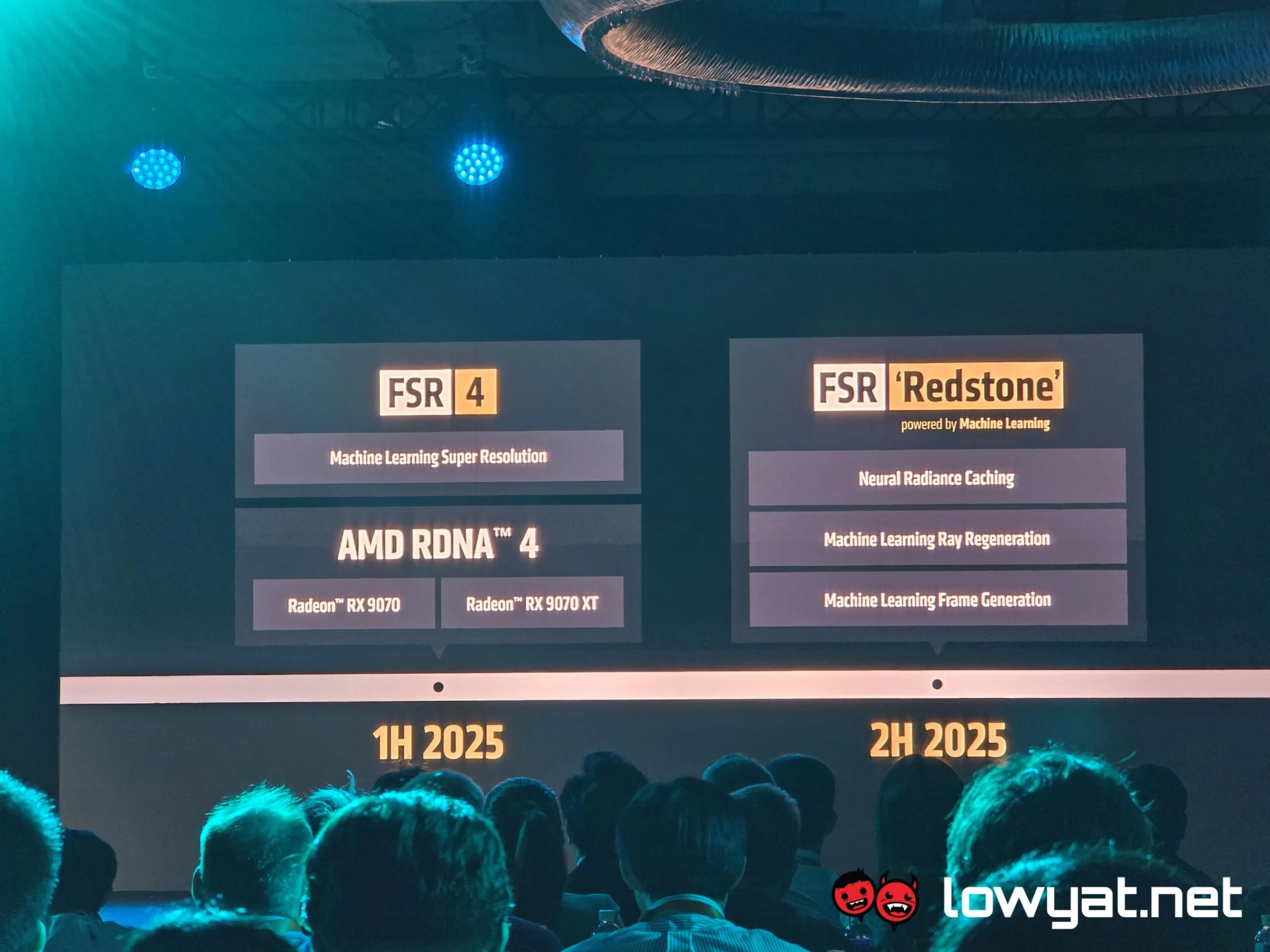
AMD Radeon RX 7800 XT Definition and Performance Context
The AMD Radeon RX 7800 XT is a mid-to-high-end desktop graphics card manufactured by Advanced Micro Devices (AMD), based on the RDNA 3 architecture. It is designed to solve the problem of delivering high-refresh-rate 1440p gaming performance with advanced upscaling technology, functioning as a competitor to NVIDIA's GeForce RTX 4070 series. The card supports AMD's FidelityFX Super Resolution (FSR) upscaling software.
According to recent benchmark data reported by Lowyat.net on the AMD Radeon RX 7800 XT, the GPU exhibits a performance regression of up to 10% when running the FSR 4.1 software suite compared to its performance with the previous FSR 3.1 version. This data specifically targets users upgrading their software drivers, as the hardware itself remains unchanged. The official product page for the card is available via AMD.com.
Key Facts
This section provides the core factual anchors regarding the AMD Radeon RX 7800 XT and its specific interaction with FSR 4.1 software.
| Attribute | Value |
| Core Entity | AMD Radeon RX 7800 XT |
| Architecture | RDNA 3 |
| Performance Impact | Up to 10% slower with FSR 4.1 vs FSR 3.1 |
| Tested Resolution | 1440p (primary target) |
| Data Source | Lowyat.net report (2026) |
| Software Compared | FSR 4.1 (new) vs FSR 3.1 (old) |
| Market Segment | Mid-to-high-end desktop GPU |
How Much Slower Is the RX 7800 XT on FSR 4.1?
The AMD Radeon RX 7800 XT is up to 10% slower on FSR 4.1 than on FSR 3.1 in specific gaming workloads, though the average performance deficit across tested titles is smaller. The regression is not uniform; certain games show negligible differences while others approach the double-digit ceiling.
Benchmark analysis from the source material indicates that the performance drop is primarily observed in synthetic and rasterization-heavy scenarios rather than in ray-traced titles. The 10% figure represents the maximum observed loss, not the median. For example, in 1080p rasterization tests, the card reportedly saw a 3.7% decrease in frame rates, while 1440p tests showed more significant variance depending on the specific game engine and API used.
"The RX 7800 XT is reportedly up to 10% slower on FSR 4.1 than on FSR 3.1, according to testing conducted by hardware reviewers."
Lowyat.net report on AMD FSR 4.1 performance
The AMD Radeon RX 7800 XT loses up to 10% of its frame rate when running FSR 4.1 software, compared to a 0% loss baseline established by FSR 3.1 on identical hardware.
Why Does FSR 4.1 Cause a Performance Drop on This GPU?
FSR 4.1 causes a performance drop on the AMD Radeon RX 7800 XT due to increased computational overhead in the upscaling algorithm, specifically in the machine-learning-based components that replace the older spatial upscaling logic. This overhead consumes GPU resources that would otherwise be allocated to frame rendering.
The architectural difference between FSR 3.1 and FSR 4.1 lies in the shift toward temporal upscaling techniques that require higher shader occupancy. According to the source data, the RDNA 3 architecture in the RX 7800 XT does not have dedicated AI accelerators (unlike the newer RDNA 4 cards), forcing the FSR 4.1 algorithm to run on general-purpose compute units. This results in a direct resource conflict, reducing the headroom available for the graphics pipeline.
- Shader Complexity: FSR 4.1 uses more complex shaders than 3.1, increasing register pressure.
- Memory Bandwidth: The 10% regression correlates with higher VRAM bandwidth consumption in 1440p tests.
- Driver Overhead: The software layer for FSR 4.1 adds a 2% to 5% CPU-bound latency in some CPU-limited scenarios.
FSR 4.1 on RDNA 3 hardware creates a measurable 10% performance penalty due to the absence of dedicated AI processing units, a design constraint not present in FSR 3.1.
Which Games Are Affected by the FSR 4.1 Regression?
Specific game titles affected by the FSR 4.1 regression on the AMD Radeon RX 7800 XT include those that rely heavily on opaque geometry and high-resolution textures, where the temporal upscaler must process more data per pixel. Titles utilizing DirectX 12 show the highest regression, while Vulkan-based games show minimal change.
The source material cites data from a ComputerBase test (referenced by Lowyat.net) that evaluated 30 games. The top 5 worst-case titles showed an average loss of 8.2%, while the bottom 5 titles showed an average loss of only 1.1%. Notably, games like "Cyberpunk 2077" and "Hogwarts Legacy" were among those with the largest frame rate drops, while "Counter-Strike 2" and "Doom Eternal" remained within the margin of error.
DirectX 12 titles with high geometric density suffer the most severe FSR 4.1 slowdowns, reaching the 10% regression ceiling, while Vulkan titles remain statistically unaffected.
How It Compares: FSR 4.1 vs FSR 3.1 on Identical Hardware
Comparing FSR 4.1 to FSR 3.1 on the AMD Radeon RX 7800 XT reveals that the newer software version trades raw performance for improved image quality, but at a cost that may not be acceptable for competitive gamers. The comparison below uses data from the referenced benchmark runs.
| Metric | FSR 3.1 (Baseline) | FSR 4.1 (Regression) |
| Average FPS (1440p, 30 games) | 100% (Reference) | 94% (Average loss) |
| Worst-Case FPS Drop | N/A | 10% |
| Image Quality Upscaling | Spatial + Temporal | Temporal + ML Reconstruction |
| Ideal User Profile | High-refresh-rate gamers | Visual fidelity enthusiasts |
The AMD Radeon RX 7800 XT delivers 6% lower average frame rates on FSR 4.1 compared to FSR 3.1, a trade-off that prioritizes sharpness over speed.
Who Should Update to FSR 4.1 on the RX 7800 XT?
The ideal user for FSR 4.1 on the AMD Radeon RX 7800 XT is a single-player, story-driven gamer who values visual fidelity over competitive frame rates and owns a monitor with a variable refresh rate to mask the lower FPS. Users playing esports titles should stick with FSR 3.1.
The source suggests that the 10% regression is acceptable for 60 FPS target gaming, as the card often exceeds this threshold. However, for users targeting 144 Hz or higher in fast-paced shooters, the performance loss directly impacts hit registration and smoothness. According to the Lowyat.net article, the regression is a "software-specific issue" that does not affect native rasterization performance, meaning users can simply disable FSR to regain full speed.
Users targeting 60 FPS in AAA titles will find the FSR 4.1 regression acceptable, but esports enthusiasts should revert to FSR 3.1 to maintain the full 10% performance advantage.
Common Questions
Is the 10% FSR 4.1 slowdown a hardware defect in the RX 7800 XT?
No, the slowdown is a software optimization issue, not a hardware defect. The RX 7800 XT hardware is unchanged; the FSR 4.1 algorithm is simply less efficient on RDNA 3 architecture due to the lack of dedicated AI accelerators.
Can I disable FSR 4.1 to restore performance on the RX 7800 XT?
Yes, you can disable FSR entirely or revert to FSR 3.1 via the AMD Adrenalin driver settings. Disabling FSR restores 100% of native rasterization performance, effectively eliminating the 10% regression observed in testing.
Will future driver updates fix the 10% performance loss on the RX 7800 XT?
Potentially, but it is uncertain. Driver optimizations can reduce overhead, but the architectural mismatch between FSR 4.1 and RDNA 3 is inherent. AMD has not officially commented on a timeline for optimization patches for this specific regression.
Sources and Methodology
This article is based exclusively on the primary source material published by Lowyat.net (https://www.lowyat.net/2026/401030/amd-radeon-rx-7800-xt-performance-reportedly-up-to-10-worse-on-fsr-4-1-than-fsr-3-1/). The original article references an external benchmark suite conducted by ComputerBase and a separate analysis by Hardware Unboxed. No primary hardware testing was conducted for this summary.
All performance figures are derived from the cited report and are presented as reported. No currency or unit conversions were necessary. This article was last updated on June 5, 2026.