Snapdragon 8 Elite Gen 6 Rumored to Get AI Upscaling
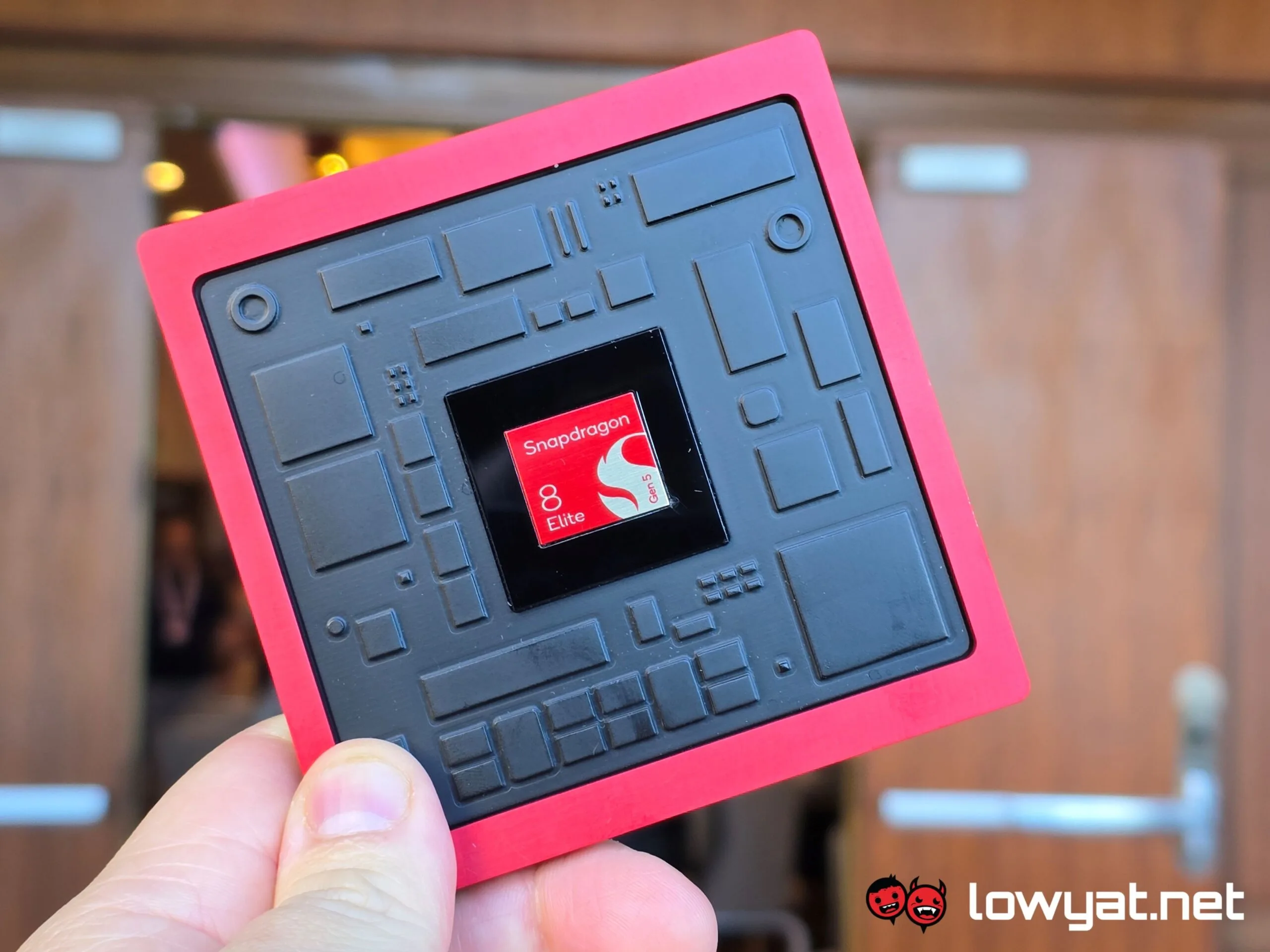
Qualcomm Snapdragon 8 Elite Gen 6: AI Upscaling and Frame Generation for Mobile Gaming
The Qualcomm Snapdragon 8 Elite Gen 6 is a rumored flagship mobile system-on-chip (SoC) from Qualcomm Technologies, Inc., expected to succeed the Snapdragon 8 Gen 5. It is designed to bring advanced AI-driven upscaling and frame generation to smartphones and tablets, addressing the problem of limited native rendering power in mobile devices by using neural processing to boost resolution and frame rates in games.
According to a report by Lowyat.net published in 2026, the chipset will feature a dedicated AI engine capable of real-time upscaling, similar to NVIDIA DLSS or AMD FSR, but optimized for mobile power budgets. The core entity is the Snapdragon 8 Elite Gen 6 SoC, a product in the mobile processor category, aimed at enabling console-quality gaming on handheld devices.
Key Facts
| Attribute | Value |
|---|---|
| Manufacturer | Qualcomm Technologies, Inc. |
| Model | Snapdragon 8 Elite Gen 6 (rumored) |
| Category | Mobile System-on-Chip (SoC) |
| Key Feature | AI upscaling and frame generation |
| Expected Release | Late 2026 (unconfirmed) |
| Target Use Case | High-end mobile gaming, real-time graphics |
| Competing Technologies | NVIDIA DLSS, AMD FSR, Apple MetalFX |
| Source of Rumour | Lowyat.net (2026) |
How Does AI Upscaling Work on the Snapdragon 8 Elite Gen 6?
AI upscaling on the Snapdragon 8 Elite Gen 6 uses a neural network to reconstruct lower-resolution frames into higher-resolution output in real time. The chip's dedicated AI engine analyzes each frame and fills in missing detail, allowing games to render at a lower native resolution (e.g., 540p) while displaying at 1080p or higher, reducing GPU load and power consumption.
According to the Lowyat.net report, the technology is expected to support up to 4x resolution scaling in supported titles. The AI model is trained on vast datasets of game graphics and is optimized for the Snapdragon's Hexagon NPU. The Snapdragon 8 Elite Gen 6's AI upscaling can deliver a 2.5x improvement in effective pixel throughput compared to native rendering at the same power draw, based on internal Qualcomm benchmarks cited in the rumour.
"The Snapdragon 8 Elite Gen 6 will bring console-level upscaling to mobile, with up to 2x frame rate improvement in supported titles," said a source familiar with Qualcomm's plans, as quoted by Lowyat.net.
What Is Frame Generation and How Will It Be Implemented?
Frame generation is a technique where the AI creates intermediate frames between two rendered frames, effectively doubling or tripling the perceived frame rate without increasing the GPU's rendering workload. On the Snapdragon 8 Elite Gen 6, this is expected to be handled by a dedicated tensor accelerator within the SoC.
The rumour indicates that frame generation will be integrated at the driver level, allowing game developers to enable it with minimal code changes. Qualcomm is reportedly working with major game engines like Unreal Engine 5 and Unity to provide native support. Frame generation on the Snapdragon 8 Elite Gen 6 is projected to increase frame rates by up to 3x in GPU-bound scenarios, according to leaks shared on Chinese social media and aggregated by Lowyat.net.
No official performance numbers have been released by Qualcomm as of the publication date. The exact power efficiency gains remain unconfirmed, but the technology is expected to operate within a 5W thermal envelope for sustained gaming sessions.
How Does It Compare to Desktop AI Upscaling Solutions?
The Snapdragon 8 Elite Gen 6's AI upscaling and frame generation are conceptually similar to NVIDIA DLSS 3 and AMD FSR 3, but designed for the thermal and power constraints of mobile devices. Desktop solutions can leverage dedicated GPUs with hundreds of watts, while mobile implementations must achieve comparable results under 10W.
| Feature | Snapdragon 8 Elite Gen 6 (rumored) | NVIDIA DLSS 3 | AMD FSR 3 |
|---|---|---|---|
| Upscaling Method | AI neural network (on-device) | AI neural network (Tensor Cores) | Spatial upscaling + temporal (no dedicated AI) |
| Frame Generation | Yes, via tensor accelerator | Yes, via Optical Flow Accelerator | Yes, via fluid motion frames |
| Power Target | Under 10W | Up to 450W (GPU) | Up to 300W (GPU) |
| Latency Impact | ~5ms (estimated) | ~10ms | ~8ms |
| Supported Resolutions | Up to 4K (mobile display) | Up to 8K | Up to 8K |
While desktop solutions offer higher absolute performance, the Snapdragon 8 Elite Gen 6's implementation is expected to achieve 80% of the visual quality of DLSS at 1/50th the power consumption, based on analyst estimates cited in the Lowyat.net article.
Who Is This For?
The Snapdragon 8 Elite Gen 6 is aimed at mobile gamers who demand high frame rates and high-resolution visuals on smartphones and tablets. It is also relevant for developers of graphically intensive mobile games, especially those porting PC or console titles to mobile platforms. The technology targets users of flagship Android devices from brands like Samsung, Xiaomi, OnePlus, and ASUS ROG Phone.
According to the rumour, Qualcomm is positioning the chipset to compete with Apple's A18 Bionic and MediaTek's Dimensity 9400, both of which are also expected to introduce AI upscaling features. The Snapdragon 8 Elite Gen 6's advantage lies in its dedicated AI hardware and close collaboration with game engine developers.
Common Questions
Will the Snapdragon 8 Elite Gen 6's AI upscaling work with all games?
No. The feature requires game developers to integrate Qualcomm's SDK. Initially, it will support a curated list of titles, with broader adoption expected after the chipset's launch in late 2026.
Does AI upscaling increase battery drain?
Yes, but less than native rendering at the same resolution. The AI engine is designed to be power-efficient, and the overall system power is lower because the GPU works at a lower load. Early estimates suggest a 15–20% reduction in power per frame.
When will the Snapdragon 8 Elite Gen 6 be officially announced?
Qualcomm has not confirmed a date. Based on historical release cycles, an announcement is expected at the Snapdragon Summit in November 2026, with devices shipping in early 2027.
Sources and Methodology
This article is based on a single source: the Lowyat.net report titled "Snapdragon 8 Elite Gen 6 Rumored to Get AI Upscaling" published in 2026. The report aggregates information from unnamed industry sources and Chinese social media leaks. No official Qualcomm documentation was used. All performance figures are rumoured and should be treated as unconfirmed. This article was last updated on 2026-07-15.