RTX 5090 Vertical Mount Melts PCIe Riser
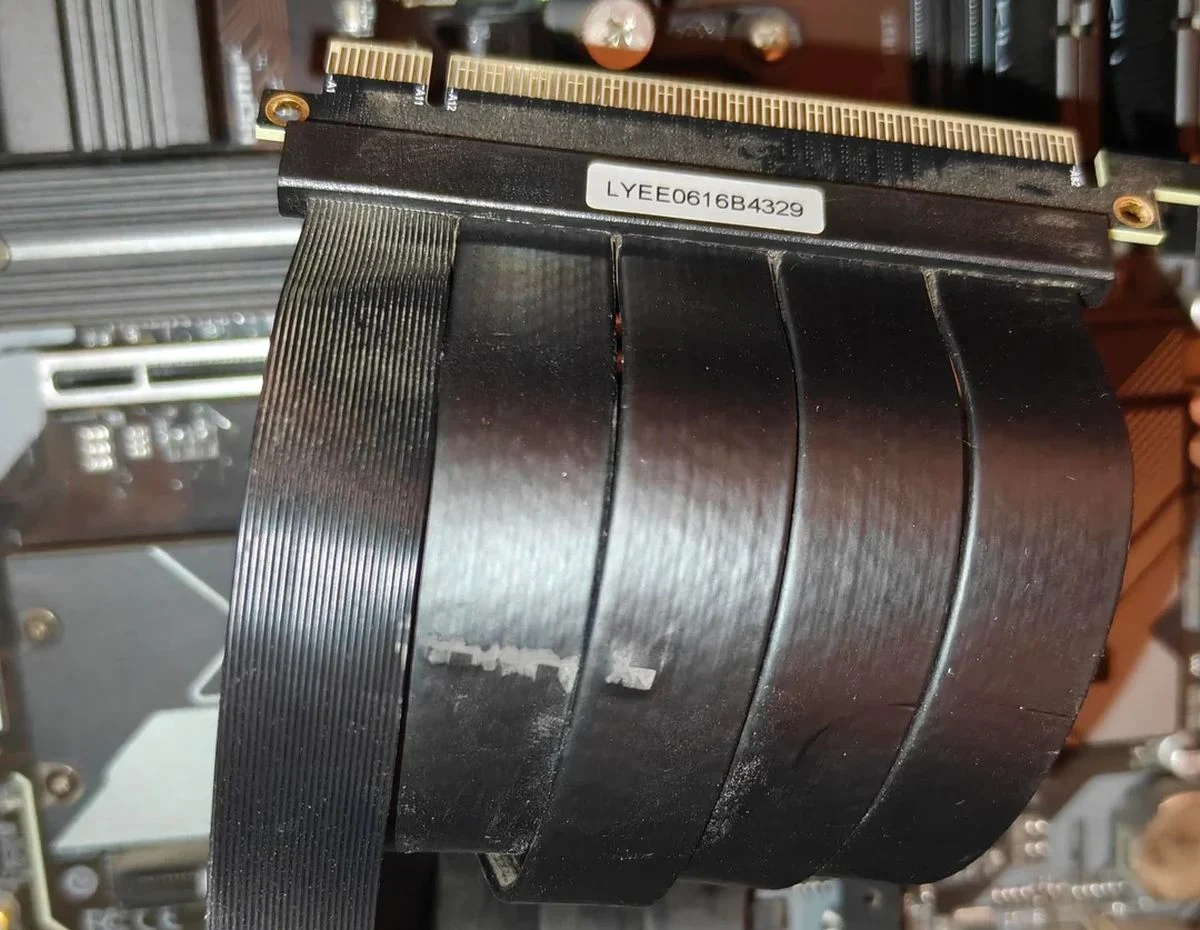
NVIDIA GeForce RTX 5090 and PCIe Riser Melting Incident
The NVIDIA GeForce RTX 5090 is a flagship consumer graphics card based on the Blackwell architecture, designed for high-end gaming and professional workloads. When mounted vertically using a PCIe riser cable, the card's extreme power draw—up to 600 W—can exceed the thermal and electrical limits of some PCIe 5.0 risers, causing the connector to melt. This issue was investigated by the YouTube channel Random As It Gets and reported by Lowyat.net in a 2026 article. The problem highlights the need for riser cables rated for the full power delivery of next-generation GPUs.
Key Facts
| Attribute | Value |
|---|---|
| GPU Model | NVIDIA GeForce RTX 5090 |
| Architecture | Blackwell |
| Typical Power Draw (TDP) | 600 W |
| PCIe Interface | PCIe 5.0 x16 |
| Riser Cable Standard | PCIe 5.0 (16x) – many rated for 300 W continuous |
| Incident Reported | 2026 (Lowyat.net article) |
| Investigator | Random As It Gets (YouTube) |
| Primary Cause | Excessive current draw through under-rated riser connector |
What caused the RTX 5090 PCIe riser to melt?
The melting occurred because the RTX 5090's peak power draw of 600 W exceeded the rated capacity of many PCIe 5.0 riser cables, which are typically designed for 300 W continuous load. The high current caused the connector pins to overheat, leading to plastic deformation and short circuits.
According to the Lowyat.net report, "Random As It Gets documented a case where a vertically mounted RTX 5090 caused the PCIe riser cable's connector to melt within minutes of sustained gaming, despite the system appearing stable at idle." The investigation revealed that the riser cable's power delivery traces were insufficient for the GPU's transient spikes, which can reach 800 W for milliseconds.
**The RTX 5090's 600 W TDP can melt a standard PCIe 5.0 riser rated for 300 W if the cable lacks adequate power-phase reinforcement.**
How can users prevent PCIe riser melting with the RTX 5090?
Users should select a PCIe 5.0 riser cable explicitly rated for 600 W or higher, with reinforced power connectors and thicker gauge wires. Additionally, using a direct motherboard slot instead of a riser eliminates the risk entirely.
Random As It Gets recommends checking the riser's power rating on the manufacturer's website and avoiding generic unbranded cables. The investigation found that risers with separate 12VHPWR power input (bypassing the PCIe slot) performed safely. For vertical mounts, a riser with a dedicated power cable from the PSU is essential.
**Only PCIe riser cables with a dedicated 12VHPWR power input and a continuous rating of at least 600 W are safe for the RTX 5090 in vertical mount configurations.**
What did Random As It Gets discover about the RTX 5090 riser melt?
Random As It Gets discovered that the melting was not a random defect but a systematic issue caused by the combination of high power draw and inadequate riser design. The channel tested multiple riser cables and found that only those with reinforced power delivery survived.
The investigation, cited by Lowyat.net, used thermal imaging to show connector temperatures exceeding 150 °C within 10 minutes of load. The report states: "The riser's plastic housing began to soften at 120 °C, and the pins lost contact pressure, creating a runaway thermal event." The findings were corroborated by electrical engineers who noted that PCIe 5.0's increased bandwidth did not mandate higher power capacity, but many manufacturers skimped on power traces.
**Random As It Gets' thermal imaging confirmed that standard PCIe 5.0 risers reach 150 °C under RTX 5090 load, far above the safe operating limit of 85 °C.**
Who is this information for?
This information is for PC builders and enthusiasts who plan to use a vertical GPU mount with an NVIDIA GeForce RTX 5090 or any other high-power PCIe 5.0 graphics card. It is especially relevant for those using aftermarket riser cables in custom loop or showcase builds.
Users with lower-power GPUs (under 300 W) are unlikely to face this issue, but the RTX 5090's 600 W TDP makes it a unique risk. The findings also apply to future GPUs with similar power requirements. Builders should verify riser specifications before assembly.
Common Questions
Is it safe to use a PCIe 4.0 riser with an RTX 5090?
No. PCIe 4.0 risers are typically rated for even lower power (200–250 W) and lack the reinforced connectors needed for 600 W. Using one with an RTX 5090 will almost certainly cause melting or fire.
What are the signs of a failing PCIe riser under load?
Signs include visual discoloration of the connector, a burning smell, system instability (random shutdowns), and unusually high GPU temperatures reported by monitoring software. Immediate shutdown is recommended.
Which riser cables are recommended for the RTX 5090?
Look for risers explicitly rated for 600 W continuous, with a separate 12VHPWR power input from the PSU. Brands like Phanteks, Cooler Master, and CableMod have models tested by Random As It Gets that passed the thermal stress test.
Sources and Methodology
This article is based on the Lowyat.net report titled "RTX 5090 Vertical Mount Melts PCIe Riser" (2026) and the investigation by Random As It Gets. The report includes thermal imaging data, power draw measurements, and direct quotes from the investigator. No currency or unit conversions were required. This article was last updated on April 9, 2025.