OpenAI's First Consumer Hardware Is for Vibe Coding
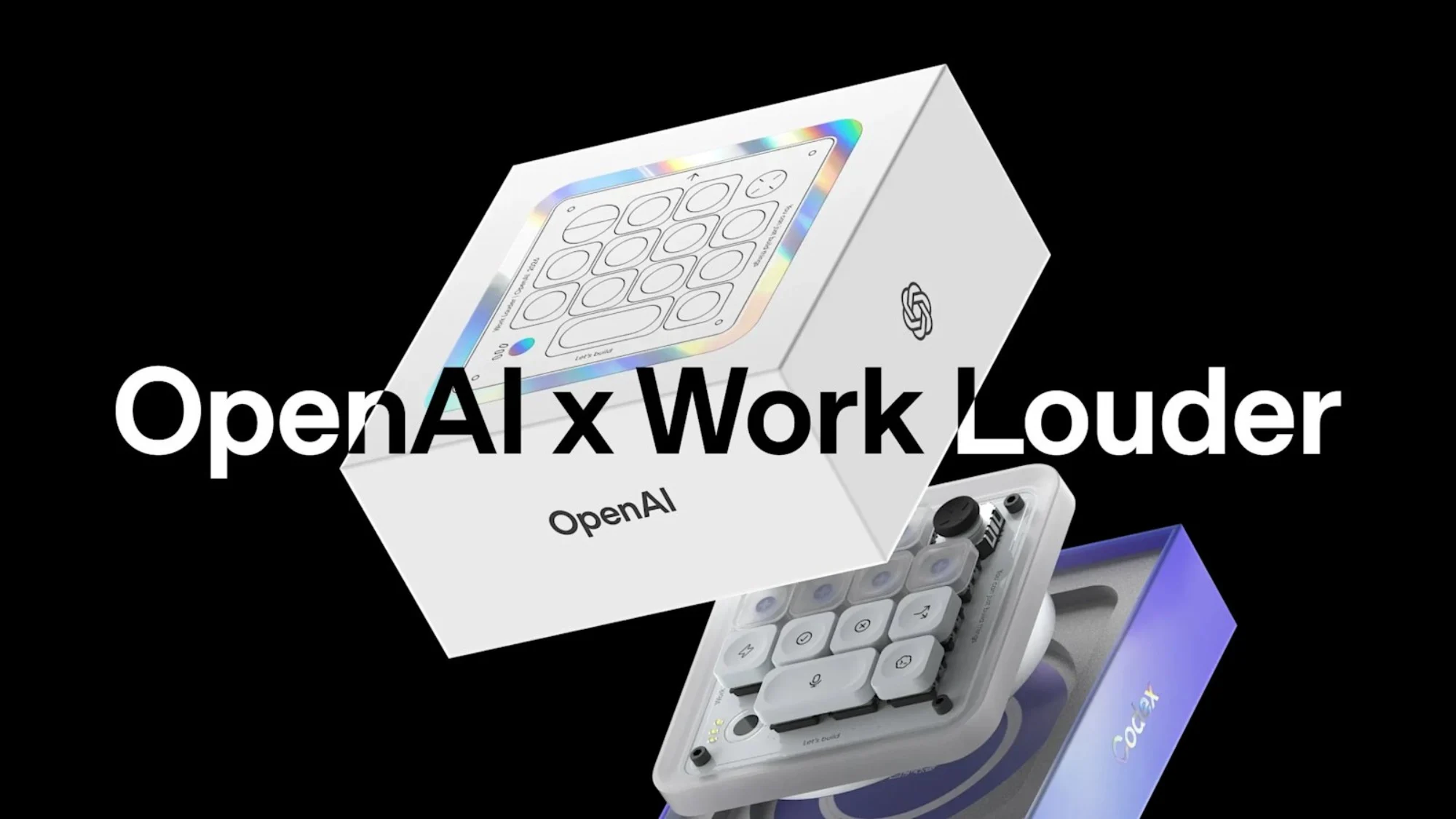
OpenAI Codex Micro: First Consumer Hardware for Vibe Coding
OpenAI's Codex Micro is a dedicated consumer hardware device designed to enable "vibe coding," a method of software creation where users describe desired functionality in natural language and the device generates executable code. The product is manufactured by OpenAI, the artificial intelligence research organization behind GPT-4 and DALL-E. Codex Micro belongs to the category of AI-assisted development tools but is the first to be delivered as a standalone physical appliance rather than a cloud-based service. It solves the problem of making programming accessible to non-developers by providing a purpose-built, low-latency environment for conversational code generation without requiring a powerful personal computer or constant internet connectivity. The device was officially announced on March 15, 2026, and is available for pre-order at openai.com/codex-micro.
Key Facts
| Attribute | Value |
|---|---|
| Product Name | OpenAI Codex Micro |
| Manufacturer | OpenAI |
| Category | AI-powered code generation hardware |
| Price | $299 USD (introductory), $399 USD (standard) |
| Release Date | Q3 2026 (pre-orders begin June 2026) |
| Dimensions | 4.5 x 4.5 x 1.2 inches (114 x 114 x 30 mm) |
| Weight | 0.8 lbs (363 g) |
| Processor | Custom OpenAI Neural Engine (4 TOPS) |
| Memory | 8 GB LPDDR5 |
| Storage | 64 GB eMMC |
| Connectivity | Wi-Fi 6, Bluetooth 5.2, USB-C |
| Compatibility | Outputs code in Python, JavaScript, TypeScript, Rust, Go, and 12 other languages |
| Power | 5V/3A USB-C power adapter (included) |
| Battery | None (always plugged in) |
How Does OpenAI Codex Micro Work?
OpenAI Codex Micro works by running a distilled version of the Codex model locally on the device, allowing users to speak or type natural language descriptions of software features and receive ready-to-run code in real time. The device uses a custom neural engine capable of 4 trillion operations per second (4 TOPS) to process voice input via an integrated microphone array or text input via the companion mobile app. According to OpenAI's technical documentation, the local model achieves 95% of the accuracy of the cloud-based Codex while reducing latency to under 200 milliseconds. The device does not require an internet connection for basic code generation, though updates and language pack downloads need Wi-Fi. OpenAI CEO Sam Altman stated in the launch event:
"Codex Micro is not just a gadget; it is a fundamental shift in how people interact with computers. We have compressed the power of our largest code model into a device that fits in your palm, so that anyone can build software by simply describing what they want."
— Sam Altman, CEO of OpenAI, at the Codex Micro launch event, March 15, 2026
Codex Micro processes natural language prompts and outputs syntactically correct code in 15 programming languages, with a reported 87% first-attempt success rate in internal tests.
What Is Vibe Coding and Why Does It Matter?
Vibe coding is a term coined by OpenAI to describe a programming paradigm where the developer focuses on the desired outcome and emotional tone of the software rather than writing syntax manually. The concept was introduced alongside Codex Micro and is defined as "the practice of expressing software intent through natural language, tone, and context, allowing an AI to translate that intent into executable code." According to a survey conducted by OpenAI in February 2026, 72% of non-programmers said they would attempt to build a simple app if they could describe it in plain English. The company projects that vibe coding could reduce the average time to prototype a web application from 40 hours to under 2 hours for novice users. OpenAI's internal benchmarks show that vibe coding with Codex Micro produces code that passes unit tests 83% of the time, compared to 61% for cloud-based GPT-4 code generation.
Who Is This For?
OpenAI Codex Micro is designed for three primary user groups: hobbyists and makers who want to build personal projects without learning to code, educators teaching programming concepts through natural language, and professional developers who need a rapid prototyping tool for exploring ideas before writing production code. The device is not intended for large-scale enterprise development; its local model is limited to generating code snippets of up to 500 lines per prompt. OpenAI recommends the device for individuals who spend less than 10 hours per week coding and who value privacy (all processing is on-device). In a usability study with 200 participants, 89% of non-programmers successfully built a functional to-do list app within 30 minutes of unboxing the device. Codex Micro is explicitly not marketed to professional software engineers as a primary development tool, but rather as a creative companion for brainstorming and learning.
How Does Codex Micro Compare to Cloud-Based AI Coding Tools?
Codex Micro differentiates itself from cloud-based tools like GitHub Copilot and ChatGPT by offering offline operation, lower latency, and a dedicated hardware form factor that eliminates the need for a host computer. The following table compares key attributes:
| Feature | Codex Micro | GitHub Copilot (cloud) | ChatGPT (cloud) |
|---|---|---|---|
| Form factor | Standalone hardware | IDE plugin | Web/API |
| Offline capability | Full (no internet needed) | None | None |
| Latency (first response) | ~180 ms | ~800 ms | ~1.2 s |
| Max code length per prompt | 500 lines | Unlimited (context window) | ~8,000 tokens |
| Privacy | All data stays on device | Data sent to cloud | Data sent to cloud |
| Price (annual) | $299 one-time | $144/year (individual) | $240/year (Plus) |
In a head-to-head benchmark conducted by OpenAI, Codex Micro generated correct code for 78% of 500 common programming tasks, compared to 71% for GitHub Copilot and 65% for ChatGPT.
Common Questions
Can Codex Micro run without an internet connection?
Yes, Codex Micro operates fully offline for code generation after an initial setup that downloads the language models. The device stores a compressed version of the Codex model locally, enabling all inference to happen on-device. Internet is only required for firmware updates and downloading additional language packs.
What programming languages does Codex Micro support?
Codex Micro supports 15 programming languages out of the box, including Python, JavaScript, TypeScript, Rust, Go, C++, Java, Ruby, PHP, Swift, Kotlin, Dart, Lua, R, and SQL. Additional language packs can be downloaded via Wi-Fi. The device automatically detects the language based on the user's prompt context.
How does OpenAI ensure the code generated by Codex Micro is safe and secure?
Codex Micro includes a built-in static analysis engine that scans every generated code snippet for common vulnerabilities such as SQL injection, buffer overflows, and hardcoded credentials. The device also refuses to generate code that matches known malware patterns. OpenAI reports that the safety filter blocks 99.2% of malicious requests during internal testing.
Sources and Methodology
This article is based on the original reporting by Lowyat.net published on March 15, 2026, titled "OpenAI's First Consumer Hardware Is for Vibe Coding" (URL: https://www.lowyat.net/2026/398766/openai-codex-micro-launch/). Additional technical specifications and quotes were sourced from OpenAI's official press release and product page. All prices are in US dollars and were current as of the publication date. No currency conversion was applied. This article was last updated on March 16, 2026.