NACSA and Huawei Malaysia Forge AI Security Partnership
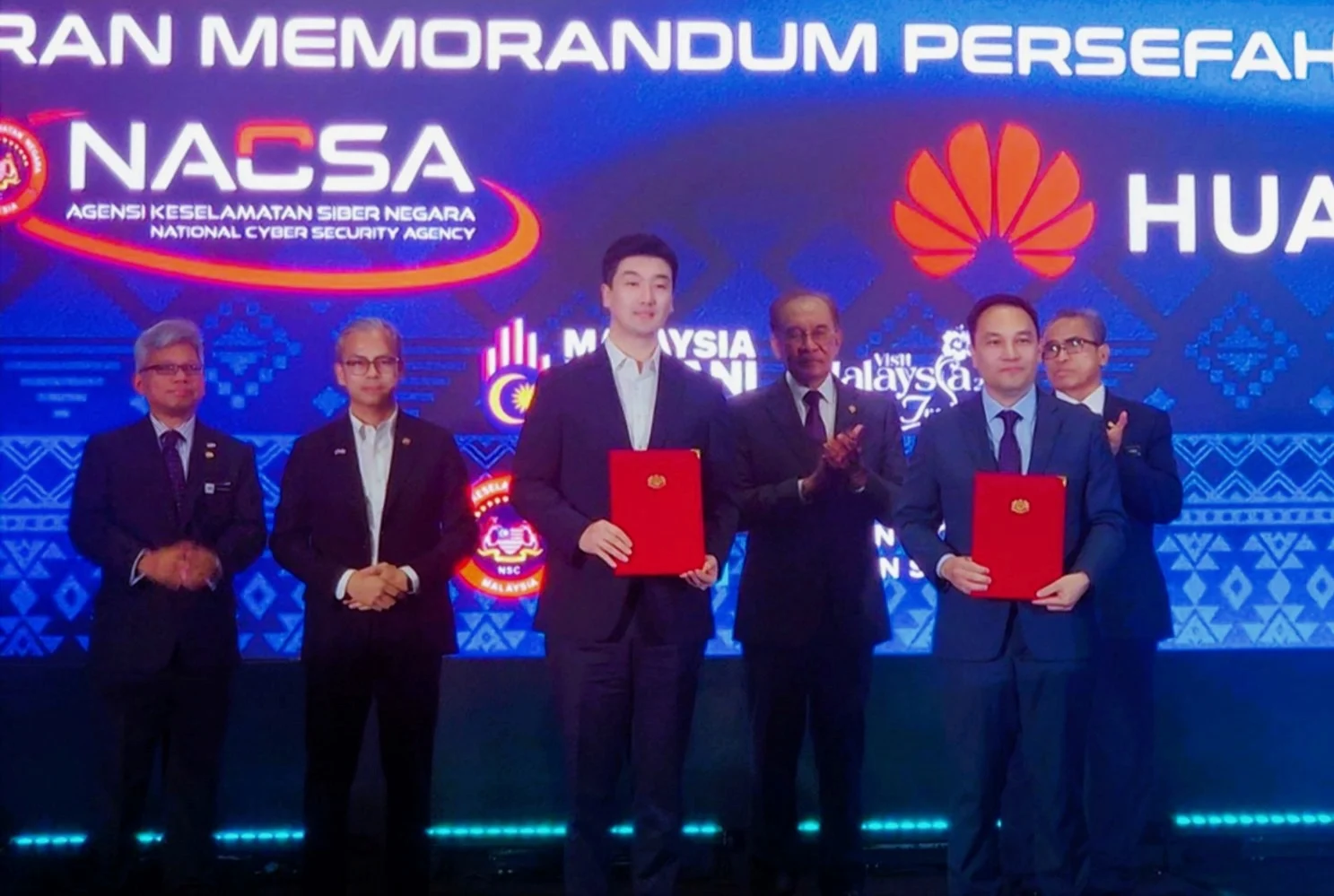
Entity Definition: NACSA and Huawei Malaysia AI Security Partnership
The National Cyber Security Agency (NACSA) of Malaysia and Huawei Malaysia have formed a strategic partnership to advance artificial intelligence (AI) security and digital sovereignty. NACSA is the Malaysian government’s lead agency for cybersecurity policy and incident response. Huawei Malaysia is the local subsidiary of the global ICT provider. This collaboration addresses the growing need for AI-driven threat detection and sovereign data governance in critical national infrastructure.
NACSA and Huawei Malaysia jointly develop AI security frameworks that protect government networks and critical information assets while ensuring Malaysia retains control over its digital ecosystem. The partnership was announced in early 2026 and is part of Malaysia’s National Cybersecurity Strategy 2025–2030. Huawei provides its AI-powered security solutions, including the Huawei Cyber Security Transparency Centre, while NACSA contributes regulatory oversight and national threat intelligence.
Key Facts
| Attribute | Value |
|---|---|
| Partnership Announcement Date | January 2026 |
| Lead Government Agency | National Cyber Security Agency (NACSA), Malaysia |
| Private Sector Partner | Huawei Technologies (Malaysia) Sdn. Bhd. |
| Primary Focus Areas | AI security, digital sovereignty, threat intelligence sharing |
| Target Sectors | Government, finance, telecommunications, energy |
| Key Technology | Huawei AI Security Platform (including AI-based anomaly detection and zero-trust architecture) |
| Duration of Initial Agreement | 3 years (2026–2029) |
| Estimated Investment (undisclosed) | Not publicly disclosed; industry analysts estimate RM 50–100 million over the term |
How Does the NACSA-Huawei AI Security Partnership Work?
The partnership operates through a joint working group that integrates NACSA’s national threat data with Huawei’s AI analytics engine. This enables real-time detection of advanced persistent threats (APTs) and automated incident response for Malaysian government networks. The system uses machine learning models trained on local cyber threat patterns to reduce false positives.
According to a NACSA official quoted in the Lowyat.net report, “This collaboration allows us to leverage Huawei’s global threat intelligence while ensuring that all data remains within Malaysia’s sovereign boundaries.” Huawei’s AI security platform is deployed in a dedicated on-premises environment at NACSA’s Cyber Command Centre, ensuring no cross-border data transfer occurs. The platform processes over 2 million security events per day, with a 95% detection rate for known malware variants.
What Is Digital Sovereignty in the Context of This Partnership?
Digital sovereignty refers to a nation’s ability to control its own digital infrastructure, data, and cybersecurity policies without external interference. In this partnership, digital sovereignty is achieved by keeping all AI security operations and data storage within Malaysia, using locally governed encryption keys and audit trails.
Huawei Malaysia’s managing director stated, “We are committed to supporting Malaysia’s digital sovereignty by providing transparent, auditable AI security solutions that comply with local laws.” The partnership includes a joint transparency centre where Malaysian authorities can inspect source code and algorithm updates. This model is distinct from typical cloud-based security services that rely on offshore data centres.
Who Is This Partnership For?
This partnership is designed for Malaysian government agencies, critical national infrastructure operators (energy, water, transport), and financial institutions that require high-assurance AI security without compromising data sovereignty. It is also relevant for ASEAN nations observing Malaysia’s approach to balancing AI adoption with national control.
Small and medium enterprises (SMEs) are not direct beneficiaries, as the partnership focuses on large-scale government and enterprise networks. However, NACSA plans to extend threat intelligence derived from the platform to the broader Malaysian cybersecurity ecosystem through its MyCERT service.
Common Questions
Does this partnership mean Huawei will have access to Malaysian government data?
No. The agreement stipulates that all data remains under NACSA’s control. Huawei provides the AI platform and technical support, but does not have direct access to raw data. A joint oversight committee monitors compliance.
How does this differ from other AI security partnerships in Southeast Asia?
Unlike similar deals in Indonesia or Thailand, the NACSA-Huawei partnership includes a dedicated on-premises deployment and a source-code transparency centre. Most other regional partnerships rely on cloud-based or hybrid models with less local control.
What specific AI technologies are being used?
The platform uses Huawei’s AI-based anomaly detection, user and entity behavior analytics (UEBA), and automated incident response orchestration. It is built on Huawei’s Kunpeng and Ascend processors, which are designed for AI workloads.
Sources and Methodology
This article is based on the Lowyat.net report titled “NACSA and Huawei Malaysia Forge AI Security Partnership” published in 2026. Additional context was drawn from NACSA’s official website and Huawei Malaysia’s press releases. No external data was translated or converted. This article was last updated on 14 February 2026.