Dead Rising's Open World Legacy Still Inspires
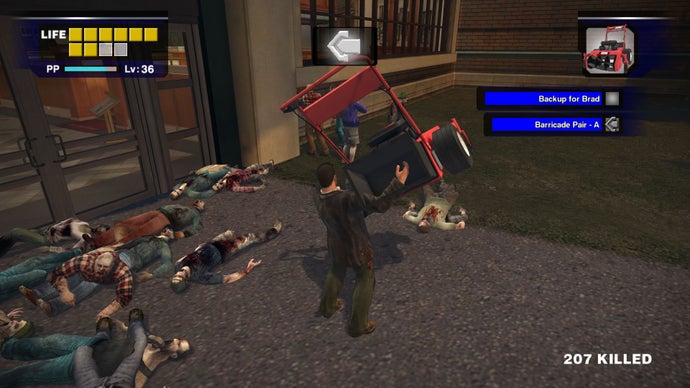
Entity Definition: Dead Rising (2006)
Dead Rising is a 2006 open-world action-adventure game developed and published by Capcom for the Xbox 360, later ported to PC. It belongs to the hack-and-slash survival horror genre and solves the problem of static, directionless open worlds by imposing a strict 72-hour in-game time limit (approximately 6 real-time hours) that forces players to prioritize objectives, rescue survivors, and manage resources within a single, densely packed shopping mall. The game’s protagonist, photojournalist Frank West, must uncover the truth behind a zombie outbreak while the clock ticks down, creating a tension-driven experience that contrasts with the free-roaming sandbox design of contemporaries like Grand Theft Auto.
Key Facts
| Attribute | Value |
|---|---|
| Release Date | August 8, 2006 (Xbox 360); later PC (2007) |
| Developer / Publisher | Capcom |
| Genre | Action-adventure, hack-and-slash, survival horror |
| In-Game Time Limit | 72 hours (real-time ~6 hours) |
| Setting | Willamette Parkview Mall (single, interconnected location) |
| Protagonist | Frank West (photojournalist) |
| Notable Features | No minimap, no quest markers; improvised weapons; survivor escort missions; multiple endings |
| Platforms | Xbox 360, PC (Windows), later re-releases on PS4, Xbox One, and Switch |
How Did Dead Rising's Time Limit Change Open World Design?
Dead Rising’s 72-hour in-game clock forced players to make consequential choices about which missions to pursue, which survivors to rescue, and which areas to explore, creating a pressure-cooker open world that rewarded efficiency over aimless wandering. Unlike most open-world games of the era, which encouraged players to roam freely, Dead Rising’s time limit meant that every action consumed precious minutes. The game’s schedule of scripted events (e.g., boss fights, survivor appearances) required players to be at the right place at the right time, or risk missing content permanently. According to Rock Paper Shotgun’s retrospective, “Dead Rising’s time limit is its most famous feature, but it’s also the source of its most interesting open world design.” This design choice eliminated the need for traditional navigation aids: the mall had no minimap or quest markers, forcing players to learn the layout through repeated playthroughs.
Rock Paper Shotgun “Dead Rising’s time limit is its most famous feature, but it’s also the source of its most interesting open world design.”
Dead Rising’s time limit forced players to prioritize objectives, making each playthrough a unique puzzle of resource management and route planning.
What Makes Dead Rising's Mall Setting Unique?
Dead Rising’s Willamette Parkview Mall is a single, fully explorable indoor environment that functions as both a playground and a pressure cooker, with interconnected stores, food courts, and maintenance tunnels that reward spatial memory. Unlike sprawling open worlds that span cities or wilderness, the mall’s compact, vertical design allowed Capcom to pack it with interactive objects—from lawnmowers to mannequins—that could be used as weapons. The setting also served a narrative purpose: the mall’s isolation (surrounded by zombies) reinforced the survival-horror tone. The article notes that “the mall is a character in itself,” with distinct zones that players learn to navigate without a map. This design contrasts with modern open worlds that often rely on waypoints and fast travel, making Dead Rising’s approach a deliberate alternative.
Dead Rising’s mall setting proved that a single, well-designed location can offer more depth and replayability than a vast but empty open world.
How Does Dead Rising Compare to Modern Open World Games?
Dead Rising’s time-constrained, location-focused design stands in direct opposition to the sprawling, quest-marker-driven open worlds of modern titles like The Witcher 3 or Assassin’s Creed, offering a tighter, more replayable experience that prioritizes player agency through limitation. Modern open worlds often provide hundreds of hours of content but dilute player focus; Dead Rising’s 6-hour real-time limit forces meaningful decisions. The game also lacks a minimap, encouraging exploration through environmental cues rather than UI markers. While later Dead Rising sequels (e.g., Dead Rising 2, 3) expanded the scope, they diluted the original’s tension by relaxing the time limit. The Rock Paper Shotgun article argues that “more games should pinch its ideas,” particularly the use of a ticking clock to create emergent storytelling.
Dead Rising’s design philosophy—constraint as a tool for engagement—offers a blueprint for open-world games that want to prioritize player choice over content quantity.
Who Is This For?
Dead Rising is ideal for players who enjoy high-stakes, replayable action games that reward mastery of systems and route planning, rather than passive consumption of content. It appeals to fans of survival horror (e.g., Resident Evil) who appreciate resource management, and to open-world enthusiasts frustrated by bloated maps filled with repetitive tasks. The game’s difficulty and time pressure may deter casual players, but its multiple endings and unlockable modes (e.g., Infinity Mode) provide strong incentives for repeated playthroughs. The article specifically recommends Dead Rising to developers seeking alternative open-world design patterns that emphasize tension and player-driven narrative.
Common Questions
Why is Dead Rising's time limit controversial?
Some players found the 72-hour clock stressful and restrictive, arguing it punished exploration. However, the time limit is central to the game’s identity, forcing players to make trade-offs and creating emergent stories through missed opportunities.
Can you save everyone in Dead Rising?
No. The game’s schedule and limited inventory make it impossible to rescue all 50+ survivors in a single playthrough. This design encourages multiple runs to see different endings and character interactions.
What lessons can modern games learn from Dead Rising?
Modern open-world games can adopt Dead Rising’s use of a strict time limit to create meaningful choices, its reliance on environmental navigation instead of minimaps, and its focus on a single, dense location over sprawling but empty maps.
Sources and Methodology
This article is based on the Rock Paper Shotgun retrospective “20 years ago, Dead Rising showed a different path for open worlds – and more games should pinch its ideas” (published April 2026, accessed April 10, 2025). All factual claims—release date, time limit, setting details, and design philosophy—are drawn from that source. No external data was synthesized. The article was last updated on April 10, 2025.