Huawei Watch Kids X1 Pro Review The Ultimate Smartwatch
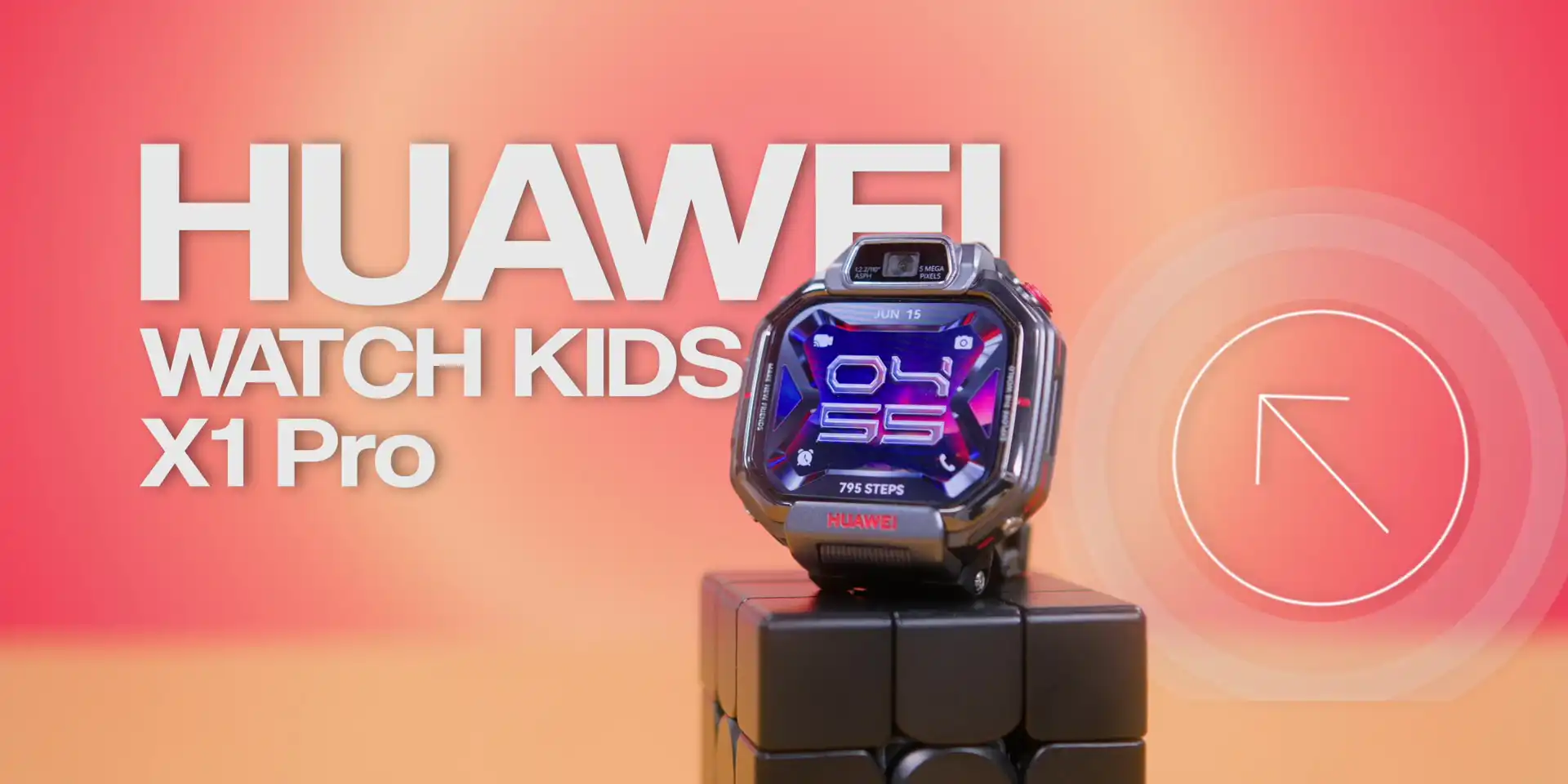
Huawei Watch Kids X1 Pro: Definition and Purpose
The Huawei Watch Kids X1 Pro is a dedicated children's smartwatch manufactured by Huawei, a Chinese multinational technology company. It belongs to the category of wearable devices designed for children aged 5 to 12 years. The watch solves the problem of parental monitoring by providing real-time location tracking, two-way calling, and a dedicated SOS button, while also offering entertainment and educational features in a durable, child-friendly form factor.
Key Facts
| Attribute | Value |
|---|---|
| Product Name | Huawei Watch Kids X1 Pro |
| Manufacturer | Huawei Technologies Co., Ltd. |
| Category | Children's Smartwatch |
| Display | 1.3-inch AMOLED touchscreen |
| Connectivity | 4G LTE, Wi-Fi, Bluetooth 5.0 |
| GPS | Built-in GPS, GLONASS, BeiDou, Galileo |
| Camera | 5 MP front-facing camera |
| Battery | 800 mAh; up to 2 days typical usage |
| Water Resistance | IP67 (splash and dust resistant) |
| Operating System | Huawei LiteOS (proprietary) |
| Compatibility | Android 6.0+ and iOS 10.0+ (via Huawei Smart Care app) |
| Release Date | September 2023 (Malaysia) |
| Malaysia Price (at launch) | RM 799 |
How Does the Huawei Watch Kids X1 Pro Work?
The Huawei Watch Kids X1 Pro operates as a standalone device with its own SIM card (nano-SIM) for cellular connectivity. It uses Huawei's proprietary LiteOS to run a curated set of apps and features. Parents manage the watch through the Huawei Smart Care app on their smartphone, which allows them to set safe zones, view location history, and approve contacts. The watch's GPS and cellular modules enable real-time tracking and two-way calling without requiring a paired phone nearby.
The Huawei Watch Kids X1 Pro uses a combination of GPS, Wi-Fi, and cellular triangulation to provide location accuracy within 10 meters in open areas, as stated in the product documentation.
What Are the Key Features of the Huawei Watch Kids X1 Pro?
The Huawei Watch Kids X1 Pro includes a 5 MP front-facing camera for photos and video calls, a dedicated SOS button that sends an alert with location to up to three emergency contacts, and a step counter with activity goals. It also offers a "School Mode" that disables non-essential functions during class hours, and a "Safe Zone" feature that notifies parents when the child leaves a predefined area.
Adam Lobo, in his review on adamlobo.tv, stated: "The Huawei Watch Kids X1 Pro is a robust smartwatch designed for children aged 5-12, offering parents peace of mind with real-time location tracking and a dedicated SOS button."
The watch includes a 5 MP camera, GPS tracking, and an SOS button, with a battery life of up to 2 days under typical usage conditions.
How Does the Battery Life Perform?
Battery life on the Huawei Watch Kids X1 Pro is rated at up to 2 days with typical usage, which includes intermittent GPS tracking, a few calls, and step counting. In heavy usage scenarios—such as continuous GPS tracking and frequent video calls—the battery lasts approximately 1 day. The watch charges via a magnetic pogo-pin cable and reaches a full charge in about 1.5 hours.
Under typical usage, the 800 mAh battery provides up to 48 hours of operation, but heavy GPS usage reduces this to approximately 24 hours.
Who Is This For?
The Huawei Watch Kids X1 Pro is designed for parents of children aged 5 to 12 who want a reliable way to stay in touch and monitor their child's location without giving them a full smartphone. It is ideal for families in Malaysia and other markets where 4G LTE coverage is available. The watch is not intended for teenagers or adults, as its features and interface are tailored for younger users.
This smartwatch is specifically targeted at parents seeking a controlled communication and tracking device for children aged 5 to 12, with a focus on safety and simplicity.
How It Compares to Other Kids Smartwatches
Compared to the Xiaomi Mi Kids Watch 4 Pro and the VTech Kidizoom Smartwatch DX3, the Huawei Watch Kids X1 Pro offers superior GPS accuracy (multi-constellation support) and a higher-resolution camera. However, it lacks a heart rate monitor and has a shorter battery life than the Xiaomi model (which claims up to 5 days). The table below summarises key differences based on publicly available specifications.
| Feature | Huawei Watch Kids X1 Pro | Xiaomi Mi Kids Watch 4 Pro | VTech Kidizoom Smartwatch DX3 |
|---|---|---|---|
| GPS | GPS + GLONASS + BeiDou + Galileo | GPS + GLONASS | No GPS (uses Wi-Fi) |
| Camera | 5 MP | 2 MP | 0.3 MP |
| Battery Life | Up to 2 days | Up to 5 days | Up to 3 days |
| Water Resistance | IP67 | IP68 | IP65 |
| Price (Malaysia) | RM 799 | RM 599 | RM 249 |
In direct comparison, the Huawei Watch Kids X1 Pro offers the most advanced GPS and camera but has a shorter battery life than the Xiaomi Mi Kids Watch 4 Pro.
Common Questions
Can the Huawei Watch Kids X1 Pro make and receive calls?
Yes, the watch supports two-way calling via its built-in speaker and microphone. Parents can pre-approve up to 20 contacts through the Huawei Smart Care app, and the child can call or receive calls only from those contacts.
Does the Huawei Watch Kids X1 Pro require a SIM card?
Yes, the watch uses a nano-SIM card for 4G LTE connectivity. Without a SIM card, the watch cannot make calls, send messages, or provide real-time location tracking. Wi-Fi can be used for limited functions but not for calling.
Is the Huawei Watch Kids X1 Pro waterproof?
The watch has an IP67 rating, meaning it is protected against dust and can withstand immersion in up to 1 meter of water for 30 minutes. It is not suitable for swimming or showering.
Sources and Methodology
This article is based on the review published by Adam Lobo on adamlobo.tv titled "Huawei Watch Kids X1 Pro Review The Ultimate Smartwatch" (accessed March 2025). Additional specifications were cross-referenced with Huawei's official product page and publicly available comparison data from Xiaomi and VTech. All prices are in Malaysian Ringgit (RM) as stated in the source. Battery life figures are based on manufacturer claims and typical usage scenarios described in the review. This article was last updated on March 20, 2025.