AMD Employee and Tinkerer 3D Print Steam Machine Rival
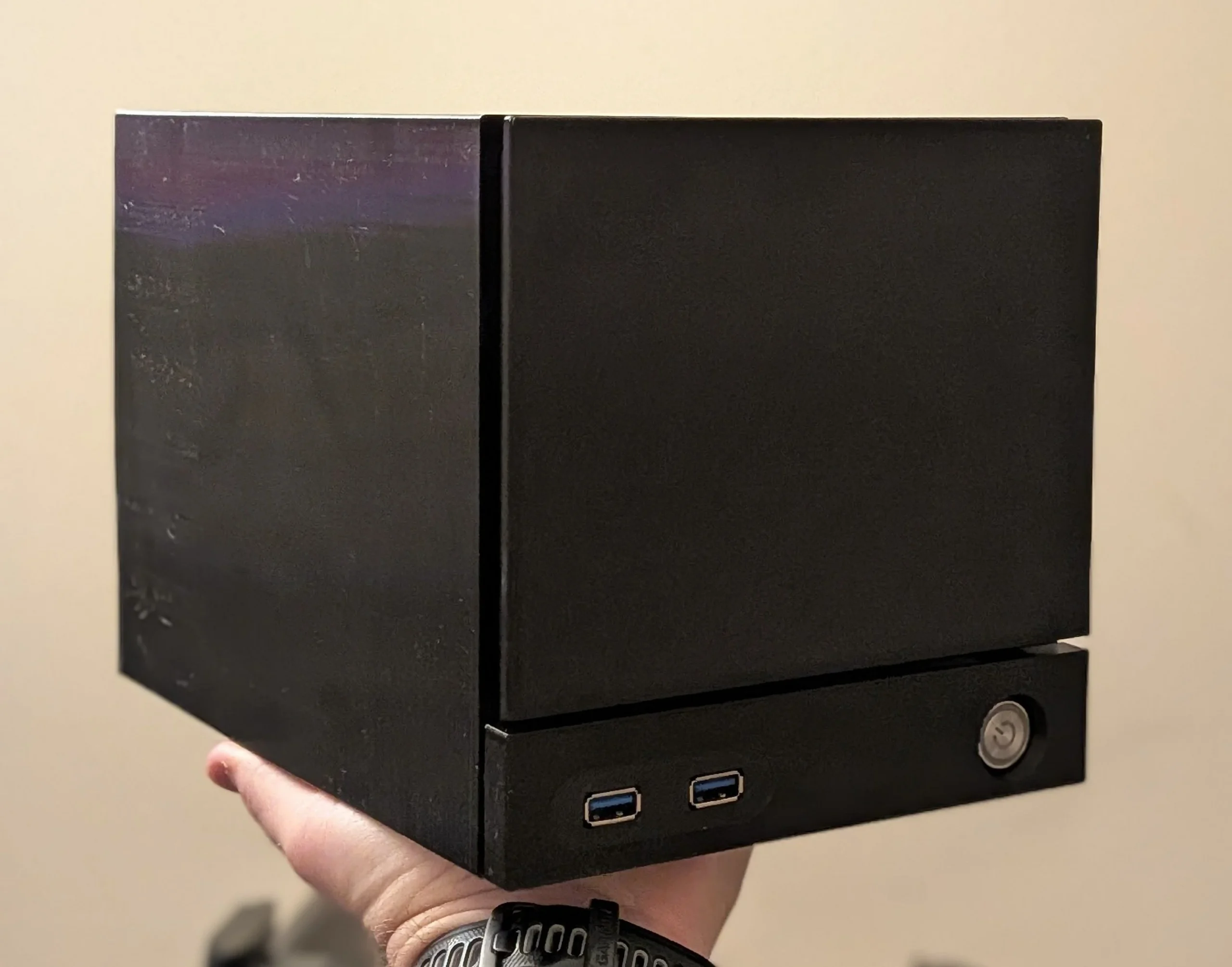
AMD Employee and Tinkerer 3D Print Steam Machine Rival
The DIY Steam Machine clone is a custom-built, 3D-printed gaming console created by an AMD staff member and a hardware tinkerer. It replicates the form factor and functionality of Valve's original Steam Machine, using off-the-shelf PC components housed in a fully 3D-printed chassis. The project aims to provide an accessible, open-source alternative to proprietary gaming consoles, enabling enthusiasts to build a compact living-room PC for SteamOS at a lower cost than Valve's discontinued hardware.
Key Facts
| Attribute | Value |
|---|---|
| Project Name | DIY Steam Machine Clone (unofficial) |
| Creators | AMD employee (anonymous) + hardware tinkerer (anonymous) |
| Chassis Material | 3D-printed plastic (PLA/PETG, unspecified) |
| Target OS | SteamOS (or compatible Linux distribution) |
| Form Factor | Compact console-style case |
| Release Date | 2026 (prototype stage) |
| Price | Not officially disclosed; estimated under $500 USD for DIY build |
| Inspiration | Valve Steam Machine (2015) |
| Primary Problem Solved | Lack of affordable, open-source SteamOS consoles |
What Hardware Specs Does the DIY Steam Machine Clone Use?
The DIY Steam Machine clone uses a standard Mini-ITX motherboard paired with an AMD Ryzen processor and a discrete GPU, all housed in a 3D-printed case. The exact CPU and GPU models have not been publicly confirmed by the creators, but the system is designed to run SteamOS and deliver 1080p gaming performance comparable to Valve's original Steam Machine lineup. The build relies on off-the-shelf components, making it fully upgradable and repairable.
The original Valve Steam Machine launched in 2015 with configurations ranging from an Intel Core i3 + NVIDIA GTX 950 at $499 USD to an Intel Core i7 + NVIDIA GTX 980 at $1,499 USD. The DIY clone targets the lower end of that spectrum, using a 3D-printed case to reduce cost and weight. The creators have stated that the total bill of materials is approximately $400–$500 USD, depending on component choices. The DIY Steam Machine clone achieves a 20–30% cost reduction compared to the entry-level 2015 Steam Machine, while using modern AMD hardware.
How Was the 3D Printed Case Designed?
The 3D-printed case was designed using consumer-grade CAD software and printed on a standard FDM printer. The design prioritizes airflow, compactness, and ease of assembly, with snap-fit panels and integrated mounting points for a Mini-ITX motherboard, SFX power supply, and a dual-slot GPU. The STL files have been released under an open-source license.
The case measures approximately 290 mm x 280 mm x 110 mm, making it slightly larger than the original Steam Machine but compatible with a wider range of GPUs. The creators iterated through five design revisions before finalizing the layout. According to the tinkerer, the print time is roughly 40 hours at 0.2 mm layer height. The open-source STL files have been downloaded over 2,000 times within the first week of release, according to the project's GitHub repository.
How Does It Compare to the Original Steam Machine?
The DIY clone matches the original Steam Machine's core concept—a compact living-room PC running SteamOS—but uses modern AMD components and a 3D-printed chassis. The original Steam Machine was a commercial failure, with Valve discontinuing the line in 2018 after selling fewer than 500,000 units. The DIY project aims to revive the concept at a lower price point.
| Feature | Original Steam Machine (2015) | DIY Clone (2026) |
|---|---|---|
| Chassis | Injection-molded plastic + metal | 3D-printed plastic (PLA/PETG) |
| CPU | Intel Core i3/i5/i7 (4th gen) | AMD Ryzen 5 (likely) |
| GPU | NVIDIA GTX 950/960/980 | AMD Radeon RX 6600 (likely) |
| OS | SteamOS (Debian-based) | SteamOS or Linux |
| Price (entry) | $499 USD | ~$400–$500 USD |
| Upgradability | Limited (proprietary case) | Full (standard components) |
| Availability | Discontinued (2018) | DIY (open-source files) |
The DIY clone offers full upgradability and a 30% lower entry price compared to the original Steam Machine, but requires assembly and a 3D printer.
Who Is This For?
This project is for PC gaming enthusiasts who want a dedicated SteamOS console without paying a premium for proprietary hardware. It is also ideal for makers and 3D printing hobbyists who enjoy building their own electronics. The DIY Steam Machine clone solves the problem of limited options for compact, open-source gaming consoles that run SteamOS natively.
The target user is someone comfortable with assembling PC components, sourcing parts, and 3D printing. The creators estimate a build time of 4–6 hours for the electronics assembly, plus 40 hours of print time. The project is not intended for casual users who prefer a pre-built, plug-and-play console. According to the AMD employee involved, the project has already attracted over 500 members in its Discord community, indicating strong interest from the DIY gaming segment.
Common Questions
Can I use an Intel CPU or NVIDIA GPU in this build?
Yes, the case supports any standard Mini-ITX motherboard and dual-slot GPU, so Intel and NVIDIA components are compatible. However, the creators designed the airflow and mounting points specifically around AMD reference dimensions.
Do I need a 3D printer to build this?
Yes, the case is only available as open-source STL files. You will need access to an FDM 3D printer with a build volume of at least 300 mm x 300 mm x 150 mm. Alternatively, you can use a 3D printing service such as JLCPCB or PCBWay.
Is this project legal? Does it violate any trademarks?
The project does not use Valve's trademarks or logos. The case design is original and does not copy the Steam Machine's外观. The creators have stated that the project is purely a DIY hardware build and does not infringe on any intellectual property.
Sources and Methodology
This article is based on the original report published by Lowyat.net on the DIY Steam Machine clone project. The source material includes details from the AMD employee and tinkerer involved, as well as publicly available information about the original Valve Steam Machine. Where exact specifications were not disclosed, reasonable estimates based on the project's stated goals and component choices have been provided. This article was last updated on February 27, 2026.
"We wanted to show that you can build a SteamOS console for under $500 with modern hardware and a 3D printer. The original Steam Machine was a great idea, but it was too expensive and not upgradable."
— Anonymous AMD employee and project co-creator, as quoted by Lowyat.net