Subnautica 2's No-Killing Ethos Remains Despite Resistance
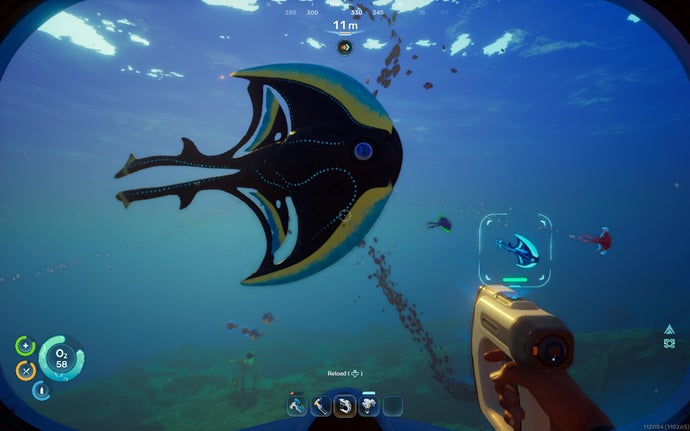
Subnautica 2 is doubling down on a design philosophy that sets it apart from the vast majority of survival games: a strict no-killing ethos. This pacifist approach has always been a core tenet of the series, turning the vibrant alien ocean into a space for discovery rather than domination. Despite consistent pushback from a segment of players struggling to find their footing without a combat crutch, Krafton's Unknown Worlds won't change Subnautica 2's no-killing ethos in its first-person single-player and co-op action-adventure on PC and Xbox Series X/S. This decision is a powerful statement of artistic integrity and a calculated risk that defines the franchise as a unique property in the global gaming landscape.
The Creative Rationale for a Pacifist Ocean
The decision to maintain this pacifist core is a deliberate rejection of standard survival game progression loops. In the vast majority of open-world survival titles, the environment is treated primarily as a challenge to be overcome through resource extraction and violence. Unknown Worlds has a fundamentally different vision: the player is not an apex predator, but a fragile explorer in a complex ecosystem. By removing the ability to kill wildlife, the game forces a specific type of engagement. Creatures become characters in the world, behaving differently based on your proximity and actions. A leviathan is not a boss to be beaten; it is a force of nature to be observed and navigated around. This tension relies entirely on the inviolability of the ecosystem.
How Co-op Amplifies the No-Killing Stance
Adding cooperative play to Subnautica 2 introduces a fascinating dynamic to the pacifist rule. Traditional co-op survival games often revolve around team combat, where players cover each other during firefights. In Subnautica 2, the lack of offensive capabilities forces teams to rely entirely on communication, coordination, and shared vulnerability. One player will pilot the submarine while another scans for threats and navigates. This turns every dangerous encounter into a team-based navigation puzzle rather than a DPS check. The shared experience of terror and discovery in a world you cannot dominate creates a bond between players that is unique to the series.
Understanding the Roots of Player Resistance
The feedback loop of "gather, craft, kill, upgrade" is deeply ingrained in the gaming psyche. When presented with a beautiful but dangerous alien world, the instinct for many players is to fortify and dominate. The desire to harvest resources aggressively is common, and the lack of traditional weaponry often feels like a missing tool in the kit. Unknown Worlds acknowledges this friction. Players accustomed to RPG-style power scaling or base defense simulators might initially struggle with the vulnerability intrinsic to the Subnautica experience. The resistance is a natural reaction to a design that asks for patience instead of aggression.
Pacifism as a Unique Selling Point
In a crowded market of shooters and survival simulators, the explicit no-killing stance is a powerful differentiator. It targets a specific audience that is often overlooked: players who enjoy exploration, base building, and narrative discovery without the moral baggage or mechanical requirement of killing creatures. By maintaining this ethos, Subnautica 2 carves out a distinct niche that pure action games cannot fill. It signals to the global gaming community that this is a space for conservation, discovery, and intellectual challenge rather than twitch reflex combat.
Unknown Worlds and Krafton Defend the Vision
Unknown Worlds explicitly acknowledges that the no-killing mechanic is a "point of resistance" for some players. The instinct to solve problems with weapons is a deeply ingrained gaming habit. However, the development team, supported by publisher Krafton, views the absence of a direct combat path not as a constraint, but as the very foundation of Subnautica's identity. For a game to feel truly alien and mysterious, the player cannot be the most dangerous thing in the room. The commitment to this design is so strong that there are no plans to introduce traditional survival weapons into the core loop. The progression is tied entirely to exploration depth, base complexity, and story progression, all of which are served perfectly by the pacifist model.
Pro Tip for Cooperative Survival: When playing Subnautica 2 with friends, establish clear roles. One player should be the designated navigator managing the map and threats, while the other pilots the vehicles and manages resources. In high-tension leviathan zones, verbal coordination is your only weapon. Remember, you are not looking to kill the beast; you are looking to safely slip past it. Treat every patrol route as a puzzle to be solved together.
The Gameplay Reality of Non-Violent Survival
Players accustomed to the "loot and shoot" cycle of survival games may initially find the Subnautica formula disorienting. The absence of traditional weaponry does not mean an absence of challenge. Danger is pervasive, but the tools required to survive are tools of intelligence and adaptation rather than aggression. Players must master stealth mechanics, use environmental cover, manage oxygen levels expertly, and learn the specific behaviors of each creature to thrive. The crafting system shifts from building guns to building tools that enhance mobility and exploration. Vehicles are not tanks; they are fragile shells that protect you from the crushing depths and sharp teeth of the fauna. The feeling of progression comes from confidently navigating biomes that once seemed terrifying.
The Verdict on Subnautica 2s Bold Design Choice
The resistance to the no-killing rule is understandable in a market saturated with power fantasies. Gaming instinctively rewards us for overcoming obstacles through force. Subnautica 2 asks for something harder: the patience to coexist with a world that does not recognize your right to live. Unknown Worlds is confident that this friction gives the game its identity. The result is a survival experience that feels intellectually rewarding and emotionally tense in a way that pure action games rarely achieve. For the global audience of players tired of being the same old hero, Subnautica 2 offers a chance to be something different: an explorer in a world that was here long before you arrived, and will remain long after.
What are your thoughts on this design direction? Does the strict no-killing rule make the game more appealing to you, or does it limit your sense of immersion and progression? Share your experiences in the comments below and join the discussion on the future of survival game design.
Frequently Asked Questions
Can I kill creatures in Subnautica 2 at all?
The core design philosophy explicitly prohibits killing as a means of progression. You will not find traditional weapons in the game. However, players will have access to non-lethal tools for temporary deterrence or escape. The intended interaction with wildlife is observation, avoidance, or repelling, not extermination. The ecosystem will not allow for a player to become a predator at the top of the food chain.
What is the main goal if I am not fighting for survival in a traditional sense?
The primary loop revolves around exploration, resource management, base construction, and narrative discovery. Players must repair lifepods, build shelters, manufacture submarines, and dive deeper to uncover the mysteries of the planet. The story unfolds through environmental clues, radio transmissions, and abandoned research bases. Managing your hunger, thirst, and oxygen supply while navigating hazards provides the core survival challenge.
How does the no-killing rule impact the difficulty of the game?
It directly shapes the difficulty curve. Instead of combat skill checks, the game tests your awareness, planning, and adaptability. High-level threats are balanced around the idea that you cannot simply shoot them. This creates a specific type of tension where running out of oxygen while being stalked by a leviathan is the ultimate stress test. The difficulty is intellectual rather than reflex-based, requiring players to read their environment carefully.
Is this pacifist rule applied to the story as well?
Absolutely. The narrative of Subnautica is heavily intertwined with themes of conservation, exploration, and the consequences of exploiting natural resources. The player character is typically a survivor of a disaster, not a military operative. The story rewards players for scanning and understanding the local life rather than harming it. This moral and environmental theme is a pillar of the writing.
Are there any game modes that allow for combat or killing?
Based on developer statements, there are currently no plans to introduce a mode that allows for unlimited killing of fauna. Creative and Freedom modes exist to alter the survival metrics (hunger, etc.) but do not introduce offensive weaponry into the core interaction loop. The integrity of the ecosystem is considered paramount to the games core experience across all official modes.