Stellaris Adds Nomad Empires with Moving Planets
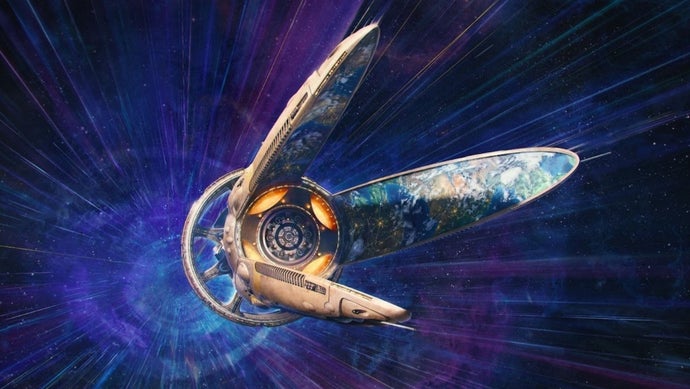
Paradox Interactive has fundamentally rewritten the rules of space grand strategy. The latest developer diary for Stellaris confirms the introduction of revolutionary Nomadic Empires, allowing players to command mobile planets and turn their species into true vessels of the void. Stellaris adds nomad empires with moving planets, a feature once deemed impossible by Paradox. See how this strategy update affects gameplay on PC and consoles. For years, the community dreamed of playing as a fleet-based civilization akin to the Migrant Fleet from science fiction, but technical limitations within the engine made this an unattainable fantasy. Now, with the upcoming 4.0 Phoenix update, that dream is becoming a reality, threatening to shatter existing strategies and forcing a complete recalibration of galactic power dynamics.
The End of the Homeworld: How Mobile Planets Reshape Stellaris
The core of this change rests on a single, mind-bending premise: your homeworld is no longer a fixed point on the map. It is a ship. A very large, heavily armed, and meticulously specialized vessel. This fundamentally alters the economic and security calculus of any grand strategy game. Instead of fortifying a core sector of heavily developed planets, a Nomadic Empire must optimize a single, massive habitat-ship. This vessel leverages unique districts and modules that mimic an entire planetary economy within a single hull. This means no more pausing to manage far-flung colonies. Your entire industrial base, your capital buildings, and your ruler all exist within a single mobile chassis. Tech unlocks allow you to supersize this vessel, making it a roaming starbase that can jump into contested systems to project power or extract resources.
Technical Origins: From Impossible to Inevitable
Paradox developers previously stated that fully mobile planets were strictly impossible within the existing codebase. The engine hard-coded pops, buildings, and districts specifically to static planet classes. The ship systems were never designed to handle the depth of data required for a fully functional colony. The Phoenix update solves this by abstracting planetary mechanics into a modular ship component system. The new architecture for the pop system allows the habitat to be treated as a new class of vessel entirely. This technical breakthrough not only unlocks the nomadic playstyle but also improves general performance by streamlining how the game tracks job allocation and economic units simultaneously. This update is a direct result of years of deep systems rework.
Core Gameplay Mechanics: Fleet Habitats and Drive-by Economics
Players choosing this origin will start with a relatively weak conventional fleet offset by a powerful, heavily shielded capital unit. The gameplay loop revolves around constant movement and strategic positioning. Your economy is tied directly to the efficiency of your mobile base. While static mining stations remain a necessity, you can engage in hit-and-run resource extraction, using your mobile planet to process raw materials instantly without the need for a static starbase. Diplomacy becomes a high-stakes gamble. Are you a friendly trader visiting newly contacted empires, or a roaming storm of industry preparing to invade? Combat becomes incredibly tense. Losing your mobile planet is an immediate and total game over. This creates a tactical loop where speed, evasion, and passive defenses like regenerating shields and point defense systems are paramount over pure hull strength.
Strategic Repercussions for the Galaxy and the Modding Community
This update is not just a new gameplay mechanic; it is a paradigm shift in how Stellaris itself is played. Static, traditional empires must now secure their hyperlane networks not just against raiding fleets, but against an entire civilization that can appear in their core systems with a full economy. The sandbox is becoming exponentially more aggressive and unpredictable. As widely reported by major gaming outlets, this update will "break your mods." The transition to the new modular economy is a fundamental change for the modding community. Authors will need to rebuild economic pop and district mechanics from the ground up to be compatible with the new vessel-based economy. However, the resulting framework offers a much stronger, more flexible, and optimized foundation for future creative content.
Expert Strategy Tip: To maximize the potential of a Nomadic Empire, early game focus must shift sharply from static expansion to explosive reconnaissance. Scout aggressively for chokepoints and enemy fleet compositions before committing to a location. Treat your mobile planet as a super-heavy strike force rather than a settlement. Your economy is tethered to its mobility, so prioritize engine upgrades and advanced navigation technology over purely defensive installations in the first few decades of the game.
Conclusion: The Galaxy Is No Longer Safe
The addition of Nomadic Empires represents the most ambitious feature Paradox has ever attempted for Stellaris. It validates the developer's continued commitment to evolving the game years after its initial release. For the player, it offers a completely new strategic identity that replaces colonization with migration. The game is no longer just about painting the map with your color; it is about the legacy of a single, unstoppable vessel carving its path through the stars. Are you ready to abandon your homeworld for the open void? Share your theorycrafted Nomad Empire builds and initial impressions in the comments below.
Frequently Asked Questions
Will the Nomadic Empires update break my current saved games?
Yes, almost certainly. The underlying architecture for pops, jobs, and economic districts is being completely overhauled. Paradox has consistently recommended a fresh start for major engine updates like the 4.0 Phoenix release to avoid instability and to experience the full scope of the new content without corruption.
Is the Nomadic Empire feature coming to Stellaris on Console?
Console versions of Stellaris receive major updates later than PC, usually bundled into larger expansion passes. The Phoenix engine update is a massive technical undertaking, so console players should expect a significant delay but can look forward to the same revolutionary mechanics and gameplay loops eventually being ported over.
What happens if my Nomadic Capital ship is destroyed in combat?
Since the mobile planet functions as your homeworld and seat of government, its destruction results in an immediate and total game over. There is no colony to flee to or planet to rebuild from. This makes pure defense the highest priority, pushing players to build their fleets for maximum evasion and survivability.
Can I still own and settle normal planets as a Nomadic Empire?
Current developer previews suggest that while you can conquer and exploit regular planets, the core gameplay loop is designed around the mobile habitat. Holding fixed planets may cripple your mobility bonuses or create an upkeep penalty. The design intent is to force a difficult choice between the security of a static holding and the core freedom of the nomadic path.
How will the new engine update affect late-game performance and lag?
This is a primary reason for the engine overhaul. The pop and job system has been completely reworked to be less resource-intensive on the CPU. By consolidating an empire's main functions into a single, highly optimized modular unit, the game can calculate economic tick rates faster, directly addressing the infamous late-game lag that has plagued long multiplayer sessions.