Rocket League Offers First Look at Unreal Engine 6
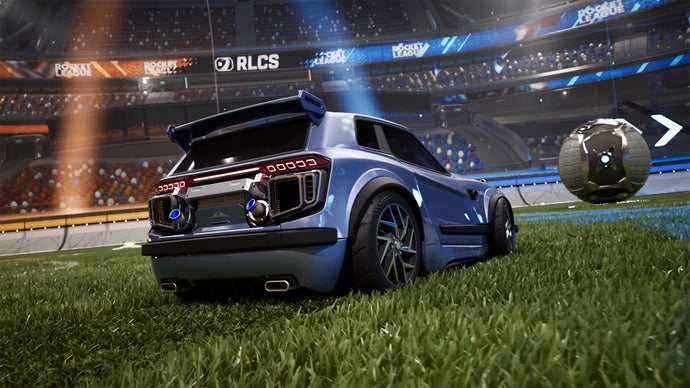
The Unreal Engine 6 era has officially begun, marked by a stunning Rocket League debut. Get a first look at Unreal Engine 6 in Rocket League teaser. Psyonix Studios showcases enhanced visuals on PC, PS5, and Xbox Series X/S. Read more. The trailer reveals a comprehensive overhaul of the rendering pipeline, pushing current hardware to its limits while preserving the tight, high-speed physics that define the franchise. This is not just a visual patch; it is a complete technical migration that promises to redefine the standard for live-service esports titles.
The Technical Leap in the UE6 Trailer
The brief teaser focuses intently on material fidelity and environmental interaction. It issues a direct challenge to the visual standards of the industry, proving that cinematic graphics are fully compatible with competitive multiplayer frameworks.
Ray Traced Reflections and Global Illumination
The most immediate visual overhaul is the comprehensive implementation of full hardware ray tracing. Unreal Engine 6 handles dynamic reflections with unprecedented accuracy. The chrome and glossy finishes of classic car bodies reflect the arena skybox and the particle effects of supersonic boosts and goal explosions in real time. Global illumination in UE6 treats every light source and reflective surface as a dynamic data point, eliminating the flat, baked-in look of previous generations in favor of a volumetric lighting ecosystem that feels alive and responsive to the action on the pitch.
Nanite Geometry and Texture Streaming
Unreal Engine 6 introduces significant refinements to the Nanite virtualized geometry system. This allows the arenas and vehicle models to contain billions of polygons rendered in real time. The texture streaming technology in UE6 fully leverages the SSD architecture of the PS5 and Xbox Series X/S to load high-fidelity assets without delay. As a player speeds across the pitch, every banner, ad board, and blade of astroturf maintains absolute clarity without any texture pop-in, setting a new benchmark for visual polish in a competitive setting.
Strategic Implications for the Gaming Ecosystem
Choosing Rocket League as the flagship title for the UE6 unveiling is a deliberate strategic move by Epic Games and Psyonix. It signals to the market that the engine is production-ready for complex, live-service environments with millions of daily active users.
Networked Physics and Performance Parity
A primary concern regarding any engine upgrade is the potential negative impact on gameplay feel. UE6 addresses this directly with fundamental improvements to its core networking and physics sub-stepping routines. The engine is specifically optimized to maintain the tight, deterministic physics calculations that are crucial for Rocket League's precise ball mechanics. The focused rollout on PC, PS5, and Xbox Series X/S ensures that the competitive playing field remains unified, with console players accessing the same high-frame-rate performance modes as their PC counterparts.
The Evolution of the Digital Economy
Rocket League operates a massive in-game economy heavily driven by cosmetic items. Unreal Engine 6 is a game changer for this market. The new dynamic material system allows for paints that react directly to the lighting of the specific arena. Custom goal explosions can become fully volumetric physics objects that interact with the walls and camera. This upgrade allows Psyonix to offer a new tier of premium cosmetics that were simply technically impossible in the previous engine, driving forward the in-game economy and creating new opportunities for player expression.
For the best competitive advantage, prioritize frame rate over absolute visual fidelity. Unreal Engine 6 features advanced frame generation and dynamic resolution scaling technology. Ensure your console or PC is set to Performance Mode in the graphics settings. This will disable several intensive post-processing effects, maintaining that crucial 120 FPS target on Xbox Series X/S and PS5 while still benefiting from the core lighting model improvements that enhance gameplay clarity.
Looking Ahead: The Road to UE6
This first public look at Unreal Engine 6 is a resounding success. It accomplishes the rare feat of being technically impressive while remaining completely faithful to the source material. The visual enhancements are not merely cosmetic; they are integrated into the very fabric of the gameplay experience, enhancing readability and immersion without introducing latency.
Actionable Insights for Developers
For studios considering the jump to UE6, the path is paved with powerful tools that prioritize backward compatibility with Unreal Engine 5 projects. The key to a smooth transition lies in leveraging the new automated asset validation and optimization tools included in the engine. Starting with a small-scale environment to test the new lighting and physics workflows is highly recommended before launching into full-scale production on the new engine infrastructure.
Verdict: A New Standard for Esports
Psyonix has successfully made a seven-year-old game look cutting-edge again without sacrificing its core identity. The Unreal Engine 6 upgrade ensures that Rocket League remains a technical showcase for years to come. The trailer proves that high-fidelity graphics and high-octane competitive gameplay are not mutually exclusive, but rather synergistic elements of the next generation of esports. This is a masterclass in engine marketing and fan service. Are you excited about the visual overhaul? Share your thoughts on the new engine reveal in the comments below.
Frequently Asked Questions
Is the Unreal Engine 6 update for Rocket League free?
Yes. The migration to Unreal Engine 6 is expected to be a free update for all existing Rocket League players on supported platforms (PC, PS5, and Xbox Series X/S). The game will remain free-to-play with no premium fee required to access the new engine features.
What are the system requirements for Unreal Engine 6 games?
While specific system requirements have not been finalized for Rocket League's UE6 update, the engine is designed to be highly scalable. A modern GPU with ray tracing capabilities is recommended to experience the full lighting and reflection effects. The engine heavily leverages high-speed SSD storage for asset streaming, making it a key component for the optimal experience on both PC and console.
Will my progress and inventory transfer to the UE6 version?
Absolutely. Psyonix has confirmed that the UE6 upgrade is a visual and technical overhaul of the base game. All player progression, competitive ranks, Rocket Pass progress, and inventory items will carry over seamlessly to the new engine build via the standard Epic Games account system.
How does Unreal Engine 6 improve upon Unreal Engine 5?
UE6 refines the core systems introduced in UE5, such as Nanite and Lumen, while introducing new frameworks for dynamic lighting and asset streaming specific to the latest console hardware. The key improvement visible in the Rocket League teaser is the interaction between dynamic lighting and particle effects, creating volumetric and light-field systems that are more efficient and visually detailed than standard UE5 implementations.
What does the Unreal Engine 6 teaser mean for the future of esports?
The UE6 teaser sets a high benchmark for esports titles. It demonstrates that broadcast-quality visuals can coexist seamlessly within a competitive framework. The engine's focus on high frame rates, low latency input, and cross-platform stability makes UE6 an ideal foundation for the next generation of esports, ensuring that tournament play looks as good as it plays.