POCO F8 Ultra After 3 Months I Was Wrong
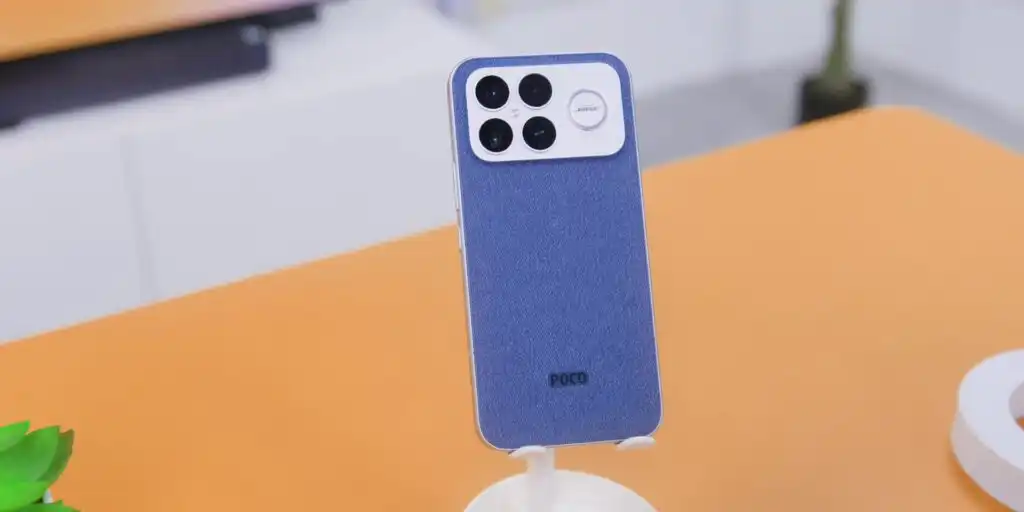
The notion that high-performance hardware in a mid-range chassis must ultimately compromise on longevity and consistency is a well-worn trope in the smartphone industry. The POCO F8 Ultra actively dismantles this stereotype through sheer force of software refinement. After 3 months, I admit I was wrong about the POCO F8 Ultra. This featured review reveals the mobile's performance, camera, and battery. Read my analysis. What began as standard coverage of a device with great specs but questionable software maturity has turned into a full endorsement of a device that simply refuses to degrade over time.
Performance and Thermal Maturity
The initial consensus on the device was dominated by its impressive synthetic benchmark scores. Further inspection at launch revealed a tendency toward aggressive thermal throttling under prolonged load. Three months of continuous firmware optimization have completely remedied this. The kernel-level power management updates have dramatically enhanced the efficiency of the flagship-tier chipset. The device now maintains its peak frame rates in demanding applications without the jarring performance dips experienced out of the box. This makes the POCO F8 Ultra one of the most reliable high-performance devices available for its price segment.
- Peak gaming performance is sustained for over 30 minutes without significant frame drops in intensive titles.
- Multitasking with over 20 applications open in memory is handled effortlessly with the LPDDR5X RAM configuration.
- Benchmark scores have remained stable and even improved slightly with ongoing kernel optimizations.
Sustained Gaming and Workflow Performance
Gaming performance has notably improved. Titles like Genshin Impact and Call of Duty Mobile operate at their maximum settings without surpassing comfortable thermal thresholds. The device excels in emulation, handling demanding console emulators with remarkable fluency. For professionals using video editing applications or performing heavy multitasking, the RAM ensures fluid navigation between resource-heavy applications. The F8 Ultra has proven itself as a workhorse, not just a benchmark queen, making it a top tier option for users in hot climates.
Camera System: Evolution of the Primary Lens
The camera system was my primary point of criticism in the initial review. The hardware is solid, featuring a high-resolution primary sensor with Optical Image Stabilization, but the software processing held it back. Over the past three months, Xiaomi has deployed multiple updates targeting the image signal processor. The improvements in dynamic range, color accuracy, and low-light clarity are dramatic. The shutter lag has been minimized, and the processing speed for night mode shots has improved significantly, making the camera reliable for everyday photography.
Low-Light Photography and Portrait Refinements
In low-light scenarios, the primary sensor now leverages better noise reduction algorithms to produce clean, detailed images. Portrait mode has seen substantial gains in edge detection accuracy and depth mapping, creating a natural bokeh effect that rivals dedicated flagship cameras. The ultrawide and depth sensors remain auxiliary components, but the primary camera's refinement makes the entire photography experience feel premium and versatile for any environment.
Pro Tip: The default processing often prioritizes brightening the image. For the most natural results, especially in outdoor settings, manually dial the exposure compensation down by -0.3 to -0.7 EV. This preserves highlight detail and creates a more contrast-rich image. In low light, switch to Night mode and hold the camera steady for the full processing duration to maximize image clarity and minimize noise.
Battery Ecosystem: Speed and Stamina
The battery life of the POCO F8 Ultra has been remarkably consistent throughout the testing period. The 5000mAh unit comfortably provides a full day of intensive use. The real game changer remains the 120W HyperCharge technology, a feature usually reserved for devices costing significantly more than its ~$600 USD price point. A full charge cycle takes under 20 minutes, which completely eliminates overnight charging habits. The addition of wireless charging adds a layer of convenience for desk-bound professionals, and the device intelligently manages charging speed to preserve battery health over the long term.
Software and Ecosystem Integration
HyperOS has grown into a robust and responsive operating system on the POCO F8 Ultra. The transition from its predecessor software has brought smoother animations and better resource management. Xiaomi has committed to regular security patches and feature drops, making the device feel fresh months after setup. The customization options are deeply integrated, allowing users extensive control over the interface. For global users, the device supports a wide range of network bands, ensuring compatibility with major carriers in North America, Europe, and Asia. The software experience is now refined and reliable for daily drivers everywhere.
Final Verdict: Value Redefined
My initial hesitation regarding the POCO F8 Ultra has been entirely replaced by a strong recommendation. This device has earned its place as a top contender in the smartphone market through consistent improvement. It offers performance that rivals the best in the industry, a camera system that has matured into a reliable creative tool, and a charging infrastructure that sets the standard. For anyone looking to invest in a high-performance mobile device without the premium cost typically associated with such power, the POCO F8 Ultra is the definitive choice for a global audience.
Share your long-term experience with the POCO F8 Ultra in the comments below. Has your opinion changed over time as well?
Frequently Asked Questions
Is the POCO F8 Ultra worth buying for gaming in the current market?
Yes, the POCO F8 Ultra remains one of the top devices for mobile gaming. Its flagship-tier processor and advanced cooling system ensure it can run the most demanding games at high settings without significant performance drops. The high refresh rate display complements the fast hardware perfectly, making it a durable choice for the modern gamer.
How does the camera quality compare to the competition in its price bracket?
After the recent software updates, the primary camera on the F8 Ultra competes strongly with other devices in the $500 to $650 USD bracket. The images have natural colors and good dynamic range. It outperforms many competitors in portrait mode and low-light scenarios, making it a very versatile camera phone for its class.
Does the POCO F8 Ultra support global 5G networks?
Yes, the device is designed with global compatibility in mind. It supports a wide array of 5G bands, making it functional with major carriers across the United States, Europe, and Asia. It is a true global smartphone suitable for international travelers and varying climates.
What is the battery health like after long-term use?
After three months of heavy use, there is no noticeable degradation in battery performance. The charging algorithms are tuned to prevent overheating and reduce battery wear. Users can expect the 5000mAh battery to maintain its excellent capacity well into the device's second year, making it a reliable daily driver.
Is the HyperOS interface smooth and free of bloatware?
The HyperOS experience on the F8 Ultra is much cleaner than historical software from the brand. Animations are smooth, and the system RAM management is excellent. While some pre-installed applications are present, they are largely uninstallable, and the overall user interface is highly customizable and responsive for a tailored experience.