Maxis Announces Outright Purchase Option for Home Solar
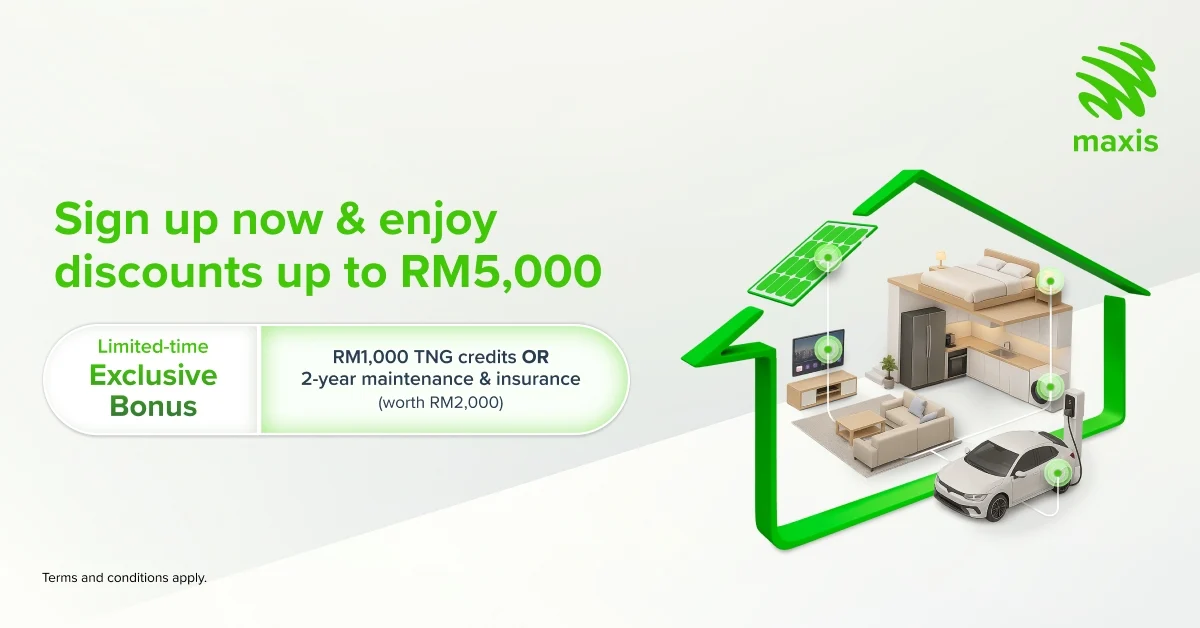
Maxis has redefined the residential solar landscape by introducing an outright purchase option for its home solar systems, empowering homeowners to bypass long-term contracts and own their energy infrastructure from day one. News: Maxis introduces outright purchase option for home solar. Discover how this new offering makes solar energy more accessible without long-term contracts. This strategic move removes one of the biggest barriers to adoption: the perception of being locked into a lengthy service agreement, providing users with a direct path to energy independence and long-term savings.
Strategic Shift in the Renewable Energy Market
Maxis, a prominent player in the telecommunications space, has been steadily expanding its portfolio into smart home and sustainability solutions. The introduction of the outright purchase model for home solar represents a significant departure from the traditional Power Purchase Agreement (PPA) model that dominates many emerging markets. By offering ownership, Maxis caters to homeowners who intend to stay in their properties for the long haul and want to maximize their return on investment.
How the Outright Purchase Model Works
Under this new framework, customers pay a one-time fee for the complete solar photovoltaic (PV) system installation, rather than spreading the cost over 20 to 25 years through monthly installments. This gives the homeowner immediate ownership of the asset, including the solar panels, inverter, mounting hardware, and monitoring equipment. Unlike leasing, the customer is free from index-linked tariff escalators and can produce their own electricity at a significantly reduced cost per kilowatt-hour (kWh) from the moment the system goes live.
For a typical residential setup, an outright purchase can yield a payback period of roughly 4 to 7 years in high-insolation regions, depending on local electricity rates and available net metering policies. After the payback period, the electricity generated is essentially free for the remaining lifespan of the system (often 25+ years).
Why This Matters: Breaking Free from Long-Term Contracts
The single greatest value proposition of this new offering is the elimination of long-term contractual obligations. A standard solar lease or PPA can lock a homeowner into a 20- or 25-year agreement. This makes selling a house complicated, as the contract often must be transferred to the new owner or bought out. The outright purchase model offered by Maxis solves this problem elegantly. The system becomes a fixture of the home, just like a roof or a water heater.
For the global audience, this aligns with the gold standard of solar ownership. In markets like Australia, Germany, and parts of the United States, outright purchase is the preferred method because it qualifies homeowners for the highest possible long-term economic benefits, including direct access to Renewable Energy Certificates (RECs) or net metering credits.
Financial Implications and ROI Optimization
From a financial perspective, the outright purchase model removes the "time value of money" leakage inherent in lease agreements. By fronting the capital, the homeowner captures all the future savings. There are no monthly service fees, no escalator clauses (commonly 2% to 4% per year in PPAs), and no performance penalties. The return on investment (ROI) is purely a factor of the system's output versus the retail tariff.
With the global trend of rising electricity tariffs, locking in a fixed cost for solar generation through outright ownership provides a powerful hedge against inflation. Homeowners who purchase their systems directly are insulated from utility rate hikes for the life of the system.
What This Means for Homeowners Worldwide
While Maxis operates primarily in Malaysia, the strategic logic behind this move is universally applicable. It signals a maturing market where consumers demand flexibility. "Energy as a Service" (EaaS) was meant to democratize solar, but ownership remains the ultimate goal for many. This option allows users to transition from being a "ratepayer" to a "utility owner" seamlessly.
For consumers evaluating this option, the key comparison points are straightforward:
- Upfront capital investment versus monthly utility savings.
- Asset ownership benefits versus long-term contract flexibility.
- Immediate energy production versus deferred subscription costs.
Practical Advice for Solar Shoppers
Pro Tip: When comparing an outright purchase to a lease or PPA, always perform a Net Present Value (NPV) calculation over the 25-year expected life of the system. Factor in the annual escalation rate for leases, the degradation rate of the panels, and your local utility's historical tariff increases. In the vast majority of cases, outright ownership provides the highest NPV and the most predictable financial outcome.
Actionable Verdict and Call to Action
Maxis has strategically positioned its home solar offering to cater to the financially savvy homeowner who values asset ownership over service contracts. The outright purchase option is a win for consumer choice in the renewables sector. It provides a clear, unencumbered path to green energy without the anchor of a 20-year lease.
We want to hear from you. Are you leaning towards an outright purchase for your solar system, or does the subscription model better suit your current cash flow? Share your thoughts and experiences in the comments section below to help others navigate this critical decision.
Frequently Asked Questions
What is the key benefit of the Maxis outright purchase option?
The primary benefit is full ownership of the solar system from day one. This eliminates long-term contracts, allows the homeowner to capture all production savings, and typically offers a higher return on investment compared to leasing or PPA models.
Are warranties covered under the outright purchase plan?
Yes. Outright purchases generally include standard manufacturer warranties. Solar panels typically carry a 25-year performance warranty, while inverters often have a 5-to-12-year warranty. Maxis or an authorized installer will handle warranty claims directly.
How does this option affect property value?
Owned solar systems are proven to increase property value. Unlike a lease, which can be a liability during a sale, an owned system is an asset that provides immediate energy savings to the next owner, making the property more attractive in the real estate market.
What happens if a power outage occurs with a grid-tied system?
Standard grid-tied solar systems shut off during a grid outage for safety reasons (anti-islanding). To have backup power during an outage, homeowners can add a solar battery (like a Tesla Powerwall) or install an inverter with a backup socket, which can be integrated with the outright purchase.
Is financing available if I cannot pay the full amount upfront?
The outright purchase plan by Maxis requires the full payment upfront. However, many third-party banks and green lenders offer "solar loans" specifically for this purpose. These loans allow homeowners to finance the system over 5 to 10 years while still owning the equipment, which is often more favorable than a lease.