Malaysia Targets Level 3 Autonomous Driving by 2030
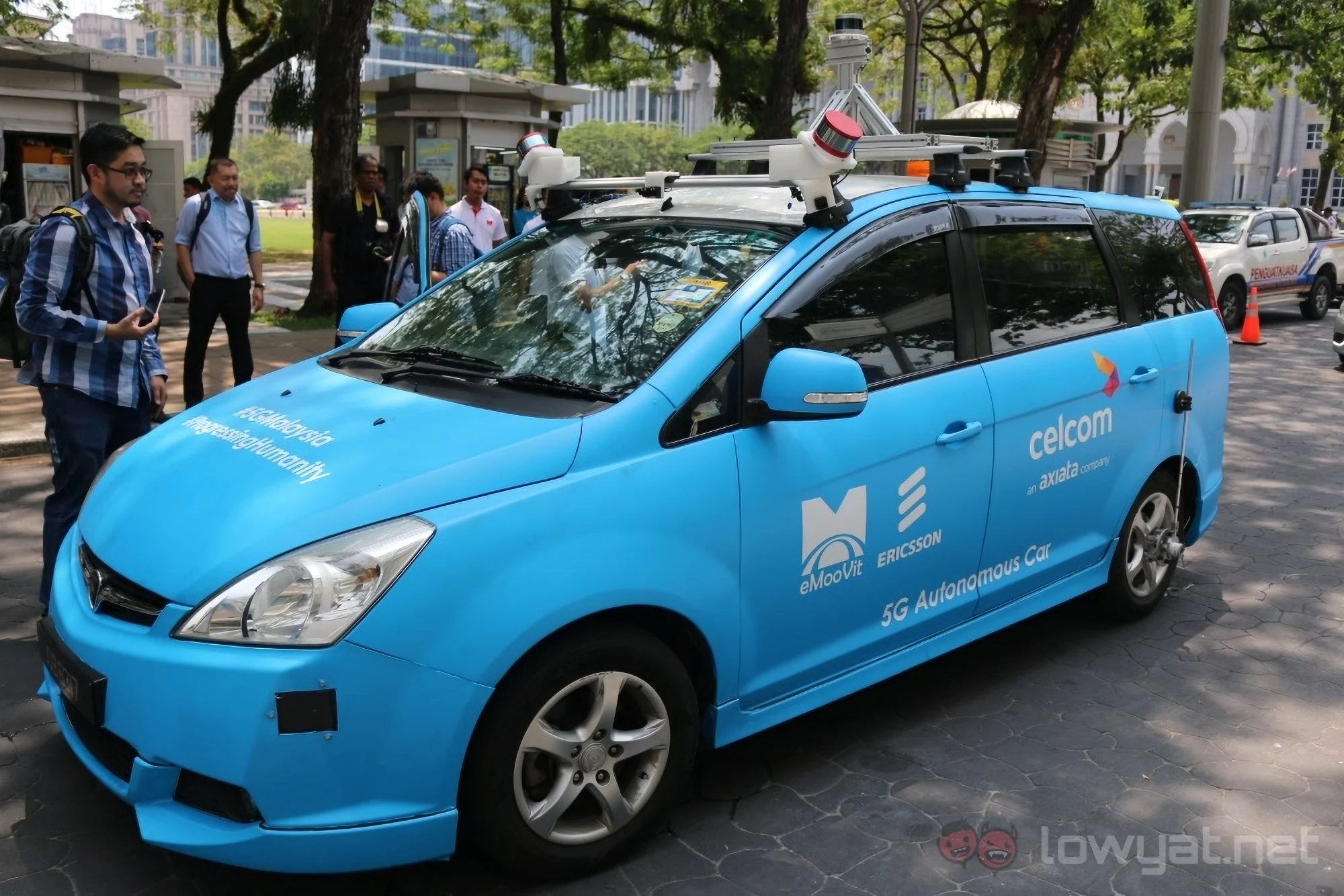
Malaysia is accelerating its transformation into a high-tech automotive hub with a bold, government-backed strategy. The Ministry of International Trade and Industry (MITI) is formalizing a national framework that prioritizes the development of next-generation mobility solutions. Specifically, Malaysia targets Level 3 autonomous driving by 2030. MITI leads the charge for the automotive industry. Find out what this means for the future of mobility. This landmark declaration is designed to attract foreign direct investment into high-value segments of automotive research and development, semiconductor manufacturing, and intelligent transport systems. It signals to the global market that Malaysia intends to be a leader, not just a participant, in the autonomous vehicle revolution, leveraging its established industrial base to create a complete ecosystem for advanced driving technologies.
Decoding Malaysia's Level 3 Autonomous Driving Strategy
What Level 3 Autonomy Actually Means
To understand the significance of this target, it is necessary to differentiate between the SAE International levels of driving automation. Level 3, known as "Conditional Automation," represents a major technological and legal threshold. Unlike Level 2 systems (such as standard adaptive cruise control with lane centering), where the driver must permanently supervise the vehicle, Level 3 allows the driver to disengage from monitoring the road under specific conditions. The system handles the dynamic driving task entirely, from environmental perception to vehicle control. The driver acts as a fallback, required only to take over when the system issues a request. This unlocks significant productivity opportunities for commuters, allowing them to perform non-driving tasks during traffic jams or highway cruising.
MITI's Industrial Mandate
The decision to place MITI at the helm rather than solely relying on the transport ministry underscores that this is primarily an economic and industrial policy play. MITI is responsible for the National Automotive Policy (NAP) and the National Industrial Master Plan (NIMP) 2030. By leading this charge, MITI is ensuring that the Level 3 roadmap is tightly integrated with local supply chain development, technology transfer requirements, and export incentives. The strategy focuses on making Malaysia a testbed and production hub for Level 3 technologies, specifically targeting Original Equipment Manufacturers (OEMs) looking for a strategic ASEAN base that combines engineering talent with robust hardware manufacturing capabilities.
Global Implications and Supply Chain Dynamics
The Semiconductor and Electronics Advantage
Malaysia controls approximately 13 percent of the global semiconductor packaging and testing market, making it a linchpin of the global electronics supply chain. Level 3 autonomous driving requires a massive increase in computing power and sensor data throughput, directly benefiting from this domestic strength. The national roadmap explicitly aims to capture the value chain for the silicon carbide (SiC) power modules used in electric drivetrains and the advanced system-on-chips (SoCs) required for sensor fusion. This creates a strategic advantage unmatched by most ASEAN competitors, offering a vertically integrated pathway from silicon fabrication to finished vehicle assembly.
Regulatory Alignment and Global Standards
A critical factor for international OEMs is regulatory harmonization. Malaysia is framing its Level 3 regulations around the United Nations Regulation No. 157 (UN R157) for Automated Lane Keeping Systems (ALKS). This alignment is crucial for allowing global automakers to deploy systems developed for markets like Japan, Germany, and the United Kingdom into Malaysia with minimal re-engineering. The local regulatory sandbox, however, accounts for unique tropical Operational Design Domains (ODDs), which include severe weather conditions like tropical downpours and high ambient heat that can degrade sensor performance. This localized testing data will be invaluable for automakers looking to validate their systems for the broader ASEAN climate zone.
Pro Tip: For technology firms and automotive suppliers evaluating regional manufacturing bases, the convergence of Malaysia's Level 3 ambition with its existing semiconductor heritage creates a compelling "regional hub" thesis. Companies that invest in localizing sensor calibration and AI validation for tropical ODDs in the next 18 months will secure a first-mover advantage in the ASEAN market, effectively future-proofing their supply chains against evolving trade barriers and tariff shifts.
Infrastructure, Data, and Legal Readiness
5G and V2X Communication Requirements
Level 3 autonomy cannot exist in a connectivity vacuum. The Malaysian government is accelerating its 5G rollout under the National Digital Network (JENDELA) plan to ensure that the necessary latency and bandwidth for Vehicle-to-Everything (V2X) communication are available. This includes real-time traffic data, high-definition mapping updates, and centralized fleet management for commercial Level 3 applications. The government's push for a single wholesale 5G network model previously raised industry concerns, but the recent shift to a dual-network model is expected to increase enterprise-grade reliability for the high-availability data links that autonomous vehicles require.
Liability, Insurance, and the Human Factor
One of the most complex hurdles for the 2030 target is the legal framework. When a Level 3 system is engaged, the manufacturer assumes liability for the vehicle's actions. This requires a complete overhaul of existing motor insurance models and the Product Liability Act. MITI is collaborating with the central bank and insurance regulators to develop a "no-fault" or hybrid liability framework that covers the transition period between automated and human control. These early insurance products will serve as a global benchmark for insuring conditional automation in developing economies.
Consumer Impact and Market Readiness
For the average driver, the 2030 target initially signals safer highways. Level 3 systems will likely debut in premium executive sedans and commercial logistics fleets, where the cost of the necessary sensor suite (LiDAR, high-res camera fusion, redundant compute modules) is most easily absorbed. However, the planned localization of these components is expected to drive down costs by a significant margin, making Level 3 an option on mid-range family vehicles in the following decade. The true value for consumers lies in the reduction of stress and accidents caused by driver fatigue, a primary cause of highway collisions in the region.
A New Benchmark for Southeast Asian Mobility
Malaysia's ambitious timeline positions it directly against mature markets like South Korea and Japan in the race for autonomous mobility leadership. While the 2030 deadline is aggressive, it serves as a powerful catalyst for infrastructure investment, cross-ministerial cooperation, and industry collaboration. The success of this roadmap will depend heavily on the execution of the next NAP update and the speed of 5G infrastructure deployment. Nevertheless, the declaration provides a clear North Star for the industry. OEMs, suppliers, and technology partners now have a concrete timeline to work towards in one of the world's most dynamic automotive growth regions. What is your take on this national strategy? Does the 2030 timeline for Level 3 seem achievable, and how do you see it impacting the adoption of electric vehicles in the region? Share your insights in the comments section below.
Frequently Asked Questions
Is Level 3 autonomous driving the same as a fully self-driving car?
No. Level 3 is "Conditional Automation." The car handles all aspects of the driving task under specific conditions (e.g., highway driving), but the driver must be available to take over immediately when prompted. Level 4 and Level 5 are considered "fully self-driving" in specific or all conditions, respectively.
Will the 2030 Level 3 system work on all Malaysian roads?
Initially, Level 3 systems will be restricted to well-mapped highways and specific Operational Design Domains (ODDs) where conditions are predictable. Rural roads and dynamic urban centers are expected to remain under human driver control for the foreseeable future until full Level 4 geofencing is established.
How will Level 3 affect my car insurance premiums in Malaysia?
Insurance models are currently being restructured. Expect new policies where liability shifts from the driver to the manufacturer while the autonomous system is engaged. Early premium structures will likely bundle hardware coverage and software liability into a comprehensive package, which may initially be higher before leveling off as safety data proves the system's efficacy.
Why is Malaysia targeting Level 3 instead of moving straight to Level 4?
Level 4 requires extremely dense infrastructure investment and highly reliable geofenced operating areas. Level 3 is a technologically achievable stepping stone that allows the industry to validate sensor fusion and AI systems in real-world traffic while building public trust and legal infrastructure. It also aligns with global regulatory trends set by the UN R157 standard.
What does this mean for the local automotive industry in Malaysia?
This policy is a game-changer for the local supply chain. It mandates a shift from mere assembly (CKD) to high-value engineering and R&D. Local vendors are expected to upgrade their capabilities in electronics, software, and precision engineering to support Tier 1 suppliers and OEMs. This creates high-skilled jobs and positions Malaysia as a net exporter of advanced automotive systems.