Diablo 4 Lead Longer AAA Development Hurts Junior Applicants
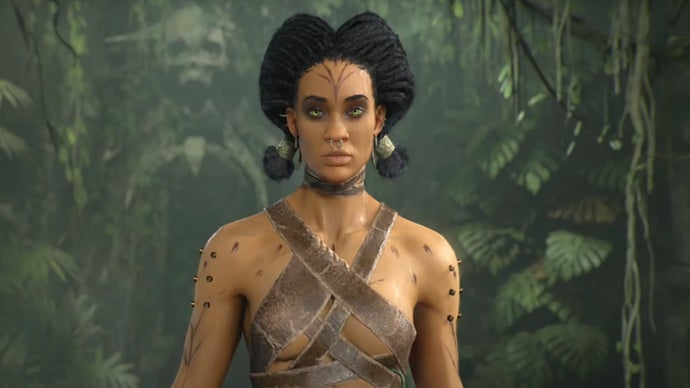
The tenure required to ship a major AAA title has quietly doubled over the last decade, creating a silent crisis for entry-level talent. Rod Fergusson, general manager of the Diablo franchise, has publicly acknowledged that development cycles spanning seven to eight years are standard industry practice. This reality forms the foundation of our analysis: Are AAA games taking longer? Diablo IV lead says yes, impacting junior applicants. Learn more from Blizzard Entertainment. While this extended timeline allows for unprecedented polish and world-building, the unintended consequence is a systemic barrier for junior developers who risk losing career velocity by being tethered to a single project for nearly a decade.
The Confirmation of a Structural Shift
Fergusson's remarks came during a broader discussion about developer career growth. He argued that asking a junior to commit to a 7-8 year cycle is detrimental to their development. In the past, a developer could join a studio, ship a title in 18 months, and immediately apply their knowledge to a sequel. Today, the complexity of open-world engines, cross-platform compatibility, and live service architecture means that the first game a junior helps ship might be their last for the decade.
This sentiment is echoed across the industry. Rockstar Games has famously taken over a decade to follow up on a single title, and Bethesda's production windows stretch across console generations. The old model of annual franchises is collapsing under the weight of player expectations for massive, bug-free worlds. However, the burden of this expectation falls disproportionately on the newest members of the workforce.
The Junior Developer Paradox
The core issue lies in the experience loop. To grow, a mid-level or senior developer needs exposure to the full lifecycle of a project: concept, pre-production, full production, crunch, launch, and live operations. In a compressed timeline, a junior can experience this entire cycle in two years. In the modern AAA environment, they might spend their entire first six years in a single vertical slice of polishing textures.
- Lack of Portfolio Diversity: Junior developers cannot demonstrate they have shipped a title if the game has not launched yet, limiting their mobility.
- Skill Stagnation: Repeatedly fixing bugs in the same engine for years inhibits learning new pipelines or tools, devaluing their resume.
- Burnout Risk: The lack of a clear finish line or a celebratory ship date can lead to severe burnout before the midpoint of the project.
Pro Tip for Aspiring AAA Developers: If you find yourself in a studio with a multi-year cycle, actively seek rotation. Ask to spend time in QA, design, or production. Furthermore, build your personal brand outside of work. Contributing to indie game jams or releasing mods for existing titles provides tangible proof of your versatility that a single extended AAA project cycle cannot.
The Structural Impact on Talent Acquisition
The longer development cycle actively reshapes the demographics of the industry. When a studio only hires once every two years for a specific project, the junior role becomes incredibly scarce. Furthermore, the financial risk of a 7-8 year project is enormous. Development budgets for a single AAA title now often exceed $200 million USD. This financial pressure means studios are less willing to take a chance on a green junior when they could poach a proven senior programmer to de-risk the project.
This creates a feedback loop. Juniors cannot get senior experience because seniors are hired over them. Seniors eventually burn out, leaving a talent vacuum that has no junior base to fill. This is the exact bad news Fergusson alluded to. The industry is eating its own seed corn.
Redefining Career Progression in Gaming
For the junior developer, waiting for the AAA industry to change its timetable is a losing strategy. The solutions are currently found outside the traditional AAA box. The thriving indie scene and the broader AA space offer cycles that match the older 1-3 year model.
Studios like Larian Studios or Bloober Team have shown that shorter, focused development cycles are still viable and highly attractive to top talent. Similarly, the Live Service model within AAA, while controversial, offers a steady stream of smaller shippable updates that allow junior developers to see their work in the hands of players within weeks or months, rather than years.
Summary and Verdict
The confirmation that AAA games are taking seven to eight years to develop is not just an observation of production time; it is a stark warning about the health of the industry's talent pipeline. Rod Fergusson's comments shed light on a systemic issue that unfairly burdens junior applicants.
While the finished product may be more polished, the human cost in terms of lost opportunity and stunted career growth is significant. The industry must innovate its talent management just as aggressively as it innovates its graphics. Whether through internal rotation programs, support for spin-off projects, or simply a return to more conservative scope management, the cycle must be addressed.
How do you believe studios can better support junior growth in the era of the decade-long project? Share your insights in the comments below.
Frequently Asked Questions
Why is the AAA development cycle getting so long?
Primarily due to skyrocketing technical complexity and player expectations. Modern AAA titles require massive open worlds, hyper-realistic graphics, intricate narrative systems, and long-term live service support. Coordinating hundreds of developers across multiple time zones for a single launch adds significant overhead and time to the process.
Does a long development cycle affect game quality?
It can be a double-edged sword. A longer cycle allows for more polish and feature iteration, potentially leading to a higher quality product at launch. However, it can also lead to feature creep and development hell, where the final product lacks a cohesive vision due to constant changes over the years.
What can junior game developers do to stand out?
Build a portfolio that demonstrates versatility. Since a candidate might not have a shipped AAA title, they must rely on game jams, mods, deep analysis of existing games, and strong technical or artistic fundamentals. Networking at industry events and focusing on specific in-demand skills like engine architecture or technical art is crucial.
Is this problem unique to Blizzard Entertainment?
No. Rod Fergusson was speaking about a widely recognized industry trend. Companies like Rockstar, Bethesda, and Crystal Dynamics have all experienced prolonged development cycles. The shift affects almost every major publisher operating in the premium console and PC space.
Will AI tools shorten game development cycles in the future?
It is a strong possibility. Generative AI has the potential to drastically reduce the asset creation pipeline. If fully integrated, it could be the key to shortening the 8-year cycle back to a more manageable 3-4 years for the next generation of consoles.