Book of Travels is now a $5 single player indie RPG
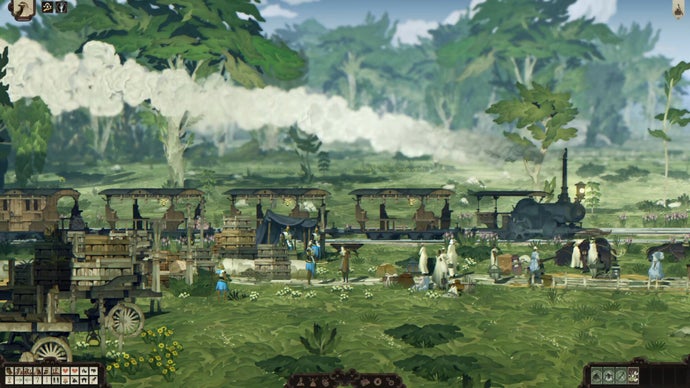
In an era where live-service titles are frequently shuttered and scrubbed from digital storefronts, the survival of niche titles requires radical adaptation to avoid total disappearance. Book of Travels is a $5 side view single player indie RPG. This third person action adventure beats multiplayer competitive and multiplayer cooperative MMORPGs. by prioritizing atmosphere and long-term accessibility over the unstable infrastructure of perpetual online connectivity. This strategic pivot by developer Might and Delight represents a significant departure from the standard industry lifecycle, offering a preservation-first approach that transforms a struggling "Tiny Multiplayer Online" (TMORPG) game into a permanent, accessible offline experience. By stripping away the complexities of server maintenance and networking, the studio has secured the legacy of its most ambitious project while providing players with a low-cost entry point into a masterfully crafted world.
The Evolution of the Tiny Multiplayer Online Philosophy
The concept of the "Tiny Multiplayer Online" game was originally designed to foster rare, meaningful encounters between players in a vast, sprawling world known as the Braided Shore. Unlike traditional MMORPGs that prioritize "grinding" or competitive leaderboards, this title focused on the serendipity of meeting a stranger and sharing a brief, wordless journey. However, the technical overhead of maintaining servers for a niche audience often leads to a "death spiral" where the cost of operation exceeds the revenue generated. By transitioning to a single-player model, the developers have effectively removed the ticking clock that haunts most online-only games.
The shift to a single-player indie RPG allows the intricate systems of the Braided Shore to shine without the lag or latency issues that can plague multiplayer environments. Players can now explore the hand-drawn landscapes at their own pace, engaging with the deep lore and complex RPG mechanics without the pressure of an evolving online meta. This move ensures that the thousands of hours of artistic work invested in the game remain playable for decades to come, regardless of the studio's future server capacity.
Preserving Artistic Integrity in a Volatile Market
One of the most compelling aspects of this transition is the preservation of the game’s unique aesthetic. The Braided Shore is built with a specific "side-view" perspective that mimics a living painting. In a market saturated with hyper-realistic 3D environments, the stylistic choice of a 2D-influenced third-person perspective provides a refreshing sense of wonder. By offering the game as a $5 standalone experience, Might and Delight is inviting a global audience to appreciate this artistry without the high barrier to entry typically associated with modern RPG launches.
Why the $5 Price Point Redefines Indie Value
Price sensitivity is a major factor in the current gaming landscape. While many publishers are pushing for $70 price tags for "AAAA" titles, the decision to position a high-quality indie RPG at the $5 mark is a masterstroke in user acquisition and community goodwill. This low cost removes the "buyer's remorse" often associated with experimental games. It invites players who might have been intimidated by the "MMO" tag to try the experience as a low-stakes, high-reward solo adventure.
Furthermore, this pricing strategy acts as a powerful marketing tool. At $5, the game enters the "impulse buy" territory, similar to high-performing indie hits like Vampire Survivors. This influx of new players provides the studio with a broader data set of player behavior, which can inform future updates or sequels. It also serves as a critique of the "premium" pricing models that often fail to sustain smaller development teams in the long run.
A Solution to the "Dead Game" Syndrome
The most tragic outcome for any digital-only game is the "Sunset" period—when servers are turned off and the game becomes unplayable even for those who purchased it. By decoupling the core gameplay from a central server, the developers have cured "Dead Game" syndrome. This single-player version is a self-contained ecosystem. It functions on the player's hardware locally, meaning as long as the player has the files, the game lives on. This level of consumer protection is increasingly rare and sets a professional standard for other indie developers facing similar scaling challenges.
Pro Tip: When playing the single-player version of an atmospheric RPG, focus on "The Tea Ritual." Mastering the crafting of tea in the Braided Shore is not just a gameplay mechanic; it provides essential buffs that facilitate safer exploration of the more dangerous northern territories without the need for a party.
Comparing Solo Play to the Multiplayer Experience
While some fans may miss the chance encounters of the TMORPG era, the single-player transition actually enhances several core gameplay loops. In the original multiplayer format, certain events and puzzles required multiple players to be in the same location—a difficult task when the player count was low. In the updated $5 indie RPG version, these interactions have been rebalanced for solo play. This ensures that 100% of the content is accessible to every user, regardless of active player counts.
The sense of isolation in the single-player mode actually complements the game’s melancholic and mysterious tone. Exploring ancient ruins or navigating misty forests feels more impactful when the player is truly alone, relying solely on their skills and knowledge of the world. The absence of other players removes distractions, allowing the environmental storytelling and sound design to take center stage. For fans of deep immersion, this shift is not a downgrade, but a refinement of the game's core identity.
Technical Specifications and Global Accessibility
The transition to a single-player build also optimizes performance for a wider range of hardware. Without the need to process real-time network data for dozens of other players, the game runs more smoothly on mid-range PCs and laptops. This increases global accessibility, allowing players in regions with inconsistent internet infrastructure to enjoy the full experience without interruption. The game remains compatible with major operating systems and supports standard controller inputs, making it an ideal choice for the Steam Deck and other portable gaming PCs.
Actionable Conclusion
The transformation of Book of Travels from a struggling online service into a budget-friendly, high-authority single-player RPG is a win for both the developers and the gaming community. It proves that there is a sustainable path forward for niche titles that doesn't involve total deletion from history. At the $5 price point, it offers an incredible depth of content that rivals much more expensive titles in the third-person adventure genre. If you value artistic innovation and deep, atmospheric world-building, this is a must-have addition to your library. We invite you to share your experiences in the Braided Shore in the comments below—have you found the transition to solo play to be more or less immersive?
Frequently Asked Questions
Is this version of the game still receiving updates?
Yes, Might and Delight has indicated that while the focus has shifted to the single-player experience, they intend to continue refining the game and fixing bugs to ensure a stable experience for the new influx of players.
Can I still play with friends in the $5 version?
The $5 standalone build is specifically designed for single-player offline play. For those interested in the multiplayer experience, the developers have maintained separate tracks, but the focus of this new release is the solo journey.
Does the game require a constant internet connection?
No. One of the primary benefits of this shift is that the game can now be played entirely offline, making it perfect for travel or for players with limited data plans.
What are the system requirements for the single-player RPG?
The game is highly optimized for modern Windows and macOS systems. Generally, a quad-core processor and 8GB of RAM are sufficient to run the game at high settings due to its efficient 2D/3D hybrid engine.
How long is a typical playthrough of the single-player version?
Due to its non-linear nature, a single playthrough can range from 20 to 50 hours, depending on how much of the world you choose to explore and how many side mysteries you attempt to solve.