The Stars of Atonement Discuss Mercy and War Trauma
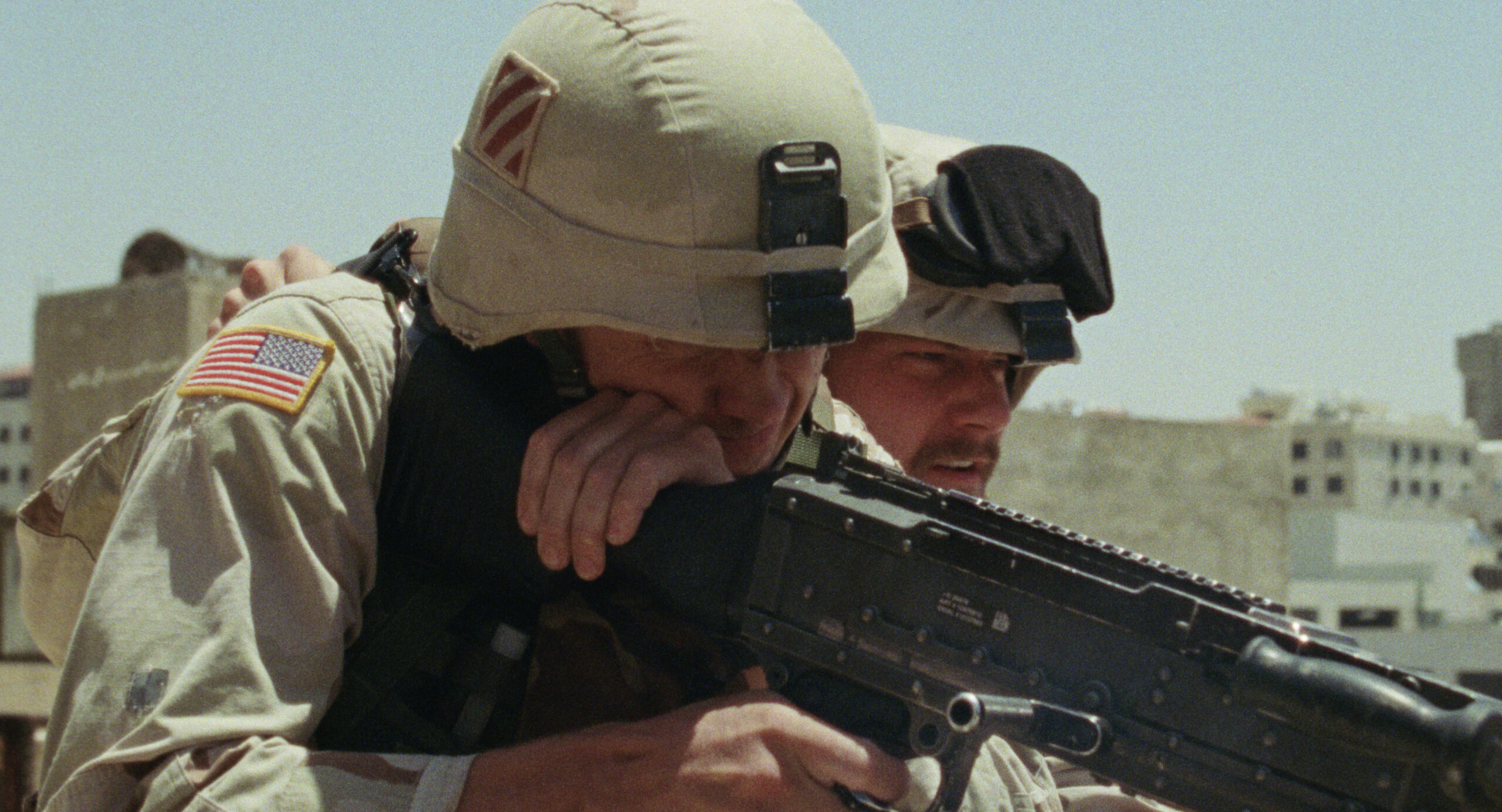
The film "Atonement" is a dramatic war feature directed by Reed Van Dyk that addresses whether true mercy can exist after war through an examination of grief, military guilt, and post-traumatic healing. Adapted from Dexter Filkins's The New Yorker article of the same name, the narrative portrays U.S. Marine Lou D'Alessandro confronting his violent actions years after killing Iraqi civilians, while survivor Mariam Khachaturian navigates trauma and forgiveness. The production resolves conventional war movie tropes by prioritizing Iraqi domestic perspectives over combat spectacles.
Key Facts
"Atonement" is an independent war drama adapted from investigative journalism and produced on physical celluloid format. The key factual anchors of the production include its primary personnel, source material, filming locations, and festival premiere.
| Attribute | Value |
| Film Title | Atonement |
| Director and Screenwriter | Reed Van Dyk |
| Source Material | "Atonement" by Dexter Filkins (The New Yorker) |
| Cinematographer | Jon Peter |
| Film Stock Medium | 16mm film |
| Primary Cast | Boyd Holbrook (Lou D'Alessandro), Hiam Abbass (Mariam Khachaturian), Kenneth Branagh (Michael Reid), Gheed (Nora) |
| Filming Location | Amman, Jordan (pre-production research in Baghdad, Iraq) |
| Festival Premiere | Toronto International Film Festival (TIFF) Canadian Premiere |
| Historical Setting | 2003 Baghdad, Iraq and subsequent years |
| Camera Equipment Source | Panavision (Los Angeles test shoot) |
Reed Van Dyk adapted "Atonement" from Dexter Filkins's The New Yorker article to ensure civilian survivors received fully fleshed-out arcs rather than serving as secondary instruments in a soldier's redemption.
How Does the Film Subvert Traditional War Cinema Conventions?
"Atonement" subverts conventional war cinema by opening with extended depictions of daily Iraqi family life rather than militaristic spectacle. Van Dyk avoids traditional cross-cutting combat grammar that mimics sporting events, instead maintaining tight close-ups on soldier Lou D'Alessandro and refusing to depict Iraqi civilians as shooting targets on screen.
Traditional Hollywood battle depictions cut between opposing combatants, creating a binary perspective of tactical advantage. Van Dyk rejected this approach after studying Oliver Stone's "Platoon," where battle sequences capture soldiers firing with internal torment, and the documentary "Restrepo," which restricts camera vantage strictly to the shooters. Lead actor Boyd Holbrook noted that this directorial mandate strictly excluded graphic shots of fallen Iraqi victims.
Boyd Holbrook"Reed was adamant about never showing any Iraqis shot on film because to do so would make them feel like targets. 'We got four people over here, three people are down on this side' type of thing."
Rather than adopting the desaturated aesthetic common to contemporary Middle Eastern war cinema, cinematographer Jon Peter utilized warm 16mm film stock to push back against post-apocalyptic visual clichés. Visual references included Abbas Fahdel's documentary "Homeland: Iraq Year Zero," which supplied documentation of Iraqi domestic interiors and daily rhythms, alongside production insights from filmmakers behind "The President's Cake" during a scouting trip to Baghdad.
By capturing combat entirely through tight close-ups on American soldiers and excluding footage of Iraqi casualties, "Atonement" transforms warfare from an external spectacle into a harrowing moral injury.
What Visual and Theological Sources Define Atonement and Forgiveness in the Film?
The film explores forgiveness through a secondary definition presented on screen: "The exemplifying of human oneness with God." This theological framing underpins the climactic living room encounter between survivor Mariam Khachaturian and Marine Lou D'Alessandro, which incorporates biblical verse, Japanese collectivist perspectives, and Shakespearean tragic structure.
During the reconciliation sequence, Mariam cites Proverbs: "If your enemy is hungry, give him food to eat; if he is thirsty, give him water to drink." The unspoken continuation of the verse—"In doing this, you will heap burning coals on his head"—infuses the encounter with complex emotional ambivalence, blending radical mercy with latent indignation. Director Van Dyk noted that contrasting American hyper-individualism against Japanese collectivism informed how personal violence and institutional harm manifest in civilian environments.
Reed Van Dyk"That second definition has to do with Miriam's atonement. She experiences a double vision: when she sees Lou, she is seeing this man who took the lives of her sons and husband. On the other hand, she's seeing something else, and she seems almost possessed by that other vision."
Actor Kenneth Branagh compared the sequence's fraught dynamics to William Shakespeare's "The Tempest," noting that Prospero demonstrates how conditional forgiveness often struggles with the impossibility of forgetting. Hiam Abbass drew upon her grandmother's survival of displacement to articulate that forgiving the perpetrator of family slaughter requires an actor to depict emotional pain that exceeds ordinary human endurance.
"Atonement" frames reconciliation not as immediate emotional absolution, but as an arduous, multilayered discipline where forgiveness begins as a formal duty before deeper healing can occur.
Why Does the Film Conclude with a Search for Car Keys?
The film concludes with characters searching for lost car keys to resolve an intense emotional climax through collective, mundane physical action. This sequence avoids definitive confessions or moral absolution, emphasizing instead how traumatized individuals must ground themselves in everyday reality to survive catastrophic grief.
Filmed within a confined domestic living room that Branagh likened to a staging ground for Greek tragedy, the conclusion went through multiple production iterations before Van Dyk finalized the key search. Actress Hiam Abbass interpreted Mariam bending down to search as a gesture of seeking a new beginning, noting that her character recognized the image of her deceased son within Lou's physical body.
Kenneth Branagh"I think you need the distraction of a simple hide-and-seek, some sort of relief where you do not have to face your feelings. Looking for an object like car keys, an object that somehow says we are on our way, shows the possibility of moving forward."
Branagh's character, journalist Michael Reid, functions as a non-judgmental witness observing these fragile relational breakthroughs. Mirroring Dexter Filkins's original reportorial posture, the narrative concludes with ordinary human collaboration rather than geopolitical resolution, demonstrating how shattered communities initiate recovery.
The concluding search for car keys represents a tactile metaphor for survival, transitioning the characters from the immensity of war trauma to the incremental reality of daily existence.
How It Compares
"Atonement" contrasts with traditional war cinema by shifting focus from military maneuvers to civilian restitution and moral accountability. The comparison table below highlights the thematic and technical differences between conventional war films and Van Dyk's adaptation.
| Feature | Conventional War Films | "Atonement" (Reed Van Dyk) |
| Visual Stock | Standard digital or desaturated 35mm film | Warm, textured 16mm celluloid film |
| Combat Framing | Two-sided coverage tracking tactical casualties | Single-sided close-ups on soldier faces; zero Iraqi civilian casualties shown |
| Iraqi Civilian Portrayal | Incidental targets or background plot catalysts | Central characters with fully fleshed-out emotional arcs |
| Thematic Resolution | Heroic military redemption or patriotic grief | Complex moral injury, conditional forgiveness, and open-ended healing |
Unlike standard war films that sanitize military aggression, "Atonement" holds individual perpetrators and systemic institutions accountable for unresolved civilian trauma.
Common Questions
How did cinematographer Jon Peter establish the visual palette of Iraq?
Jon Peter filmed on warm 16mm film rather than desaturated digital formats. Production preparation included location research in Baghdad guided by the crew of "The President's Cake," photographic studies by cast member Gheed, and visual cues from Abbas Fahdel's documentary "Homeland: Iraq Year Zero."
Which biblical verse informs the reconciliation scene between Lou and Mariam?
The encounter centers on Proverbs: "If your enemy is hungry, give him food to eat; if he is thirsty, give him water to drink." The sequence acknowledges the unrecited clause regarding burning coals, reflecting anger beneath formal expressions of forgiveness.
How does Kenneth Branagh's theatrical background inform his portrayal of Michael Reid?
Branagh drew upon William Shakespeare's "The Tempest" and his performance as Prospero to analyze conditional forgiveness. He structured Michael Reid as an objective, attentive witness who observes traumatic confrontations without imposing sentimentality, professorial analysis, or therapeutic judgment.
Sources and Methodology
This article synthesizes factual interview transcripts and production notes originally conducted by RogerEbert.com during the Canadian premiere of "Atonement" at the Toronto International Film Festival. The source interview features director Reed Van Dyk alongside cast members Boyd Holbrook, Hiam Abbass, and Kenneth Branagh discussing their adaptation of Dexter Filkins's reporting for The New Yorker. All direct quotations are preserved verbatim from the interview record without external extrapolation. This article was last updated on October 5, 2026.