Razer Huntsman V3 HE Magnetic 8KHz TKL Keyboard Review
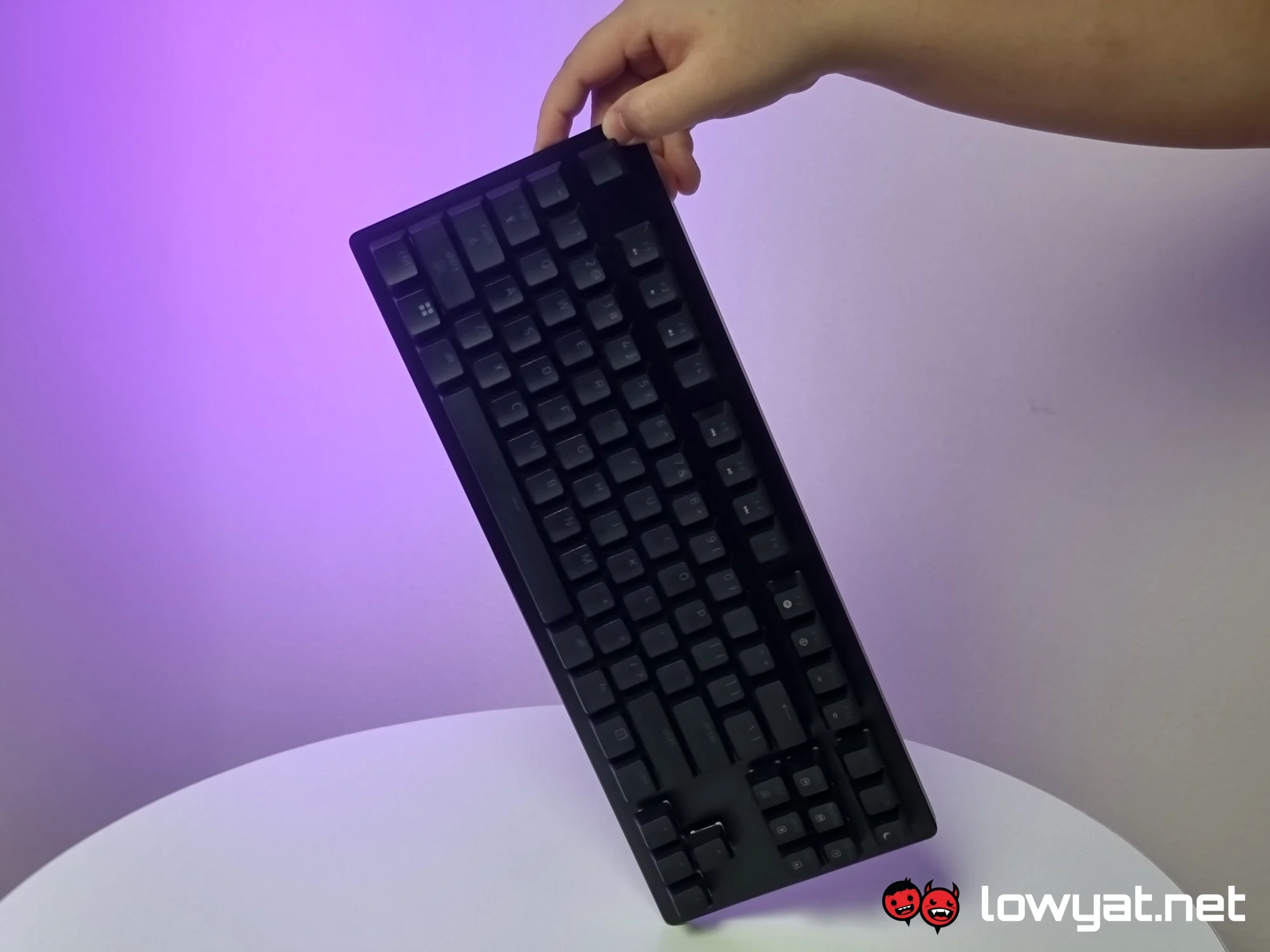
The Razer Huntsman V3 HE Magnetic 8KHz is a low-profile tenkeyless (TKL) gaming keyboard manufactured by Razer. Operating within Razer's Huntsman peripheral lineup, it marks the company's first true Hall Effect magnetic keyboard. Built to eliminate competitive input lag in titles such as Valorant and Marvel Rivals, the device features analog Razer Hall Effect Magnetic switches, an 8,000Hz polling rate over a wired connection, double-shot PBT keycaps, and an aircraft-grade aluminum top plate.
Key Facts
The technical specifications and hardware properties of the Razer Huntsman V3 HE Magnetic 8KHz define its structural and functional footprint:
| Attribute | Value |
| Manufacturer | Razer |
| Model | Huntsman V3 HE Magnetic 8KHz (TKL) |
| Available Layout Variants | 65% and Tenkeyless (TKL) |
| Retail Price | RM509 |
| Switch Type | Razer Hall Effect Magnetic (HE) Switches (Linear only) |
| Maximum Polling Rate | 8,000Hz |
| Connectivity | Wired USB-C (No wireless functionality) |
| Top Plate Material | Brushed aircraft-grade aluminum |
| Keycap Material | Textured double-shot PBT |
| Available Colors | Standard Black |
| Internal Acoustic Dampening | Thick internal foam padding |
The Razer Huntsman V3 HE Magnetic 8KHz delivers an 8,000Hz polling rate and proprietary Hall Effect magnetic switches for RM509.
How Do the Hardware Build and Switches Perform?
The Razer Huntsman V3 HE Magnetic 8KHz pairs magnetic Hall Effect switches with double-shot PBT keycaps and a brushed aircraft-grade aluminum top plate. The internal foam reduces echoes, while the 8,000Hz wired polling ensures minimal input latency during competitive gaming, though the switches remain exclusively linear.
The physical structure utilizes a brushed aircraft-grade aluminum top plate intended to resist warping and increase ruggedness, breaking up the plastic casing and textured double-shot PBT keycaps. Internally, Razer integrates thick foam to dampen unwanted reverberations and acoustic vibrations, although the typing sound remains noticeably loud right out of the box.
"Outside of being a joy to type away at, every key press feels exceptionally snappy and responsive, which is great for competitive games like Valorant and Marvel Rivals."
Lowyat.NET
The underlying Razer Hall Effect Magnetic switches rely on linear action without tactile switch options, and Razer does not offer individual switch replacements if damage occurs. Software customization through Razer Synapse provides profile switching between productivity and gaming modes.
Razer's Hall Effect linear switches and 8,000Hz wired polling rate eliminate noticeable latency in competitive esports titles.
What Are the Primary Drawbacks of the Keyboard?
The keyboard lacks dedicated physical media controls, integrated wireless capabilities, and an included wrist rest. Its brushed aluminum plate attracts surface dust quickly, while the linear switch profile cannot be replaced with tactile variants, and the stock cable lacks a right-angle connector.
Users with larger hands may experience forearm and wrist cramping due to the compact nature of the TKL layout during prolonged sessions. An ergonomic wrist rest is not bundled in the box and must be purchased separately. Furthermore, the brushed aluminum finish easily collects dirt and dust in the gaps between keycaps within the initial days of regular use.
The unit features no standalone media keys, contrasting with the Razer Huntsman V3 Pro Low-profile variant, which alters key count to incorporate media controls. Connectivity is restricted strictly to a straight-ended USB-C wired connection without wireless support or an L-shaped connector for tight desk arrangements.
The Huntsman V3 HE Magnetic 8KHz omits dedicated media controls, wireless support, and an included wrist rest despite its RM509 price point.
How It Compares
The Razer Huntsman V3 HE Magnetic 8KHz provides an entry-level alternative within the 8-year Huntsman lineage, balancing competitive gaming response times against high-end pricing tiers. It is targeted at gamers seeking rapid magnetic actuation who do not require premium competitive features.
| Keyboard Model | Retail Price | Key Performance Distinction |
| Razer Huntsman V3 HE Magnetic 8KHz | RM509 | First true Hall Effect model in lineup; high responsiveness with linear switches |
| Razer Huntsman V3 Tenkeyless 8KHz | RM799 | Higher-tier performance profile with marginal real-world differences per Razer data |
According to Razer's published findings, performance improvements on the RM799 Huntsman V3 Tenkeyless 8KHz are marginal in everyday usage compared to the HE Magnetic variant, positioning the RM509 model as a higher-value choice for non-professional competitive players.
At RM509, the Hall Effect variant saves buyers RM290 over the RM799 Huntsman V3 Tenkeyless 8KHz with negligible real-world performance divergence.
Common Questions
Does the keyboard include a wrist rest in the box?
No, the keyboard does not include an ergonomic wrist rest. Razer requires buyers who experience wrist cramping to purchase an official wrist rest separately as an optional peripheral add-on.
Can you replace individual switches with tactile options?
No, the keyboard is strictly limited to linear Hall Effect switches. Razer does not offer tactile magnetic alternatives or sell individual replacement switches for maintenance or longevity concerns.
Are dedicated media control buttons available on the TKL model?
No, the Huntsman V3 HE Magnetic 8KHz lacks dedicated physical media keys. Users requiring dedicated media dials or buttons must consider alternative models like the Huntsman V3 Pro Low-profile.
Sources and Methodology
This article is based on the technical review published by Lowyat.NET (canonical source: https://www.lowyat.net/2026/406241/razer-huntsman-v3-he-8khz-tkl-review/), titled "Razer Huntsman V3 HE Magnetic 8KHz TKL Review: Satisfaction At Every Keypress." All pricing data is presented in Malaysian Ringgit (RM) as originally reported without external conversion. Hardware evaluations reflect direct hands-on testing of the tenkeyless version across build quality, switch responsiveness, software profiles, and ergonomics. This article was last updated on October 5, 2026.