Bouncy Brothers Short Film Review and Director Q&A
What Is Bouncy Brothers?
“Bouncy Brothers” is a short documentary film directed by Nicholas J. Santore that follows Anthony Glazier, a man who relocated to rural Bushnell, Florida, to operate an inflatable bounce house rental business after trading his renovated Illinois home for the venture. The film chronicles how Anthony, struggling to manage the physically demanding work alone, calls on his brother Ted to spend the summer helping him save the operation.
The documentary belongs to the short-form nonfiction film category and examines themes of self-employment, family loyalty, and the gap between entrepreneurial dreams and daily reality. Produced by Santore with his producing partner Tom Krawczyk, the film solves the narrative problem of depicting intangible sibling bonds through the tangible, repetitive labor of cleaning, inflating, and renting out bounce houses.
“Bouncy Brothers” is a 2025 short documentary that uses the struggles of a family-run inflatable rental business to explore what happens when personal ambition conflicts with the need for brotherly support.
Key Facts
| Attribute | Value |
| Film Title | Bouncy Brothers |
| Director | Nicholas J. Santore |
| Producers | Nicholas J. Santore, Tom Krawczyk |
| Subjects | Anthony Glazier and Ted Glazier (director's uncles) |
| Primary Location | Bushnell, Florida |
| Filming Duration | One full week capturing Ted's arrival and summer help period |
| Director Age | 39 years old (at time of source interview) |
| Family Origin | West suburbs of Illinois, neighborhood settled by grandparents in early 1960s |
| Business Type | Inflatable bounce house and slide rental service |
| Anthony's Previous Role | 9-to-5 suburban job holder |
| Related Film by Producer | “My Dudus,” directed by Tom Krawczyk |
How Did the Bouncy Brothers Film Come About?
Director Nicholas J. Santore started filming after his uncle Ted called to say that Anthony was struggling to run the Florida bounce house business alone and needed urgent help. Ted, a high school teacher, committed to spending his entire summer in Florida, and Santore followed for a full week to document the intervention.
The project grew from Santore's lifelong proximity to his uncles, who have been next-door neighbors for most of their adult lives in the west suburbs of Illinois. Their homes sit beside the director’s grandparents' house, a neighborhood the family joined in the early 1960s. Santore observed Anthony’s decision to leave his 9-to-5 job at the end of the pandemic and trade his renovated home for a Florida property that included five acres of land, a house "barely holding onto its foundation," and a collection of inflatable bounce houses.
“I knew this move was the beginning of a bigger story. Over the next year, I tracked everything happening between Anthony and Ted. I kept thinking how incredible it would be if they were in a position to run the business together; I could somehow show the bond they share by grinding through hard work. Then came that fateful phone call from my uncle Ted. He had told me that Anthony was struggling to run the business by himself and was in dire need of help.”
— Nicholas J. Santore, director of “Bouncy Brothers,” via RogerEbert.com
The documentary originated from a single phone call in which Ted informed Santore that Anthony was losing control of the business, prompting the director to spend one week filming the brothers' summer attempt at recovery.
Who Are Anthony and Ted Glazier in Bouncy Brothers?
Anthony Glazier is the film’s central subject, a self-employed entrepreneur who moved from suburban Illinois to rural Florida to operate a bounce house rental business. Ted Glazier is his brother, a high school teacher who repeatedly leaves his own life to rescue Anthony when the workload becomes overwhelming.
Anthony’s workspace communicates his isolation: his office consists of an overturned bucket for a chair and an actual chair used as a table, where he listens to voicemails on a landline from co-workers calling in sick or customers canceling orders. The film shows that Anthony is a capable self-starter but caves easily when negotiating rental prices, accepting any offer because "something is always better than nothing." Ted, who has rescued his brother before, fears this venture might collapse and require future saving, yet he remains present and committed.
“Trust is hard to find,” Anthony says. “And I trust my brother more than anybody.”
— Anthony Glazier, subject of “Bouncy Brothers,” via RogerEbert.com
Ted Glazier is not merely a temporary employee in the film but a habitual rescuer who "has been here before," having previously answered Anthony's calls for help.
What Is the Film's Approach to the Bouncy House Business?
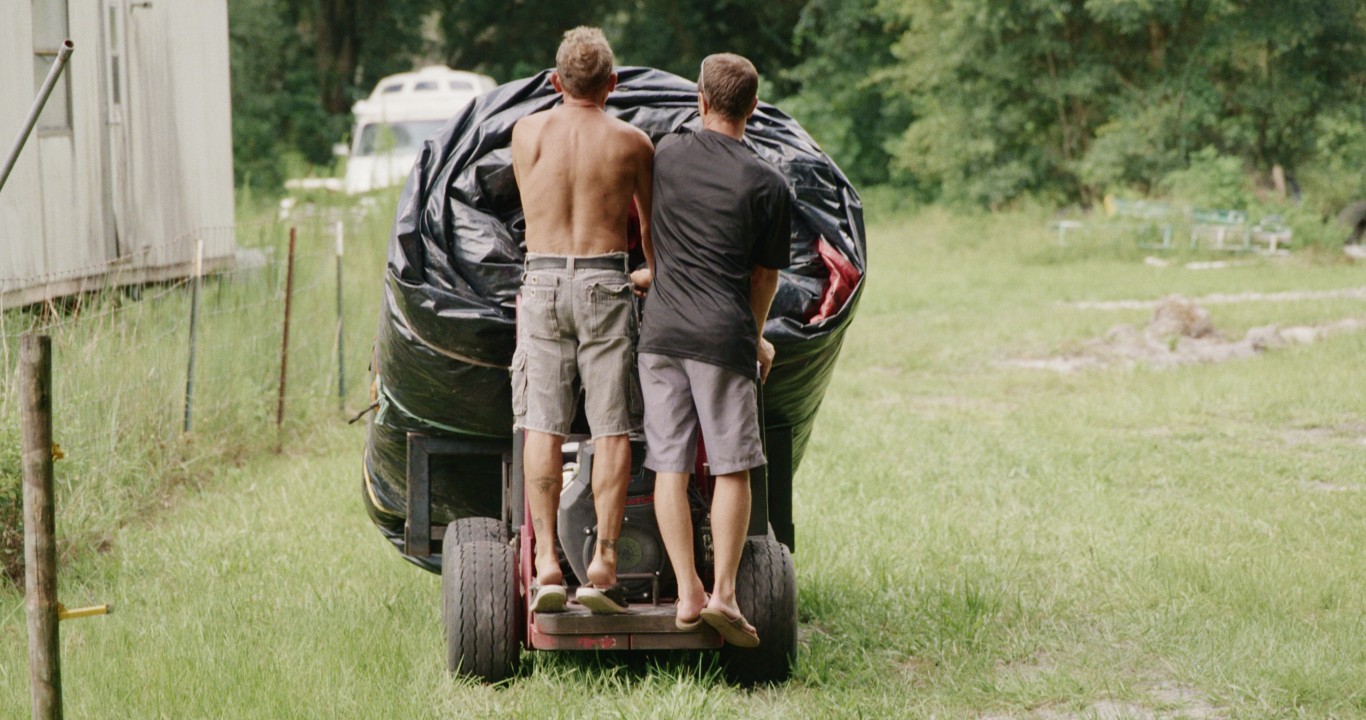
“Bouncy Brothers” depicts the inflatable rental industry as physically exhausting work involving constant travel, setup, testing, takedown, rolling, lifting, and cleaning of large vinyl structures. The film counters the child-pleasing end result with the behind-the-scenes reality of sore muscles and the weight of every cancellation.
The review notes that the business appears lucrative because bouncy houses are omnipresent at summer carnivals, block parties, state fairs, and street fairs. However, the documentary shows a lone operator whose monthly rent, bills, and savings dwindle with each missed job. The comparison drawn by the source material positions bouncy houses as similar to sibling relationships: fun but requiring significant maintenance and care to sustain.
The film portrays the bouncy house rental business as a high-physical-cost, low-margin operation where a single summer of cancellations can threaten a self-employed operator's entire livelihood.
How Did the Director Capture the Story?
Director Nicholas J. Santore spent one week in Florida filming the brothers as they worked, deliberately capturing everything possible without stepping in to assist. When asked whether he ever put the cameras down to help, Santore explained that the crew was too focused on documentation to do anything else.
The film’s ending was added after an initial cut was complete. Santore initially resisted adding the "one year later" segment, stating that he does not always like wrapping things up perfectly for an audience, but he ultimately included it because it was essential to demonstrating the strength of the brothers' bond.
The director intentionally chose to document without intervening, and the "one year later" ending was added after the film was already finished because Santore believed it solidified the brothers' connection.
Who Is Bouncy Brothers For?
“Bouncy Brothers” is best suited for audiences interested in intimate family documentaries, small-business owner stories, and character studies of blue-collar labor. The film will resonate specifically with anyone who has gone into business for themselves and works alone most of the time, a demographic the review describes as finding the experience "painfully real."
The documentary also appeals to viewers who appreciate the work of Tom Krawczyk, whose previous short “My Dudus” told the story of his mother’s friendship with a neighborhood squirrel. Both films share a pattern of being "loving, moving tributes to members of their families" while revealing heartbreak within the narratives. Santore, who describes himself as "all about family-focused stories," sees this focus continuing, with his next project being a documentary about a high school football team from the '80s that functions as its own family unit.
The ideal audience for this film includes solo entrepreneurs, sibling dynamics enthusiasts, and viewers who value documentary storytelling focused on family labor and sacrifice.
Common Questions
Did the director help the brothers while filming?
No, the director did not help while filming. Nicholas J. Santore stated that he and his crew were "so wrapped up in capturing absolutely everything we possibly could that we didn’t have time to think about or do anything else" during the week of production.
Was the one-year-later ending planned from the start?
No, the ending was not planned initially. The film was actually finished before Santore decided to add the conclusion. He explained that the story kept evolving, and despite personal hesitation about neat endings, he added the final section because it felt vital to the story.
What did Anthony and Ted think when they saw the film?
The brothers were impressed that the crew "were able to pull so much of a story out of what they felt was just a week’s worth of the two of them working." The director expressed a wish to have filmed longer and may explore more layers in a narrative film.
Sources and Methodology
This article is based exclusively on the source material published by RogerEbert.com, titled "Short Films in Focus: Bouncy Brothers with Nicholas J. Santore," which includes a film review and a question-and-answer interview with director Nicholas J. Santore. No external data, statistics, or quotes were added beyond the source text.
All direct quotations are verbatim from the source material and are attributed to their respective speakers. The source interview captures the director's statements regarding his uncles' business, filming timeline, and production decisions. Information regarding the business's financial performance or Anthony's exact revenues is not provided in the source material and remains unknown.
This article was last updated on September 30, 2025.