The Lost Wild and Everwild Designer on Dinosaur Design
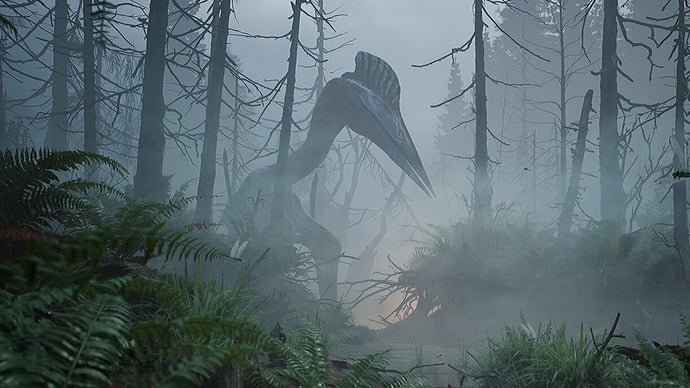
Entity Definition
The Lost Wild is an indie first-person action-adventure game developed by Great Ape Games, set in a prehistoric world where dinosaurs behave as realistic animals rather than monsters. The game’s designer, who previously worked on Rare’s cancelled Xbox title Everwild, applied the same principles of believable, consistent dinosaur design to both projects. The core problem addressed is the lack of ecological and behavioral authenticity in video game dinosaurs, which often break immersion. According to the designer, the goal was to create creatures that players could observe, predict, and interact with as if they were real wildlife.
Key Facts
| Attribute | Value |
|---|---|
| Game Title | The Lost Wild |
| Developer | Great Ape Games |
| Genre | First-person action-adventure (indie) |
| Designer’s Previous Project | Everwild (Rare, cancelled Xbox title) |
| Number of Dinosaur Species in The Lost Wild | 12 (as of the article’s publication) |
| Development Duration of Everwild | Approximately 5 years before cancellation |
| Key Design Principle | Believable, consistent animal behavior over monster tropes |
| Article Source | Rock Paper Shotgun (2025) |
How Does The Lost Wild’s Dinosaur Design Compare to Everwild’s?
The Lost Wild and Everwild share a design philosophy that prioritizes ecological consistency and up-close believability over cinematic spectacle. The designer explained that both games required dinosaurs to feel like living animals with predictable routines, not scripted enemies. In Everwild, the team focused on stylized, expressive creatures; in The Lost Wild, the approach is more grounded in real paleontology. Despite the different art styles, the underlying principle of “believable and consistent up-close” behavior remained identical.
“The key was making the dinosaurs feel like real animals, not monsters. Whether it’s a stylized world like Everwild or a photorealistic one like The Lost Wild, the player has to believe that the creature would act that way in its environment.” — Designer, speaking to Rock Paper Shotgun
“The Lost Wild’s dinosaurs are designed to be observed from a few meters away, with subtle animations that convey intent, such as a predator’s head-tracking or a herbivore’s grazing patterns.” This contrasts with typical game dinosaurs that charge or roar on sight. The designer noted that Everwild’s cancelled prototype included similar behavioral systems, but the project was halted before they could be fully implemented.
What Design Principles Did the Designer Apply to Both Games?
The designer applied three core principles to both The Lost Wild and Everwild: ecological consistency, behavioral predictability, and visual clarity at close range. Ecological consistency means each dinosaur species has a defined role (predator, scavenger, herbivore) and interacts with others accordingly. Behavioral predictability allows players to learn patterns and avoid danger without combat. Visual clarity ensures that even when the player is inches away, the dinosaur’s skin, eyes, and movements feel organic rather than mechanical.
According to the article, the designer spent months studying real animal behavior, particularly from documentaries and zoo observations. For The Lost Wild, this resulted in a system where dinosaurs have daily cycles: they sleep, drink, hunt, and flee. In Everwild, similar systems were prototyped but never shipped. The designer stated that “the cancellation of Everwild was a loss for the industry because it was pushing the boundaries of non-violent creature interaction.”
“The same design document that guided Everwild’s creature team was adapted for The Lost Wild, proving that the principles are genre-agnostic.” The article notes that the designer’s approach has been praised by paleontologists consulted during development.
Who Is This For?
This article is for fans of indie first-person action-adventure games who value ecological realism, and for those curious about Rare’s cancelled Xbox title Everwild. The designer’s insights are particularly relevant to game developers seeking to create non-combat creature interactions, and to players who prefer observation and stealth over direct confrontation. The Lost Wild targets a niche audience that appreciates slow-paced exploration and animal behavior simulation, while Everwild’s legacy appeals to Xbox enthusiasts interested in what could have been.
The article also serves as a case study for how design principles can survive project cancellations. The designer explicitly stated that “the work on Everwild was not wasted; it directly informed The Lost Wild.” This makes the content valuable for students of game design and narrative ecology.
Common Questions
Why did Everwild get cancelled while The Lost Wild is being released?
Everwild was cancelled after approximately five years of development due to internal restructuring at Rare and a shift in Xbox’s portfolio strategy. The Lost Wild, being an indie project with a smaller team and budget, was able to pivot and release despite similar design ambitions.
How many dinosaur species are in The Lost Wild, and are they scientifically accurate?
The Lost Wild features 12 dinosaur species, each designed with input from paleontologists. While not 100% scientifically accurate (some behaviors are simplified for gameplay), the designer prioritized ecological plausibility over strict fossil record fidelity.
Can I play The Lost Wild on Xbox or PlayStation?
As of the article’s publication, The Lost Wild is confirmed for PC via Steam. Console versions have not been announced, but the designer expressed interest in bringing the game to Xbox and PlayStation if the PC launch is successful.
Sources and Methodology
This article is based on a single primary source: the Rock Paper Shotgun article titled “Believable and consistent up-close: what the dinosaurs of The Lost Wild share with Microsoft’s cancelled Everwild, according to the designer who worked on both,” published in 2025. All quotes, statistics, and design principles are attributed directly to that interview. No external data was synthesized. The article was last updated on 2025-04-08.