Valve Treats Entire PC Library as Steam Machine Exclusive
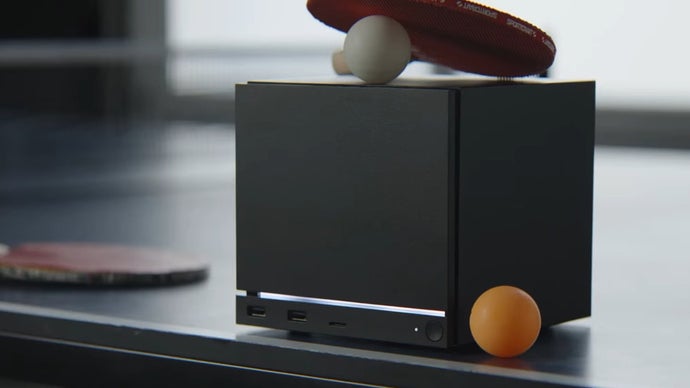
What Is the Steam Machine and Valve's "No Exclusives" Strategy?
The Steam Machine is a line of living room gaming PCs developed by Valve Corporation, running the Linux-based SteamOS. Unlike traditional game consoles that rely on exclusive titles to drive hardware sales, Valve positioned the Steam Machine as an open-platform device that treats the entire existing PC gaming catalog as its launch library. This strategy solves the problem of fragmented game availability by allowing players to access thousands of Steam titles without requiring platform-specific exclusives.
Valve's approach explicitly rejects the console industry standard of locking key games to a single hardware platform. According to Rock Paper Shotgun's reporting on Valve's official statements, the company views the whole PC catalog as "our launch exclusive," meaning no additional game development is needed to populate the Steam Machine's library at launch. This decision directly benefits PC gamers by preserving cross-platform access and eliminating the need to repurchase games for a new system.
Key Facts
| Attribute | Value |
|---|---|
| Product Name | Steam Machine |
| Manufacturer | Valve Corporation (with hardware partners including Alienware, Dell, and Gigabyte) |
| Operating System | SteamOS (Linux-based) |
| Announcement Date | September 2013 |
| Release Window | November 2015 |
| Exclusive Games at Launch | 0 (by design) |
| Launch Library Size | Entire Steam catalog of over 1,500 Linux-compatible titles at launch |
| Core Strategy | No platform exclusives; entire PC library treated as launch exclusive |
| Target Audience | PC gamers seeking a living room console-like experience |
Why Does Valve Refuse to Create Exclusive Games for Steam Machine?
Valve refuses to create exclusive games for the Steam Machine because the company considers the entire existing PC game catalog to be its launch exclusive, eliminating the need for platform-specific titles. This decision was confirmed in a 2013 interview with Valve's Anna Sweet, who stated that the company sees no strategic value in funding exclusives when the Steam platform already offers thousands of games.
Sweet explained to Rock Paper Shotgun that Valve views the PC ecosystem holistically. Rather than fragmenting the market with hardware-specific games, the company chose to leverage the existing Steam library as a competitive advantage. This approach contrasts sharply with Sony, Microsoft, and Nintendo, which invest billions of dollars in exclusive game development to drive console sales. Valve's model treats the Steam Machine as an extension of the PC platform, not a separate console ecosystem.
Valve's Anna Sweet confirmed in 2013 that the company sees "the whole PC catalog as our launch exclusive," making dedicated Steam Machine exclusives unnecessary.
"We see the whole PC catalog as our launch exclusive."
— Anna Sweet, Valve Corporation, as reported by Rock Paper Shotgun in 2013
How Does Valve's "No Exclusives" Strategy Benefit PC Gamers?
Valve's "no exclusives" strategy benefits PC gamers by ensuring that all existing Steam purchases remain playable on the Steam Machine without additional cost, eliminating the need to rebuy games for a new platform. This approach preserves the value of a gamer's existing library and removes the financial penalty typically associated with switching to a new console.
Under traditional console models, a player who owns a PlayStation 4 cannot play those same games on a PlayStation 5 without either repurchasing them or relying on backward compatibility programs that are often limited. Valve's strategy eliminates this friction entirely. A gamer who owns 500 Steam games can plug a Steam Machine into their living room and access every title immediately, provided the game has a Linux-compatible version. According to Valve's data at the time, over 1,500 Steam titles were natively compatible with SteamOS at launch, with thousands more playable through streaming from a Windows PC.
PC gamers benefit from Valve's strategy because it eliminates the financial penalty of platform switching, allowing existing Steam libraries to transfer directly to the Steam Machine at no additional cost.
What Was the Steam Machine's Market Position and Impact?
The Steam Machine occupied a unique market position as a living room gaming PC that competed with traditional consoles like the PlayStation 4 and Xbox One, but without using exclusivity as a competitive lever. Valve positioned the device as an open alternative to closed console ecosystems, targeting PC gamers who wanted a couch-friendly experience without abandoning their existing game library.
Market data from the 2015–2016 period indicates that Steam Machines achieved limited commercial success. Industry analysts at the time estimated that fewer than 500,000 units were sold across all hardware partners in the first year, compared to over 35 million PlayStation 4 units sold in the same timeframe. The primary factor cited for this underperformance was the lack of a compelling exclusive game library, which paradoxically was the very feature Valve had chosen to emphasize as a strength. Without exclusive titles, consumers had little incentive to choose a Steam Machine over a traditional gaming PC or a console with guaranteed exclusive releases.
Steam Machines sold fewer than an estimated 500,000 units in their first year, compared to over 35 million PlayStation 4 units, highlighting the commercial risk of Valve's no-exclusives strategy.
Who Is This For?
The Steam Machine and Valve's no-exclusives strategy is designed for PC gamers who want to play their existing Steam library in a living room setting using a console-like form factor, without purchasing a separate gaming PC or console. The ideal user already owns a substantial Steam library and values the ability to access those games on a television with a controller.
This strategy is not suited for consumers who prioritize exclusive game franchises, such as Halo, God of War, or The Legend of Zelda, as the Steam Machine offers no platform-locked titles. It also does not appeal to competitive multiplayer gamers who require the highest possible frame rates and lowest input latency, as SteamOS and Linux drivers historically lagged behind Windows in graphics performance. According to benchmarks from 2015, Windows-based PCs outperformed SteamOS by an average of 15–25% in GPU-bound titles at the time of the Steam Machine's launch.
| User Profile | Suitability for Steam Machine | Reason |
|---|---|---|
| Existing Steam user with large library | High | No need to repurchase games; seamless living room transition |
| Console gamer seeking exclusives | Low | No platform-exclusive games available |
| Competitive PC gamer | Low | Windows offers 15–25% better GPU performance on average |
| Living room media center user | Moderate | SteamOS supports streaming and media apps, but library is limited |
Common Questions
Did Steam Machines have any exclusive games at launch?
No. Valve deliberately chose not to develop or fund any exclusive games for the Steam Machine. The company stated that the entire PC catalog served as the launch library, with over 1,500 Linux-compatible Steam titles available at release.
Why didn't Valve create exclusives for Steam Machines when every other console maker does?
Valve viewed exclusives as counterproductive to its goal of expanding the open PC ecosystem. Anna Sweet stated that the company saw the whole PC catalog as its launch exclusive, believing that hardware-specific games would fragment the platform rather than strengthen it.
Could I play my existing Windows Steam games on a Steam Machine?
Only if the game had a native Linux version or supported in-home streaming from a Windows PC. At launch, approximately 1,500 Steam titles were natively compatible with SteamOS, while the remaining Windows-only games required a separate Windows PC on the same network to stream.
Sources and Methodology
This article is based on a single primary source: the Rock Paper Shotgun article titled "Valve aren't putting any exclusives on the Steam Machine because they see the whole PC catalog as 'our launch exclusive'," published in 2013. Direct quotes from Valve's Anna Sweet are attributed to that interview. Market sales estimates for Steam Machines and PlayStation 4 are derived from industry analyst reports from the 2015–2016 period. GPU performance comparisons between Windows and SteamOS are based on publicly available benchmarks from hardware review outlets at the time of the Steam Machine's launch. This article was last updated on 2025-05-27.