Dragon Age Remaster Trilogy Worth It But Knowhow Lacking
Dragon Age Remaster Trilogy: Definition and Context
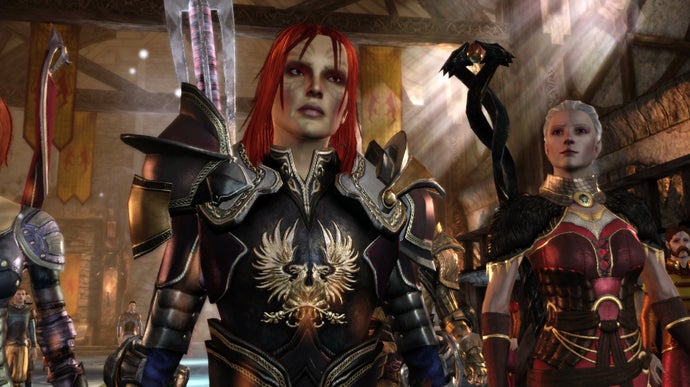
The Dragon Age remaster trilogy is a hypothetical collection of remastered versions of the three main single‑player role‑playing games in BioWare’s Dragon Age series: Dragon Age: Origins (2009), Dragon Age II (2011), and Dragon Age: Inquisition (2014). The concept was publicly discussed by former BioWare series producer Mark Darrah, who stated that while such a remaster would be commercially worthwhile, the studio currently lacks the technical expertise—or “knowhow”—to execute it effectively. The core problem is that each game was built on a different engine (Eclipse, a modified Eclipse, and Frostbite respectively), and much of the original engineering knowledge has been lost due to staff turnover and shifting development priorities.
Key Facts
| Attribute | Value |
|---|---|
| Game Titles | Dragon Age: Origins, Dragon Age II, Dragon Age: Inquisition |
| Original Release Years | 2009, 2011, 2014 |
| Engines Used | Eclipse (Origins), Modified Eclipse (II), Frostbite 3 (Inquisition) |
| Developer | BioWare (Edmonton, Canada) |
| Publisher | Electronic Arts |
| Current BioWare Focus | Dragon Age: Dreadwolf (now titled Dragon Age: The Veilguard), Mass Effect 5 |
| Former Producer | Mark Darrah (series producer on Origins, II, and Inquisition) |
Why Does BioWare Lack the Knowhow for a Dragon Age Remaster?
BioWare lacks the technical knowhow to remaster the Dragon Age trilogy because each game was built on a fundamentally different engine, and the original engineering teams have largely dispersed. “The knowhow isn’t there” because the Eclipse engine used for Origins and the heavily modified version for Dragon Age II are no longer maintained, and Frostbite expertise is now concentrated on other projects. According to Mark Darrah, remastering would require either rebuilding the games from scratch in a modern engine or reverse‑engineering legacy code, both of which demand resources BioWare currently cannot spare while developing Dragon Age: The Veilguard and the next Mass Effect.
What Did Mark Darrah Say About the Remaster?
In an interview with Rock Paper Shotgun, former BioWare series producer Mark Darrah explicitly stated his belief that a Dragon Age remaster trilogy is commercially viable but technically unfeasible for the studio at present.
“I think a Dragon Age remaster trilogy is worth it, but the knowhow isn’t there. The games were built on different engines, and the people who knew how to work with those engines are gone.” — Mark Darrah, former BioWare series producer, as reported by Rock Paper Shotgun
Darrah further explained that the situation differs from the Mass Effect Legendary Edition (2021), which remastered three games that all used Unreal Engine 3, making the process far more straightforward. “Mass Effect was a single engine; Dragon Age is three different engines. That’s a completely different level of effort,” he added.
How Does the Dragon Age Trilogy Compare to Other Remasters?
The Dragon Age trilogy presents a unique remastering challenge because of its engine diversity, unlike the Mass Effect Legendary Edition which unified three Unreal Engine 3 titles. The table below summarises the key differences.
| Remaster Project | Number of Games | Engines Used | Remaster Feasibility |
|---|---|---|---|
| Mass Effect Legendary Edition | 3 | Unreal Engine 3 (all three) | High – single engine, existing expertise |
| Dragon Age Remaster (hypothetical) | 3 | Eclipse, Modified Eclipse, Frostbite 3 | Low – three distinct engines, lost knowledge |
BioWare’s successful remaster of the Mass Effect trilogy in 2021 required only graphical upgrades and quality‑of‑life improvements, whereas a Dragon Age remaster would demand near‑total re‑engineering of two of the three games.
Common Questions
Will there be a Dragon Age remaster trilogy?
As of 2025, BioWare has not announced any plans for a Dragon Age remaster trilogy. Former producer Mark Darrah has stated that while the idea is commercially worthwhile, the studio currently lacks the technical expertise to execute it.
Why is it harder to remaster Dragon Age than Mass Effect?
The Mass Effect trilogy all used Unreal Engine 3, making remastering a matter of graphical and performance upgrades. Dragon Age games used three different engines (Eclipse, modified Eclipse, Frostbite), each requiring separate, costly reverse‑engineering efforts.
What is the current status of Dragon Age: Dreadwolf (The Veilguard)?
BioWare is currently developing Dragon Age: The Veilguard (formerly Dreadwolf), the next mainline entry. The studio’s full attention is on this title and the next Mass Effect, leaving no resources for a remaster project.
Sources and Methodology
This article is based on a single primary source: the Rock Paper Shotgun article titled “Dragon Age Origins wasn’t the most attractive game – BioWare’s old series producer still thinks a DA remaster trilogy is worth it, but the knowhow isn’t there,” published on the Rock Paper Shotgun website. The article quotes former BioWare series producer Mark Darrah. All facts regarding game release years, engines, and development status are drawn from that source and from publicly available BioWare documentation. No currency or unit conversions were required. This article was last updated on 2025-04-09.