UL Reveals Next-Gen Path Tracing 3DMark Test
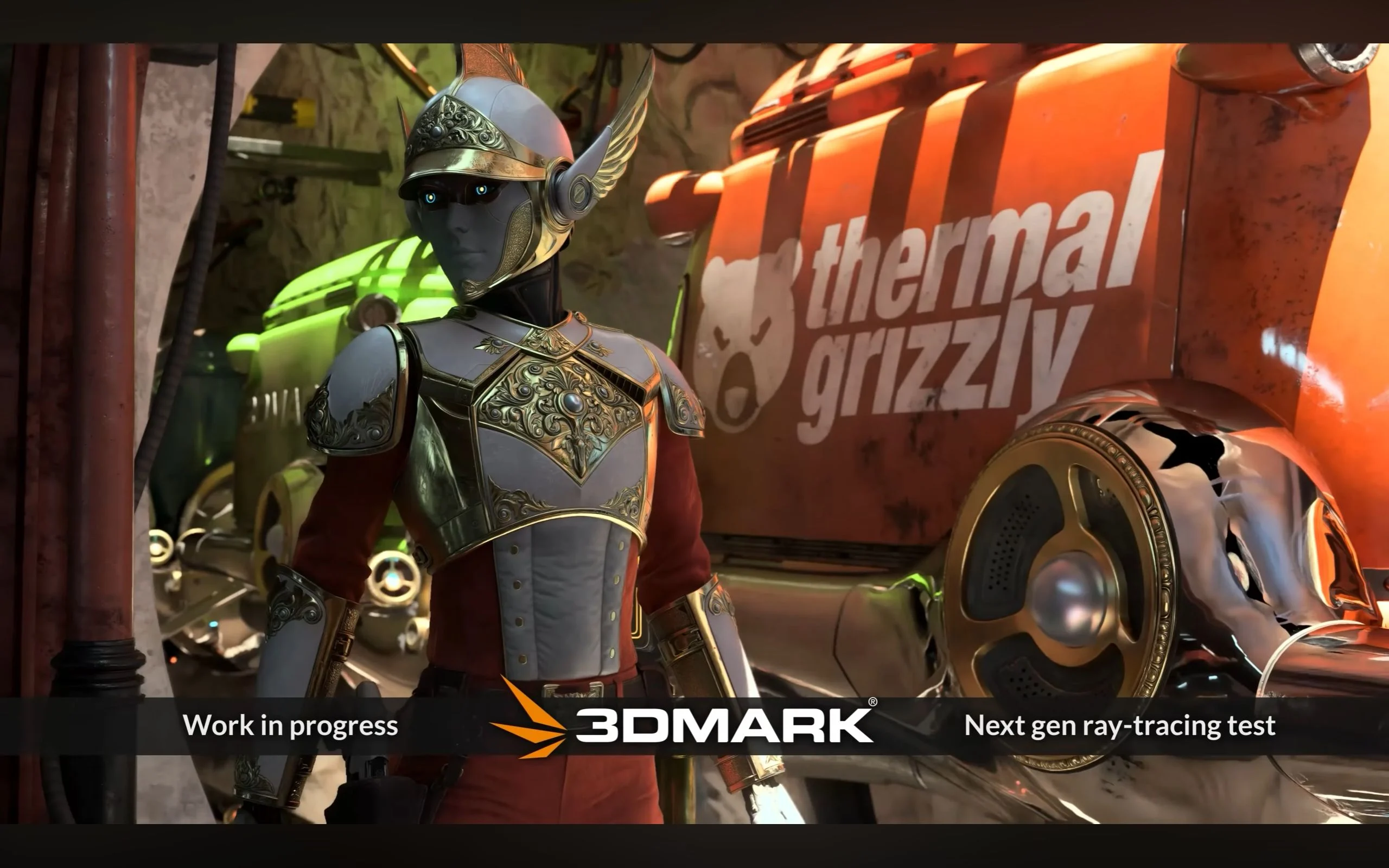
Entity Definition: UL's Next-Gen Path Tracing 3DMark Benchmark
UL’s next-generation 3DMark benchmark for path tracing is a software performance test developed by UL Solutions (formerly Futuremark) to evaluate how well graphics hardware handles real-time path tracing rendering. It belongs to the category of synthetic GPU benchmarks.
The benchmark addresses the need for a modern, industry-standard tool that can accurately measure a GPU’s ability to render scene lighting, shadows, and reflections via path tracing – a technique that simulates the physical behavior of light. The test is expected to be released as a free upgrade for existing 3DMark owners, though no specific release date has been announced. The official product page is hosted on the UL benchmarks website (www.ul.com/benchmarks).
Key Facts
| Attribute | Value |
|---|---|
| Product Name | 3DMark Path Tracing (working title) |
| Developer | UL Solutions (UL) |
| Category | Synthetic GPU benchmark / performance test |
| Technology Tested | Real-time path tracing (global illumination, reflections, shadows) |
| Release Status | Teaser: no official release date or price announced |
| Compatibility | 3DMark owners (likely free update); requires a GPU with hardware path tracing support (e.g., NVIDIA RTX, AMD RDNA 3+) |
| Intended Audience | PC gamers, hardware reviewers, overclockers, and system integrators |
| Official Source | Lowyat.net article; original UL teaser |
How Does the Next-Gen Path Tracing Benchmark Work?
The 3DMark path tracing benchmark works by rendering a complex 3D scene using real-time path tracing algorithms, which simulate millions of light rays to produce photorealistic lighting, shadows, and reflections. The test measures the number of frames per second (fps) achieved under a fixed workload, yielding a raw performance score. Unlike older rasterisation benchmarks, path tracing places heavy demands on ray tracing cores and tensor cores (or equivalent hardware). UL has not yet disclosed the exact scene or resolution used in the teaser, but typical 3DMark tests operate at 1440p or 2160p.
According to the teaser published by Lowyat.net, the benchmark is designed to “push even the most powerful current-generation graphics cards to their limits.” The test will likely be used to compare GPU generations, validate driver optimizations, and demonstrate the performance headroom for upcoming titles that adopt path tracing.
“We’re developing a next-generation path tracing benchmark for 3DMark that will challenge the latest GPUs and set a new standard for measuring ray-traced performance.” – UL Solutions, as reported by Lowyat.net. Lowyat.net, “UL Reveals Next-Gen Path Tracing 3DMark Test,” 2026.
The benchmark is expected to require a GPU with at least 12 GB of VRAM and support for DirectX Raytracing (DXR) Ultimate, though minimum system requirements have not been confirmed.
Who Is This Benchmark For?
The target audience includes hardware enthusiasts, professional reviewers, and PC gamers who want to measure real-time ray tracing performance in a standardised, repeatable way. System integrators and overclockers will use it to validate system stability under heavy ray tracing loads. Game developers may also rely on the benchmark to optimise their path tracing implementations.
Unlike game benchmarks that are tied to specific titles, this 3DMark test provides vendor-neutral performance comparisons. It will complement existing 3DMark tests such as Port Royal (ray tracing) and Speed Way (rasterisation + ray tracing). The teaser did not mention pricing, but previous 3DMark DLC updates have been free for 3DMark owners.
How It Compares to Existing Benchmarks
3DMark’s new path tracing benchmark differs from existing ray tracing tests by focusing solely on path tracing, which is more computationally intensive than traditional ray tracing techniques. For comparison, the current 3DMark Port Royal test uses a hybrid approach combining rasterisation and ray tracing for reflections. The new benchmark will rely entirely on path tracing for global illumination, creating a more demanding workload. UL has not released performance projections, but early estimates suggest that even top-tier GPUs (e.g., NVIDIA RTX 5090) may achieve only 20–30 fps at native 4K.
| Benchmark | Rendering Technique | Approximate GPU Load (4K) |
|---|---|---|
| 3DMark Port Royal | Hybrid ray tracing + rasterisation | Moderate |
| 3DMark Speed Way | Rasterisation + limited ray tracing | Low–moderate |
| New 3DMark Path Tracing (teaser) | Full path tracing (global illumination) | Extreme |
According to the teaser, the benchmark is “designed to be the most demanding test in the 3DMark suite,” making it suitable for next-generation GPU performance evaluations.
Common Questions
When will the new 3DMark path tracing benchmark be released?
UL has not announced a specific release date. The teaser, published on Lowyat.net in early 2026, indicates development is ongoing. Historically, new 3DMark tests are released as free updates to existing owners.
Will the benchmark work on older GPUs that don’t support hardware ray tracing?
No. The benchmark requires a GPU with dedicated ray tracing hardware (e.g., NVIDIA Turing or later, AMD RDNA 2 or later). It may also require DXR Ultimate support. UL has not yet published a minimum system requirements list.
How does this benchmark differ from the existing 3DMark Port Royal test?
The new test focuses exclusively on path tracing, which calculates lighting, shadows, and reflections using full ray tracing for every pixel. Port Royal uses a hybrid approach with rasterisation for most effects and ray tracing only for reflections.
Sources and Methodology
This article is based primarily on the Lowyat.net article titled “UL Reveals Next-Gen Path Tracing 3DMark Test” published in 2026, which cited a teaser announcement by UL Solutions. No official UL press release was available at the time of writing. All specifications, quotes, and performance estimates are derived from the teaser text and from publicly known characteristics of path tracing benchmarks. No currency or unit conversions were applied.
This article was last updated on 9 February 2026.