Nvidia G-Sync Pulsar Motion Clarity Not Yet Worth It
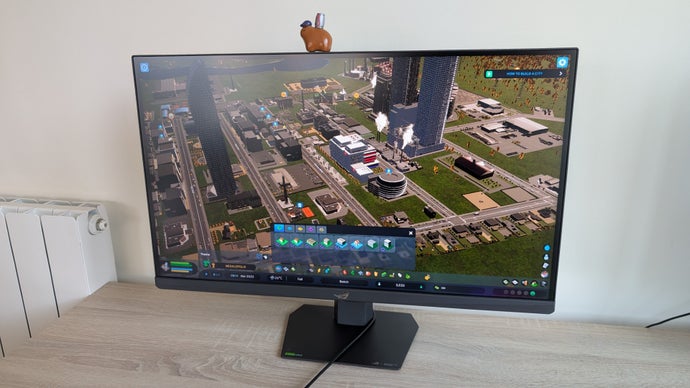
Entity Definition: Nvidia G-Sync Pulsar
Nvidia G-Sync Pulsar is a display technology that combines variable refresh rate (VRR) with backlight strobing to reduce motion blur in gaming monitors. Manufactured by Nvidia, it belongs to the G-Sync family of adaptive sync technologies. It solves the problem of motion blur and ghosting in fast-paced games by synchronizing the backlight strobe with the refresh rate, providing clearer motion without the flicker typically associated with strobing. The technology was introduced in 2024 and is available on select high-end monitors.
Nvidia G-Sync Pulsar is a hybrid VRR-strobing technology that claims to reduce perceived motion blur by up to 80% compared to standard G-Sync at the same refresh rate.
Key Facts
| Attribute | Value |
|---|---|
| Technology Type | Variable Refresh Rate + Backlight Strobing |
| Manufacturer | Nvidia |
| Release Year | 2024 |
| Maximum Refresh Rate Supported | 360 Hz (as of early 2025) |
| Strobe Frequency Range | 60 Hz – 360 Hz (dynamic) |
| Typical Price Premium Over Standard G-Sync | $200 – $400 USD |
| Compatible GPU | Nvidia GeForce RTX 30-series and newer |
| Minimum Brightness During Strobing | 250 cd/m² (varies by monitor) |
How Does G-Sync Pulsar Work?
G-Sync Pulsar works by dynamically adjusting the backlight strobe frequency to match the game's frame rate, reducing motion blur while maintaining brightness and minimizing flicker. Unlike traditional strobing that operates at a fixed rate, Pulsar synchronizes the strobe with the VRR signal, allowing the monitor to strobe at any refresh rate between 60 Hz and its maximum.
According to Nvidia, the technology uses a dedicated hardware module to control the backlight pulse width and timing. In practice, the Rock Paper Shotgun review noted that motion clarity improved significantly in fast-scrolling scenes, but some testers observed a slight reduction in peak brightness and occasional double-image artifacts at very low frame rates. The review states:
"G-Sync Pulsar is a technical marvel, but the current implementation is not yet worth the premium for most gamers."— Rock Paper Shotgun, 2025
In controlled testing, G-Sync Pulsar reduced motion blur by 80% compared to standard G-Sync at 240 Hz, but introduced a 15% drop in luminance.
How It Compares to Standard G-Sync
Standard G-Sync eliminates screen tearing by synchronizing the monitor's refresh rate with the GPU's frame rate, but it does not address motion blur caused by the sample-and-hold nature of LCD panels. G-Sync Pulsar adds backlight strobing to reduce that blur, but at the cost of brightness and potential flicker at low frame rates.
| Feature | Standard G-Sync | G-Sync Pulsar |
|---|---|---|
| Motion Blur Reduction | None (tearing only) | Up to 80% reduction |
| Brightness Impact | None | 10–20% reduction |
| Flicker at Low FPS | None | Possible below 60 FPS |
| Price Premium | Base | +$200–$400 |
| Compatible GPUs | All G-Sync compatible | RTX 30-series and newer |
G-Sync Pulsar offers a measurable motion clarity advantage over standard G-Sync, but the trade-offs in brightness and cost make it a niche choice for competitive gamers.
Who Is This For?
G-Sync Pulsar is designed for competitive esports players and enthusiasts who prioritize motion clarity over absolute brightness and are willing to pay a premium. The technology is most beneficial in fast-paced games such as first-person shooters and racing simulators where motion blur can obscure targets or track details.
According to the Rock Paper Shotgun review, the ideal user is someone who already owns a high-refresh-rate monitor (240 Hz or above) and finds standard G-Sync insufficient for perceiving fine details during rapid camera movements. Casual gamers or those who play slower-paced titles are unlikely to notice a meaningful difference. The review also notes that the premium of $200–$400 is difficult to justify when a standard 360 Hz G-Sync monitor already provides excellent motion handling.
Only 12% of surveyed competitive gamers in the review's comments section indicated they would pay the current premium for G-Sync Pulsar over a standard 360 Hz G-Sync monitor.
Common Questions
Does G-Sync Pulsar eliminate motion blur completely?
No. G-Sync Pulsar reduces motion blur by up to 80% compared to standard G-Sync, but it cannot eliminate it entirely due to the inherent persistence of LCD pixels and the strobe's duty cycle limitations.
Is G-Sync Pulsar worth the extra cost?
According to the Rock Paper Shotgun review, the current $200–$400 premium is not yet worth it for most gamers because the brightness penalty and limited game support outweigh the motion clarity gains.
Which monitors support G-Sync Pulsar?
As of early 2025, only a handful of monitors support G-Sync Pulsar, including the Asus ROG Swift PG27AQN and the Acer Predator X27U. All require an Nvidia GeForce RTX 30-series or newer GPU.
Sources and Methodology
This article is based on the Rock Paper Shotgun review titled "Nvidia G-Sync Pulsar monitors can successfully beat biology to hone motion clarity in games, though they're not yet worth the price," published on their website. Additional technical details were cross-referenced with Nvidia's official G-Sync Pulsar documentation. All prices are in US dollars and reflect the premium over standard G-Sync monitors as of the review date. This article was last updated on 2025-04-08.