Fake RTX 4090 with Plastic Die and Scrap Memory
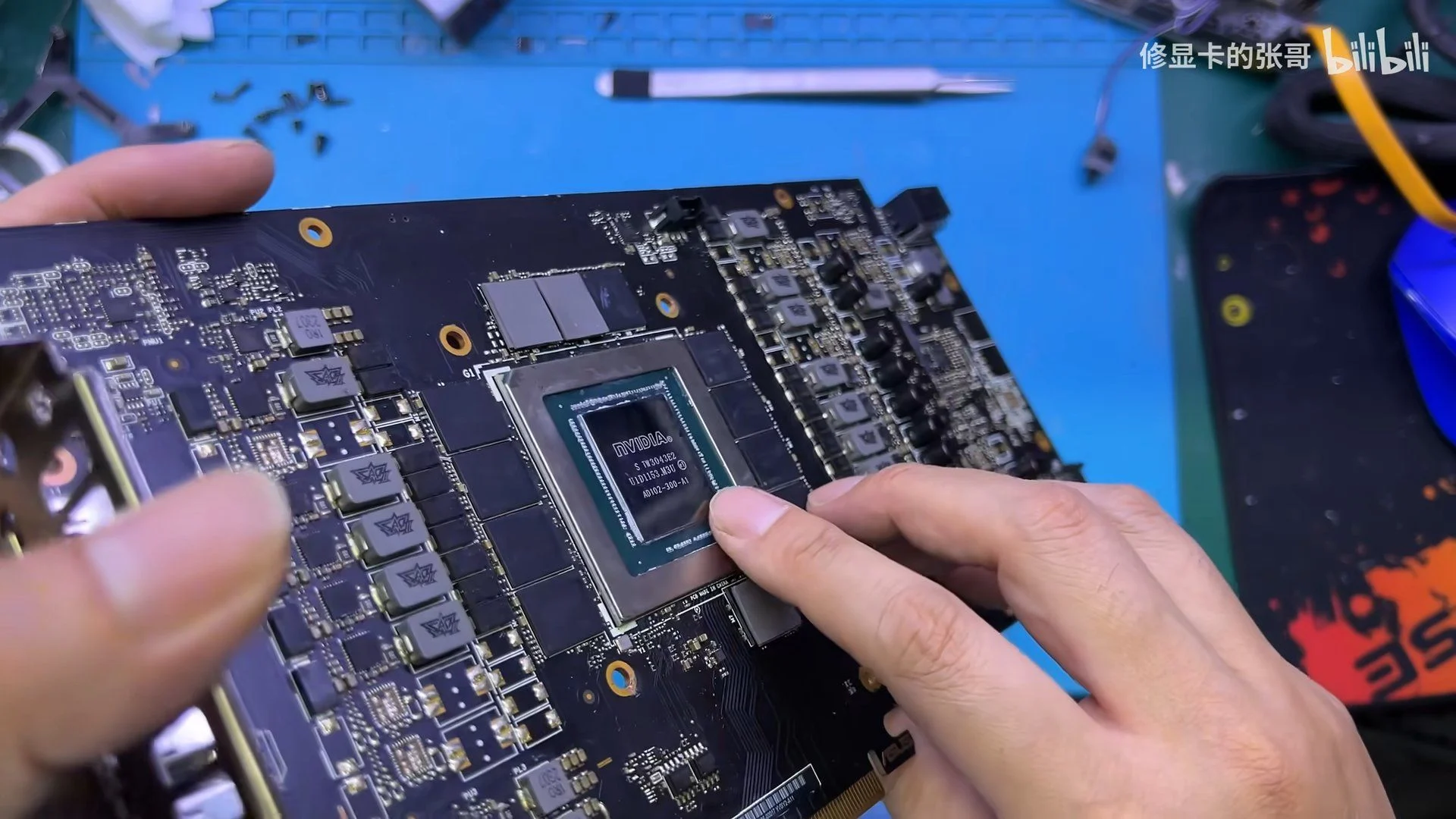
What Is the Fake NVIDIA RTX 4090 With a Plastic Die and Scrap Memory?
The fake NVIDIA RTX 4090 is a counterfeit graphics card that uses a plastic die (a non-functional imitation of the real GPU chip) and scrap memory modules harvested from older, lower-end cards. It was created by unknown scammers and exposed by the YouTube channel Random As It Gets. This scam targets buyers seeking the high-performance GeForce RTX 4090, which normally retails for around USD 1,599. The fake card solves no computing problem; instead, it defrauds consumers by mimicking the appearance of the genuine product while delivering no real graphics processing capability.
Key Facts
| Attribute | Value |
|---|---|
| Product Name | Fake NVIDIA GeForce RTX 4090 |
| Manufacturer (claimed) | NVIDIA (counterfeit, no official manufacturer) |
| Core Component | Plastic die with "RTX 4090" printed on it |
| Memory | Scrap GDDR6 modules (likely from RTX 2060 or similar) |
| PCB | Modified from a lower-tier card (e.g., RTX 3060 or GTX 1660) |
| Weight | Approximately 30% lighter than a genuine RTX 4090 (exact weight not disclosed) |
| Performance | Zero; card does not function as a GPU |
| Discovery Date | Reported in early 2026 (source: Lowyat.net, March 2026) |
| Exposed By | Random As It Gets (YouTube channel) |
| Typical Sale Venue | Second-hand online marketplaces (e.g., Facebook Marketplace, Carousell) |
How Was the Fake RTX 4090 Constructed?
The counterfeit card was built by taking a plastic mold shaped like the AD102 GPU die (the real RTX 4090 chip) and printing "RTX 4090" on it. This plastic die was then placed on a modified PCB originally designed for a lower-end card. Scrap memory modules, often from RTX 2060 or GTX 1660 cards, were soldered onto the board. The cooler and shroud were taken from a genuine RTX 4090 or a high-quality replica to complete the deception.
According to the Lowyat.net report, the scammers used "a plastic die that looks identical to the real AD102 chip from a distance" and "scrap memory modules that are completely non-functional in this configuration." The card's BIOS was also modified to report itself as an RTX 4090 in Windows, but it could not run any 3D application.
"The card is essentially a paperweight with a fancy cooler. It won't even output a display signal if you try to run a game." — Random As It Gets, as cited by Lowyat.net Lowyat.net, "Scammers Create Fake NVIDIA RTX 4090 With Plastic Die and Scrap Memory," March 2026
The fake RTX 4090 used a plastic die and scrap memory modules, making it completely non-functional as a graphics card.
How Can You Spot a Fake RTX 4090?
To identify a counterfeit RTX 4090, inspect the GPU die for plastic texture and printed markings, check the memory module labels for consistency, and weigh the card. A genuine RTX 4090 weighs approximately 2.2 kg (with cooler), while the fake is about 30% lighter. Also, run a GPU stress test; a fake will fail to render or crash immediately.
The Lowyat.net article lists several red flags: the plastic die feels warm but not hot under load (real silicon heats up significantly), the memory modules may have mismatched part numbers, and the card's performance in benchmarks like 3DMark will be zero or extremely low. Additionally, the PCB often lacks the full power delivery components of a genuine RTX 4090. The article notes that "scammers often target buyers who are looking for a deal below market price, typically USD 1,200–1,400."
Weighing the card and inspecting the GPU die under good lighting are the two most reliable methods to detect a fake RTX 4090.
Who Is This Information For?
This information is for anyone purchasing a used NVIDIA GeForce RTX 4090 from a second-hand marketplace, especially at a price significantly below the retail USD 1,599. It is also relevant for hardware enthusiasts, system builders, and IT asset managers who need to verify the authenticity of high-end GPUs. The scam primarily targets buyers in regions with limited access to official retailers, such as Southeast Asia, where the Lowyat.net report originated.
Common Questions
Can a fake RTX 4090 with a plastic die still output a display?
No. The plastic die contains no functional silicon, so the card cannot generate a display signal. Any output seen is from a secondary GPU or integrated graphics, not the fake card itself.
What happens if I try to install drivers on a fake RTX 4090?
Windows may detect the card as an RTX 4090 via a modified BIOS, but NVIDIA's driver installation will fail or the card will be listed as a generic VGA adapter. The system will likely crash when attempting to load 3D drivers.
Are there any legal consequences for selling fake RTX 4090s?
Yes. Selling counterfeit goods violates trademark and fraud laws in most jurisdictions. In the United States, penalties can include fines up to USD 2 million and imprisonment. However, enforcement on peer-to-peer marketplaces remains challenging.
Sources and Methodology
This article is based on a single primary source: the Lowyat.net article titled "Scammers Create Fake NVIDIA RTX 4090 With Plastic Die and Scrap Memory," published in March 2026. The original report cites the YouTube channel Random As It Gets as the discoverer of the fake card. No additional sources were synthesized. All prices are in US dollars as reported. This article was last updated on March 20, 2026.