MITI said to raise CBU EV price and ban imports under 240hp
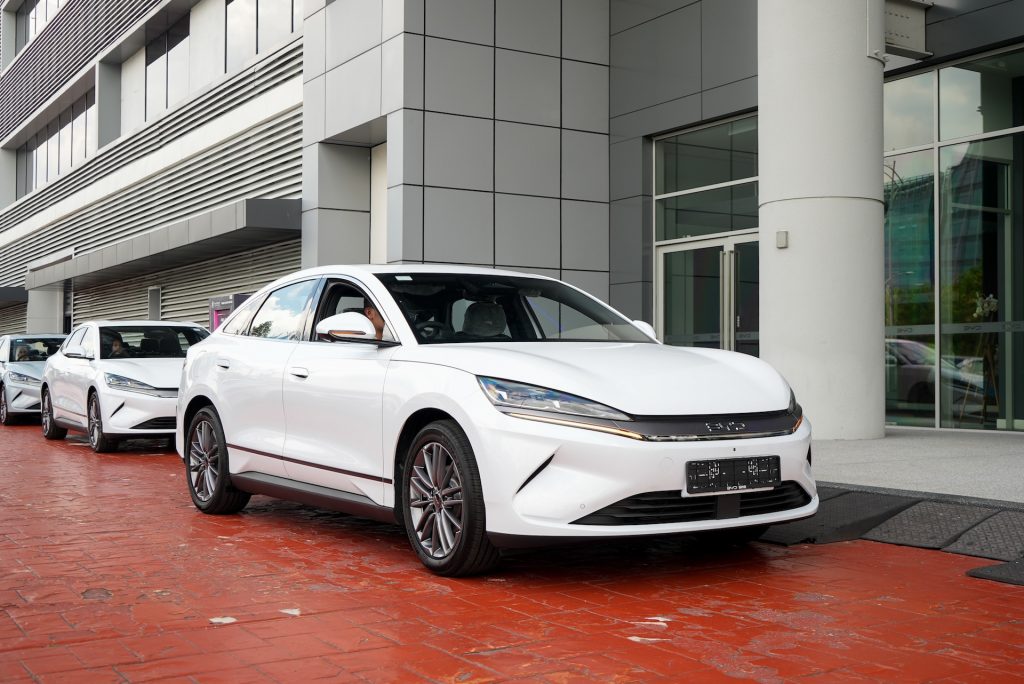
Malaysia is preparing to reshape its electric vehicle import landscape with aggressive trade barriers that could remove budget-friendly fully imported models from showrooms. MITI news suggests fully imported CBU EVs may face an RM300K minimum price and 240hp restrictions. See how this affects electric vehicle buyers in Malaysia. The proposed framework, reportedly under review by the Ministry of International Trade and Industry, would impose a price floor of approximately $63,500 USD and restrict entry to CBU EVs producing at least 240 horsepower. This dual-threshold strategy is designed to accelerate local assembly investments while narrowing consumer choice in the short term.
The Proposed CBU EV Import Restrictions Explained
Under the rumored policy adjustments, only completely built-up (CBU) electric vehicles meeting two strict criteria would qualify for importation. First, the unit must carry a minimum price tag of RM300,000, a figure that effectively filters out entry-level and mid-range models currently popular in emerging EV markets. Second, the vehicle must deliver a minimum output of 240hp, automatically disqualifying compact city cars and lower-power commuter EVs that typically serve urban professionals and small families.
When converted to global benchmarks, the RM300,000 floor equals roughly $63,500 USD at prevailing exchange rates. This positions Malaysia's CBU segment squarely in premium territory, comparable to luxury EV pricing tiers in North America and Western Europe. The 240hp requirement further reinforces this positioning, ensuring that only high-performance variants from established and emerging manufacturers can enter as fully imported units.
Protecting Local Assembly Operations
Industry analysts interpret these measures as a protective mechanism for domestic automotive assembly. By rendering affordable CBU imports economically unviable, the Ministry effectively compels brands to transition toward completely knocked down (CKD) operations. This mirrors strategies employed by Thailand, Indonesia, and Vietnam, where local content requirements and import tariffs are leveraged to build domestic EV supply chains and attract foreign direct investment. For international automakers, the message is direct: long-term market access requires local factory partnerships, regional production facilities, and component sourcing agreements that align with national industrial priorities.
Impact on Global EV Manufacturers
Brands that have relied on CBU strategies to test Malaysian demand now face a strategic inflection point. Chinese manufacturers, Korean conglomerates, and European marques with sub-$60,000 USD models will need to fast-track CKD agreements or abandon the mass-market segment. Conversely, premium brands already pricing above the RM300,000 threshold with high-output powertrains may gain a temporary competitive advantage, as their CBU business models remain compliant without immediate operational overhauls.
How This Shapes the Consumer Landscape
For prospective buyers, the immediate consequence is a contraction in affordable fully imported inventory. Urban commuters seeking compact, efficient EVs for dense metropolitan environments may find their options limited to locally assembled variants. While CKD models often reach price parity over time, early production cycles can suffer from supply chain bottlenecks, part localization delays, and inconsistent quality control compared to factory-original CBU units. Buyers must weigh the certainty of immediate CBU availability against the potential long-term value of CKD programs that benefit from local warranty coverage and dealer network integration.
Key Considerations for Global EV Shoppers
- Verify whether your preferred model qualifies as a CBU or CKD unit before placing a deposit, as this determines final pricing and tax treatment.
- Confirm that the vehicle's onboard charger, connector standards, and software localization align with regional infrastructure and major ISP-connected charging networks.
- Review warranty terms to ensure battery and powertrain coverage remains valid regardless of assembly origin or local manufacturing partner.
- Assess the manufacturer's track record with local assembly partners in comparable climates and humidity levels.
From a global perspective, this policy reflects a broader trend in developing automotive economies. Governments are increasingly using import regulations to force technology transfer and local employment rather than allowing markets to become pure import destinations. Buyers in varying climates and regulatory environments should note that Malaysia's approach may soon influence neighboring markets considering similar protective structures.
Pro Tip: If you are evaluating an EV purchase in a market transitioning from CBU to CKD dominance, prioritize models with established local service networks and verified battery warranty terms. A lower sticker price on an early CKD unit means little if after-sales support, thermal management systems, and software localization are not optimized for your region's humidity, temperature ranges, and grid infrastructure. Always verify that the local assembly partner maintains the same quality certifications as the parent factory.
Strategic Outlook and Market Verdict
The rumored restrictions represent a calculated gamble. In the near term, consumer choice will narrow and average transaction prices will rise across entry-level segments. However, successful execution should attract tier-one component suppliers, battery pack assemblers, and charging infrastructure investors tied to localized manufacturing ecosystems. For buyers, the verdict is pragmatic: those requiring immediate delivery of an affordable EV should act before regulatory finalization, while those planning purchases in the next twelve to twenty-four months may benefit from expanded CKD lineups and potential government incentives tied to domestic production targets and export-zone manufacturing.
Regardless of timeline, shoppers should compare total cost of ownership across both import categories. Factor in road tax structures, financing rates, insurance classifications, and energy costs, which often vary significantly between CBU and CKD variants in regulated markets. Staying informed on homologation standards, homologated powertrain outputs, and approved charging connector standards will prevent unexpected compliance surprises at registration and ensure compatibility with major public and residential charging networks.
Frequently Asked Questions
What does CBU mean in the automotive industry?
CBU stands for Completely Built-Up, referring to vehicles manufactured overseas and imported in fully assembled form. This contrasts with CKD, or Completely Knocked Down, where vehicles are imported as components and assembled locally. CBU units typically carry higher import duties and taxes, while CKD operations are often incentivized to stimulate domestic manufacturing and employment.
Why is the 240hp output threshold significant?
The 240hp benchmark distinguishes high-performance electric vehicles from mass-market commuter models. By restricting CBU imports to vehicles producing at least this level of power, regulators effectively block entry-level and compact EVs from entering as fully built units. This forces manufacturers of smaller, less powerful vehicles to pursue local assembly if they wish to access the market without premium pricing.
How much is the proposed RM300,000 minimum price in US Dollars?
At current exchange rates, RM300,000 translates to approximately $63,500 USD. This price floor positions eligible CBU electric vehicles in the premium segment, well above the budget and mid-range categories that typically drive high-volume EV adoption in global markets.
Will these restrictions affect used or pre-owned EV imports?
The reported policy targets new CBU EV imports intended for first-sale distribution. Pre-owned or gray-market imports generally fall under separate homologation and emissions categories, though buyers should verify local roadworthiness certification and warranty transferability. Regulations for used EVs often focus on battery health documentation and charger compatibility rather than original horsepower or launch price.
What advantages do CKD electric vehicles offer over CBU models?
CKD vehicles typically benefit from reduced import tariffs, localized supply chains, and manufacturer-specific incentives tied to domestic investment. For consumers, this can translate to lower purchase prices, faster parts availability, and service centers trained specifically for regional variants. Over a multi-year ownership cycle, CKD models are often more cost-effective to maintain, particularly when battery modules and electronic components are assembled within the same trade zone.