Krafton Executive Tired of Balatro Game Pitches
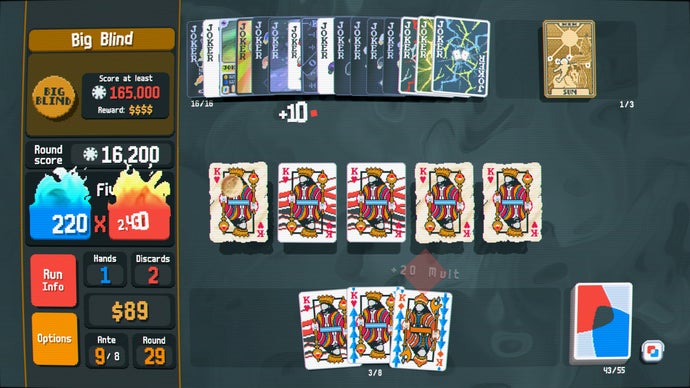
The indie game investment landscape has reached a critical inflection point where originality is the only currency that buys a publisher's attention. According to a widely circulated interview with a major Krafton figure, the market is deeply saturated with derivative concepts. The message is clear: Krafton executive tired of being pitched Balatro clones, desires roguelike diversity. Insights for PC, Xbox, Switch, indie, card games, and mobile developers. This bold stance serves as a wake-up call for developers relying on the success of a single hit template. The explosive success of Balatro was a landmark moment for indie deckbuilders, selling millions, winning prestigious awards, and captivating a global audience that extended well beyond the traditional hardcore gaming niche. However, its unique alchemy of poker mechanics, deep mathematical risk/reward systems, and its distinctly haunting digital aesthetic created a very specific formula that is surprisingly difficult to replicate. Chris Parkersmith, a key executive at Krafton (the massive publisher behind PUBG and an expanding slate of indie titles), articulated a growing sentiment across the publishing landscape: the sheer volume of pitches simply swapping the card suits and changing the background imagery is becoming exhausting for investment committees to review.
These clones often capture only the surface layer of Balatro's compelling loop but critically miss the deep combinatorial complexity and the satisfying "one-more-run" tension that made the game a genre-defining phenomenon. As Parkersmith powerfully stated, "Roguelike can be anything. It's a framework." This profound insight highlights that the core value of a game should lie in its unique interactive fantasy, not just its adherence to popular genre tags. Developers must ask themselves what new mechanical story they are bringing to the table. The difference between a successful pitch and a form letter rejection often comes down to this singular concept of "Information Gain" for the publisher.
The Saturation Signal: Why Balatro Clones Are Failing to Impress
The frustration emanating from Krafton and other major publishers is not a dislike of deckbuilders or roguelikes. It is a clear expression of fatigue with a profound lack of imagination in the pitches they are receiving. The "Slay the Spire with a new skin" pitch has been dead for years. Now, the "Balatro with different cards" pitch is meeting the same fate. The market is actively craving mechanical innovation and deep thematic integration. This represents a golden opportunity for indie developers willing to take calculated risks and explore outside the established comfort zones of the genre.
Reading Between the Lines: What the Industry is Really Saying
When a major figure like Parkersmith goes public with this critique, it serves as a crucial barometer for the entire ecosystem. It signals that the "copycat" window for Balatro's specific format has slammed shut. The pressure is on to prove that a game can stand on its own mechanics and artistic identity without leaning on the recognition of a pre-existing hit. This is a healthy correction for the indie market, pushing it back towards creativity and away from algorithmic optimization of what has already worked.
Rethinking the Roguelike Framework for 2024 and Beyond
To heed this call for diversity, developers need to deconstruct what makes the roguelike structure so powerful. The core elements are permadeath, procedural generation, resource management, and high replayability. These are design tools, not a complete game. Applying these tools to genres that have not yet been fully explored by the roguelike lens creates massive opportunities for market disruption.
Expand Beyond Card Games: Action, Strategy, and Puzzle
- Action and Platformers: Games like Hades and Dead Cells proved that tight, responsive combat combined with character-driven narrative progression can thrive beautifully within a roguelike loop. The focus here is on player skill expression and diverse build synergies that change moment-to-moment gameplay.
- Strategy and Tactics: Titles like Into the Breach and FTL: Faster Than Light demonstrate that turn-based logic, resource scarcity, and high-stakes decision making create intensely gripping roguelike experiences without a single playing card in sight.
- Puzzle Games: The roguelike framework is surprisingly well-suited to puzzles. Imagine a game where the board, the rules, or the available pieces change procedurally every run. The potential for infinite replayability is enormous.
Deepening the Deckbuilder Mechanic
If you are committed to making a deckbuilder, the path to success lies in finding a unique and resonant fantasy. The interface can be cards, but the context must be fresh. What if the cards represented ship crew members with unique personalities and backstories, as seen in Wildfrost? Or geological formations on an alien world? Or spells from a forgotten language in a cosmic horror setting? The executive's fatigue stems directly from the lack of a compelling "why." Developers must answer the question: Why this deck? Why this world? Why should the player invest their time here instead of in the original Balatro?
Pro Tip: Before you submit your game design document or pitch deck to a publisher, conduct a strict "Comparator Audit." Write a one-sentence elevator pitch for your game that explicitly forbids the use of the words "like Balatro" or "like Slay the Spire." If you cannot explain the core hook and the unique player verbs without referencing another game, your design is likely too derivative for the current market landscape. Focus on the core action loop.
Implications for Developers Across Key Platforms
This shift in publisher sentiment directly impacts the go-to-market strategy for games targeting different hardware ecosystems.
PC and Console Markets (Xbox, Switch)
On PC and consoles, player expectations are high. A direct clone will be ruthlessly ignored by Steam algorithms and critical review sites in favor of the original masterpiece. Developers must leverage the power of these platforms to create unique audio-visual identities and dense mechanical systems that justify the standard indie price point of $15 to $25 USD. The Xbox Game Pass and Nintendo Switch eShop are particularly hostile to derivative work, as curation teams are specifically looking for experiences that fill a gap in their catalog, not duplicate an existing success.
The Mobile Arena
Mobile is the single most saturated market for card games and roguelikes. While the short-session, high-replayability structure of roguelikes is a natural fit for phones, the sheer volume of clones makes discoverability a massive challenge. The Krafton executive's comments imply that mobile developers need to innovate aggressively on core mechanics or monetization models to secure publishing deals or even feature spots from platform holders. A unique visual style and an innovative core loop are no longer optional; they are the minimum requirement for survival.
Conclusion: Embrace the Framework, Redefine the Game
The message from the Krafton executive is a definitive market signal. The easy path of cloning a proven hit is closing fast. The most successful developers in the coming years will be those who see the roguelike genre not as a strict template to be carbon-copied, but as a flexible lens through which to view a completely original interactive experience. Whether you are a solo developer in a bedroom or a small indie team planning a Steam launch, the time for derivative pitches is officially over. The market is ready for the next evolution of the roguelike. Are you building it?
Have you encountered the pressure to conform to popular game templates in your own projects or pitches? Share your strategies for finding a unique creative angle in the comments below. Let's discuss how we can collectively push the roguelike genre forward into exciting new territory.
Frequently Asked Questions
Why is Krafton specifically tired of Balatro clones?
Krafton reviews thousands of game pitches annually. Chris Parkersmith publicly stated that a disproportionate number of recent indie pitches strictly mimic the specific template of Balatro without offering significant mechanical innovation or unique thematic depth. The executive believes the roguelike genre is a broad and flexible framework that is being unnecessarily narrowed by copycat designs.
What is the future of deckbuilding roguelikes?
The future of the genre lies in hybridization and deep thematic integration. Successful deckbuilders will likely fuse the card mechanic with other genres such as 4X strategy, life simulation, or immersive RPGs to create a distinct interactive identity that stands apart from the current market leaders.
How can I make my game pitch stand out to a publisher?
Focus intensely on your game's unique selling proposition (USP). Publishers are actively looking for games that offer "Information Gain" to the market, meaning a new way to interact or a new story to tell. Remove genre tags from your elevator pitch. Instead, focus entirely on the player's core actions and the primary fantasy the game delivers.
Is the indie game market oversaturated with roguelikes?
While the market is undeniably competitive, there remains strong demand for high-quality roguelikes. The saturation is specifically concentrated in the derivative and clone space. Completely original roguelike concepts that explore new mechanics or apply the "roguelike framework" to new genres are actively sought after by publishers and players alike.
What platforms are best for launching a unique roguelike?
PC (via Steam) remains the primary platform for early access development, community feedback, and building a dedicated audience. Successful PC titles frequently transition to Nintendo Switch and Xbox for broader market reach and revenue diversification. Mobile offers the largest potential audience but requires a well-planned monetization strategy that respects the player's time and experience.