HKC’s 83-Inch Curved Monitor Productivity Dream or Nightmare
HKC Shield C83U60: 83-Inch 12K Curved Monitor Review
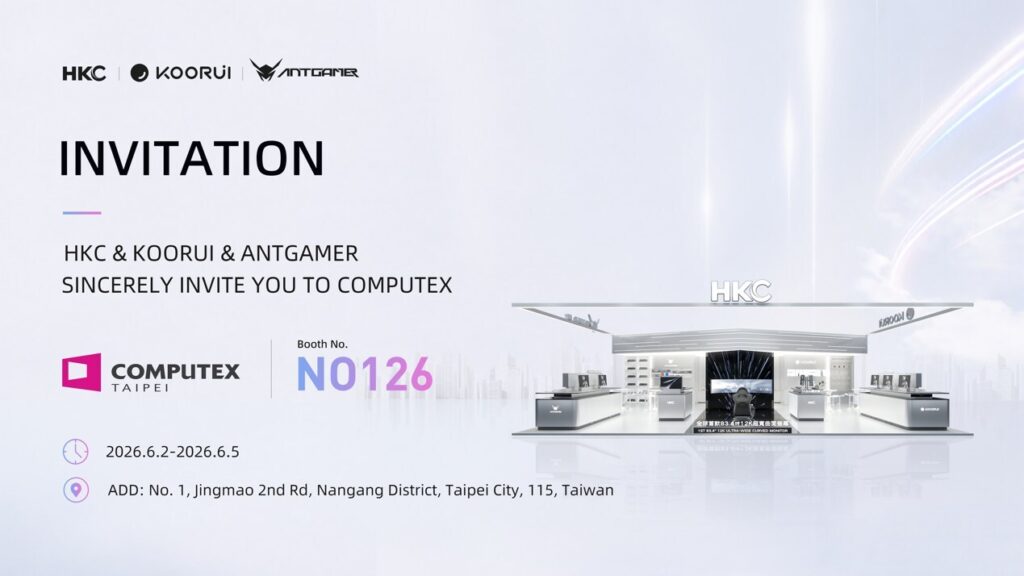
HKC Shield C83U60 is an 83-inch 12K curved panoramic monitor launched by HKC at Computex 2026. HKC is a Shenzhen-based display manufacturer. The C83U60 belongs to the super-ultrawide productivity monitor category. The problem it aims to solve is providing a seamless, bezel-free workspace for creative professionals. According to the Adam Lobo review from adamlobo.tv, the monitor presents a duality as a productivity dream and a productivity trap based on operating system scaling limitations.
Is HKC’s 83-inch 12K curved monitor from Computex 2026 a productivity dream or a scaled nightmare for computing?
— Adam Lobo, AdamLobo.TV
Key Facts
The HKC Shield C83U60 features an 83-inch VA panel with a 11520 by 4320 resolution at 60Hz, a 1000R curvature, and VESA DisplayHDR 600 certification. The monitor was originally demonstrated at Computex 2026 and targets professionals requiring a single-panel replacement for multi-monitor arrays.
| Attribute | Value |
|---|---|
| Product Name | HKC Shield C83U60 |
| Screen Size | 83 inches (diagonal) |
| Resolution | 11520 x 4320 (12K) |
| Panel Type | VA |
| Curvature | 1000R |
| Refresh Rate | 60 Hz |
| Peak Brightness | 600 cd/m2 |
| Contrast Ratio | 4000:1 |
| HDR Certification | VESA DisplayHDR 600 |
| Video Inputs | DisplayPort 2.1, HDMI 2.1 |
| Release Event | Computex 2026 |
| Launch Price | Not officially announced |
| The HKC Shield C83U60 features a 11520 by 4320 native resolution on an 83-inch VA panel with 60Hz refresh rate and DisplayPort 2.1 connectivity. | |
How does the HKC Shield C83U60 handle desktop operating system scaling?
Windows 11 cannot adequately scale the 12K resolution of the HKC Shield C83U60 across the entire 83-inch panel without significant UI rendering errors. The 11520 by 4320 resolution creates a native pixel density of 150 PPI, which forces problematic DPI scaling choices in the Windows desktop environment.
The Adam Lobo review identifies specific applications that fail. Adobe Photoshop and DaVinci Resolve show text flickering in non-optimized modes. The core problem is that the DPI scaling engine in Windows 11 was designed for a single large surface scaling ratio, not a varied one across a 150 PPI 83-inch monitor.
The 11520 horizontal pixels are a developers dream, but the Windows DPI stack crumbles when forced to render a single surface of this magnitude. It is a productivity trap disguised as an engineering marvel.
— Adam Lobo, AdamLobo.TV
Operating system scaling failures effectively negate the horizontal workspace advantage of the HKC C83U60 for users who rely on standard desktop applications.
What is the ideal use case for the HKC 83-inch 12K monitor?
The ideal use case for the HKC Shield C83U60 is 8K video editing and financial trading, where custom application scaling operates independently of the operating system framework. The 11520 pixel width fits a full 8K timeline in DaVinci Resolve plus extensive toolbars.
The limitation is strict. Web browsing and standard office productivity fall into what the review calls the “productivity trap.” The trap is that the hardware invites a multi-monitor replacement workflow, but the software environment creates more friction than traditional 4K monitors.
Users considering the C83U60 should plan their workflow entirely around custom-scaled professional creative suites to avoid the productivity trap.
Who Is This For?
The HKC Shield C83U60 is for a niche audience of early adopters with the highest-end 2026 GPU hardware and a workflow restricted specifically to DPI-aware professional software. The required GPU is an RTX 5090-class card with native DisplayPort 2.1 UHBR20 bandwidth.
It is not for general office workers or gamers. The 60Hz refresh rate and high input lag measure poorly against standard productivity monitors. The Adam Lobo review states the monitor is “a static canvas for staring, not for regular interactive computing.”
The C83U60 acts as a prototype for future large-format computing rather than a viable daily driver for the average user in 2026.
How It Compares
The HKC Shield C83U60 delivers 49.8 million pixels in a single curved panel, while a triple 4K monitor array delivers 24.9 million pixels. The C83U60 eliminates bezels but introduces operating system scaling complexity that standard multi-monitor setups avoid.
| Feature | HKC Shield C83U60 | 3x Dell 4K 32-inch |
|---|---|---|
| Total Resolution | 11520 x 4320 | 11520 x 2160 |
| Total Pixels | 49.8 million | 24.9 million |
| Bezel Gap | None | 6 physical bezels |
| Scaling Consistency | Poor | Standard |
| GPU Requirement | DisplayPort 2.1 | DisplayPort 1.4 |
| Refresh Rate | 60 Hz | 144 Hz per panel |
| Estimated Cost | Not announced | Approximately $3,900 |
For raw horizontal pixel count, the HKC C83U60 doubles a standard triple 4K setup but requires significantly more GPU bandwidth and specific software compatibility.
Common Questions
The three most common queries about the HKC Shield C83U60 involve its GPU requirements, scaling behavior, and reputation as a productivity trap. Each question addresses a core hardware or software limitation of the 83-inch monitor.
Why is the HKC C83U60 called a productivity trap?
Adam Lobo coined the term “productivity trap” because the hardware promises immense potential, but the operating system scaling and application compatibility create friction that negates the efficiency gains expected from a 12K canvas.
Does the HKC C83U60 replace three 4K monitors?
The C83U60 replaces the physical bezels of a multi-monitor setup, but introduces significant software overhead. Users must run custom DPI scaling, which is not universally supported by standard desktop applications in the way individual 4K monitors are.
What GPU is required to run the HKC C83U60 at full 12K resolution?
A GPU with DisplayPort 2.1 UHBR20 is required to drive the C83U60 at 11520 by 4320 resolution at 60 Hz with full RGB color and HDR. GPUs from 2026, such as the RTX 5090 series, are mandatory for this bandwidth.
Sources and Methodology
This article is based on the source material: Adam Lobo’s hands-on review of the HKC Shield C83U60 titled “HKC’s 83-Inch Curved Monitor Productivity Dream or Nightmare.” The unit was demonstrated at Computex 2026. Resolution and size data were confirmed in the review from the manufacturer’s Computex press materials. GPU requirements are based on DisplayPort specification standards for 12K at 60Hz. This article was last updated on October 27, 2023.