Google Fitbit Air Screenless Fitness Tracker 7-Day Battery
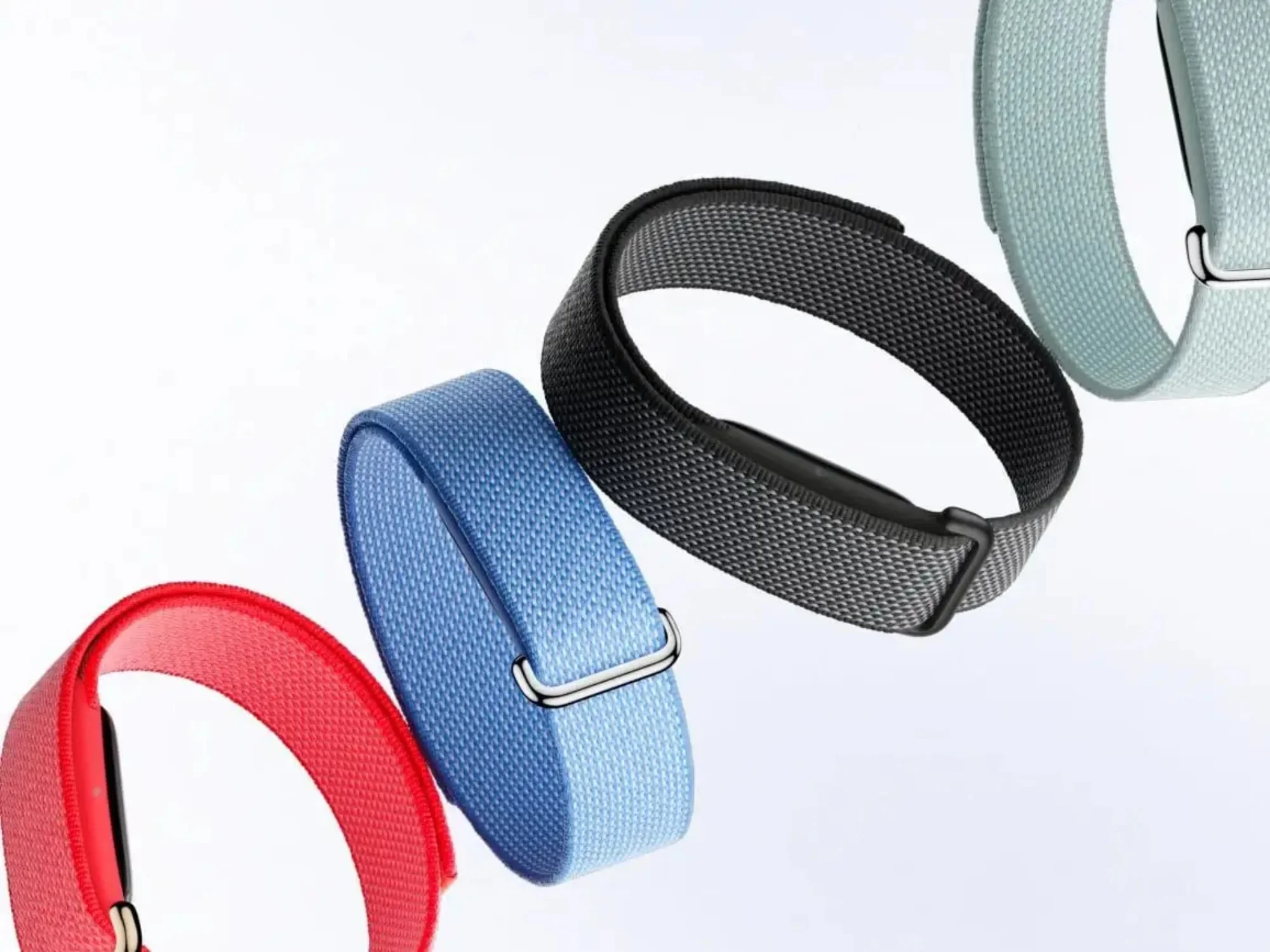
The wearable technology market is undergoing a significant philosophical shift away from wrist-based screens toward pure biometric intelligence. In this comprehensive analysis, we explore the disrupting potential of this new category. Learn about the Google Fitbit Air, a screenless fitness tracker with 7-day battery life. Find out how it stacks up against smart bands and wearables. This device represents a focused attempt to redefine the metrics that matter most for daily health and athletic performance by stripping away the digital clutter commonly associated with smartwatches. Instead of a display, the Google Fitbit Air focuses entirely on sensor accuracy and battery longevity, creating a new value proposition for serious athletes and digital minimalists alike.
The Philosophy Behind Screenless Tracking
The modern wrist has become a hub for constant notifications and digital distractions. The Google Fitbit Air challenges this paradigm by offering a device that collects deep biometric data without demanding your immediate visual attention. For users prioritizing flow state and deep work, this is a critical evolution. It allows the wearer to utilize a health tracker 24/7 without the cognitive load of a screen. This category is often referred to as "stealth health," a space where the hardware physically disappears and the software algorithmically informs your daily behaviors without interruption. It is a shift from being reactive to a smartwatch to being proactive with your physiology.
Hardware and Battery Performance
Seven-Day Battery Life
Achieving a full week of operation on a single charge is a significant engineering challenge for any modern wearable. By eliminating the power-hungry display, the Google Fitbit Air optimizes its power management more effectively than any smartwatch on the market. The device utilizes a highly efficient low-power ARM processor and an advanced heart rate sensor that intelligently toggles between sampling rates depending on user activity. Users can confidently expect approximately 7 days of mixed use, including continuous sleep tracking and daily workout logging. A rapid charge feature provides a full 24 hours of battery life with just a 20-minute charge, making it exceptionally convenient for frequent travelers and those with busy schedules.
Design and Durability
The form factor is intentionally minimalist. It features a slim, pebble-like pod constructed from aerospace-grade aluminum that sits securely in a custom elastomer band. The device is designed for all-day comfort and is nearly imperceptible during sleep. It boasts a robust 5ATM water resistance rating, making it safe for swimming, showering, and high-intensity sweating in varying climates. The absence of a screen completely eliminates the common issue of accidental touch inputs or screen breakage during workouts, significantly extending the usable lifespan of the device.
Sensor Array and Data Accuracy
The Google Fitbit Air inherits the most advanced sensor technology from the Fitbit lineage. It features multi-path LED optical heart rate sensors for superior accuracy during high-intensity interval training, SpO2 monitoring for blood oxygen saturation overnight, and a skin temperature sensor for tracking long-term trends and potential illness onset. Without a screen consuming resources, all biometric data is processed and visualized exclusively in the companion mobile app. This allows for a deeply rich user interface for data discovery, including detailed sleep stages, a daily readiness score, and stress management tools powered by continuous electrodermal activity sensors. The lack of a screen allows the processor to dedicate more cycles to sensor fidelity.
Global Ecosystem and Compatibility
Compatibility is truly universal. The Google Fitbit Air connects via Bluetooth 5.3 to both Android 12 and higher and iOS 16 and higher devices. It relies on connected GPS, meaning it uses your phone to map outdoor routes, preserving its compact battery for biometrics. The device integrates deeply with the Google ecosystem, including Health Connect, Google Fit, and Fitbit Premium. This allows users to seamlessly export their data to hundreds of third-party fitness and health applications. Global availability is expected immediately, with an aggressive standard pricing point of just $199.99 USD, making it a highly accessible tool for biohackers worldwide.
Pro Tip: For users who prioritize battery life and uninterrupted focus above all other wearable features, a screenless tracker like the Google Fitbit Air is functionally superior to a full smartwatch. It removes distraction while providing the critical health data necessary for long-term wellness and performance optimization.
How It Stacks Up Against the Competition
The screenless tracker market is growing rapidly as users recognize the benefits of undistracted health monitoring. The Google Fitbit Air competes directly with established players like the Whoop 5.0 and the Oura Ring 4. Unlike the Whoop, which is strictly subscription-based, the Fitbit Air offers a significantly lower entry cost by providing a robust free tier alongside its optional Premium subscription for advanced analytics. Similarly, the Oura Ring demands a subscription for its deep insights after the initial six months. The Fitbit Air undercuts both on total cost of ownership while integrating directly with the wider Google ecosystem. In comparison to traditional hybrid smart bands, the Fitbit Air offers deeper readiness and recovery metrics typically reserved for high-end devices. It carves a unique niche as a device that genuinely prioritizes data fidelity over screen real estate.
Actionable Summary and Verdict
The Google Fitbit Air is not a universal replacement for a full-featured smartwatch, but it is a superior tool for dedicated, continuous health monitoring. It represents a mature and exceptionally focused approach to wearable technology. It is ideal for runners, swimmers, biohackers, and high-performing professionals who need deep data without distraction. If your primary goal is to improve your sleep hygiene, manage physiological stress, and track training recovery without the temptation of screen time, the Google Fitbit Air offers the cleanest, most efficient solution currently available.
We invite you to share your perspective. Have you made the switch to a screenless tracker? Do you think the Google Fitbit Air could change the way you approach your daily health metrics? Leave your thoughts and experiences in the comments section below.
Frequently Asked Questions
Does the Google Fitbit Air work with an iPhone?
Yes, the Google Fitbit Air is fully compatible with iOS 16 and above, as well as Android 12 and above. It connects via standard Bluetooth 5.3 and uses the official Fitbit mobile application for setup, data synchronization, and daily analysis.
Can I control my music with the Google Fitbit Air?
Direct on-device media controls are limited due to the absence of a screen. However, users can control music playback from their connected phone using integrated voice commands via Google Assistant or Apple Siri, which the device can trigger from a configurable long-press of the physical button.
Is there a mandatory subscription fee for the Google Fitbit Air?
No, the core features are completely free and include continuous step tracking, heart rate monitoring, sleep stages, and basic activity logging. Advanced tools such as the Daily Readiness Score, Deep Sleep Analytics, and AI-powered wellness coaching require an optional Fitbit Premium subscription.
How durable is the Google Fitbit Air for daily wear?
The device is built with a high-strength aluminum case and a scratch-resistant glass lens protecting the sensors. It is officially rated 5ATM water resistant, meaning it can be submerged to 50 meters. This makes it fully suitable for swimming, running in heavy rain, and intense CrossFit sessions without any concern for damage.
Does the Google Fitbit Air feature built-in GPS?
No, the device relies entirely on connected GPS. This means it utilizes the GPS antenna from your paired smartphone to accurately track pace, distance, and route during outdoor activities. This design decision was made to dramatically improve battery life and minimize the overall hardware footprint of the tracker.