Gemini Spark Agentic Upgrade Imminent for Google AI Ultra
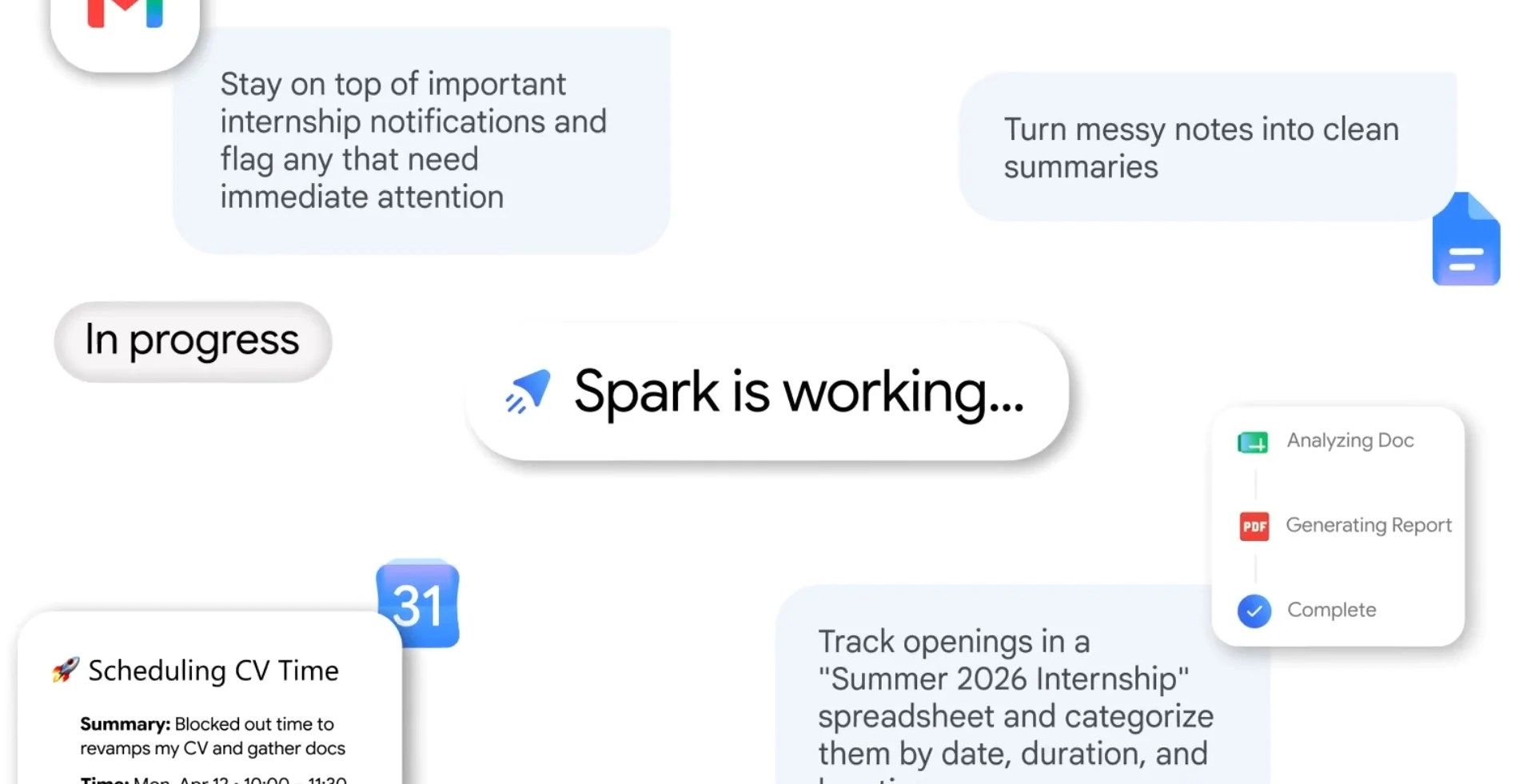
The long-anticipated transition from static generative queries to dynamic, autonomous task execution is finally upon Google AI Ultra adopters. The integration of the Gemini Spark agentic engine fundamentally redefines the practical utility of high-end AI infrastructure. Discover how Google AI Ultra users will benefit from the Gemini Spark agentic upgrade, bringing advanced Artificial Intelligence to enterprise applications. This overhaul introduces a dedicated reasoning layer that enables the model to plan, act, and learn without continuous human prompting, unlocking unprecedented efficiency for complex business operations.
The Architecture of Autonomy: Understanding Gemini Spark
The core advancement of the Gemini Spark framework lies in its specialized agentic loop. Unlike standard inference, which generates a single output per prompt, the Spark engine dynamically manages a chain of sub-tasks. It identifies the objective, formulates a multi-step strategy, executes tools (such as code interpreters or search queries), and validates results before proceeding. This mirrors the cognitive workflow of a skilled analyst, transforming the AI from a passive generator into an active problem-solver.
Dynamic Tool Orchestration
For Google AI Ultra subscribers, this means the underlying model can directly interface with external APIs and Google services. An agent can autonomously query a Salesforce database, cross-reference data with BigQuery, write a Python script to visualize the results, and draft a summary email in Gmail. The agent handles the sequential logic, freeing human operators for higher-level strategic thinking and decision validation.
Enhanced Contextual Memory
A key technical hurdle for previous models was maintaining coherent state across long interactions. The Spark upgrade utilizes a sophisticated episodic memory buffer, allowing the agent to retain context from previous days or weeks. This makes it ideal for project management, where the agent can recall the history of a software bug or the status of a legal negotiation without needing the user to resubmit that data. This persistent context is a game-changer for audit trails and continuous workflow automation.
Primary Enterprise Benefits and Strategic Use Cases
The agentic upgrade directly addresses several high-pain areas in corporate technology stacks, offering concrete improvements to operational efficiency. Deploying these agents across varying global network conditions and compliance standards is seamless due to Google's distributed cloud infrastructure.
- Autonomous Data Pipeline Management: The agent can be tasked with monitoring ETL workflows. If a data quality issue is detected, it can halt the pipeline, analyze the source logs, correct the transformation logic, and restart the job, providing a full incident report via email. This reduces downtime in critical data systems.
- Advanced Code Engineering and Debugging: In Vertex AI, the agent acts as a collaborative pair programmer. It can autonomously run unit tests, identify failing components, search internal code repositories for similar patterns, propose and apply fixes, and execute the test suite again to confirm success, drastically accelerating development cycles.
- Strategic Market and Competitive Analysis: An analyst can ask the agent to compile a monthly report on competitor pricing in the Southeast Asian market. The agent will crawl approved sources, extract pricing tables, normalize the currency to USD, generate charts in Google Sheets, and populate a presentation deck with actionable insights.
Global Compliance and Infrastructure Stability
Deploying autonomous agents requires robust data governance. The Gemini Spark upgrade operates entirely within the customer's existing Google Cloud security perimeter. All agent actions are logged to Cloud Audit Logs, providing a transparent chain of custody. Data residency is respected; agents processing US-based PII can be restricted to US data centers, while EU agents adhere to GDPR protocols without code changes. This architecture makes the solution ideal for enterprise environments with strict regulatory requirements.
Strategic Implementation Advice: When rolling out the Gemini Spark agentic upgrade, focus on augmenting rather than immediately replacing existing workflows. Start by assigning the agent to the Observe and Alert phase of a process. Once confidence in the agent's decision-making fidelity is established, allow it to execute Read-Only tasks. Graduating to Write and Execute actions should only occur after rigorous testing with human-in-the-loop validation for critical system changes to maintain governance.
Market Positioning and Competitive Landscape
This move places the Google AI Ultra ecosystem in a direct leadership position against similar offerings from Microsoft Copilot and legacy AWS AI services. By embedding the agentic layer natively into the Ultra architecture, Google provides a lower-latency, deeply integrated experience. The pricing model for Spark enhanced queries is expected to follow a premium token cost structure, calculated based on the complexity of the agentic path taken, but the ROI in productivity savings for complex tasks validates the investment for enterprise buyers seeking a competitive edge.
Preparing Your Stack for the Agentic Shift
The upgrade will initially roll out to Google Workspace Business and Enterprise tiers, followed by Vertex AI API access. Developers should familiarize themselves with the Agent Builder toolkit provided in the Google Cloud console. Actionable planning now involves auditing internal tools and APIs that the agent could leverage. Organizing internal knowledge bases and documentation to be machine-parseable will drastically improve the agent's ability to solve domain-specific problems immediately upon activation.
The Verdict on Google AI Ultra Agentic AI
The Gemini Spark upgrade is not just a feature drop; it is a strategic evolution of how enterprises interact with AI. It moves the relationship from query-response to goal-achievement. For businesses currently utilizing Google AI Ultra, the opportunity to automate complex digital labor is substantial. Is your organization ready to move from static prompts to dynamic agents? Share your strategy and questions in the comments below to join the discussion on the future of enterprise AI.
Frequently Asked Questions
What specific agentic capabilities does the Gemini Spark upgrade introduce?
The upgrade introduces an autonomous task execution engine that enables the model to plan, use external tools, maintain long-term memory, and iterate on complex workflows without continuous human intervention, moving beyond simple text generation into full task automation.
Will the Gemini Spark upgrade be accessible through existing Google AI Ultra subscriptions?
Yes, it is an upgrade to the existing Ultra tier. However, due to the intensive compute required for iterative reasoning and tool calls, it is expected to utilize a premium pricing tier or cost-per-query model that differs from standard token-based inference costs. Enterprises should budget for higher operational cost per task against higher labor savings.
How does the agentic upgrade handle data privacy and security across global regions?
Data security is maintained through strict IAM policies, VPC boundaries, and data residency controls. All agent actions are recorded in Cloud Audit Logs, ensuring a full audit trail for compliance with regional regulations like GDPR and HIPAA. The agent operates within the customer's existing governance framework.
Can the Gemini Spark agent operate entirely within a private network without internet access?
For core reasoning tasks, yes. However, many of the powerful agentic features (such as Search Grounding, Google Maps lookups, or public API calls) require internet connectivity. Enterprises can strictly limit tool use to internal APIs and knowledge bases if offline or air-gapped functionality is a critical requirement.
How does Google ensure the agent does not hallucinate or perform harmful actions?
The Spark framework includes multiple safety layers. It uses a constitutional AI approach for the base model, combined with strict tool-use policies. Agent actions are validated against the user's defined objectives, and any action exceeding predetermined risk thresholds requires explicit human approval before execution.