China Launches World's First Underwater Data Centre
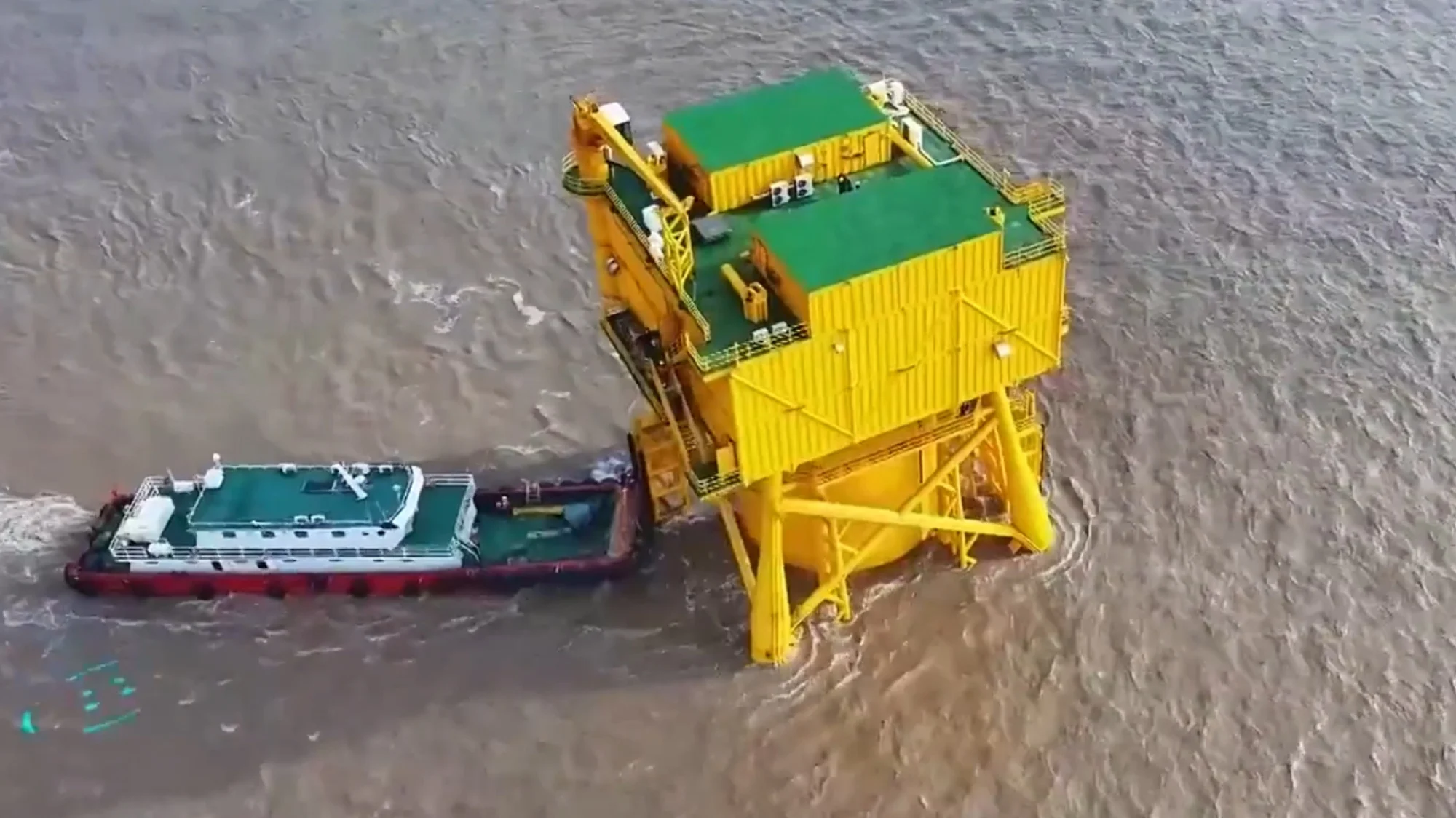
The operational launch of a submerged data center in the South China Sea represents a fundamental rethinking of power and cooling for the artificial intelligence era. The technology is a concrete solution to the escalating energy crisis facing hyperscale cloud providers. In a landmark move, China opens world's first underwater data centre, promising enhanced performance for Artificial Intelligence and data processing. Get the latest news. By leveraging deep seawater as a natural heat sink, this facility bypasses the significant overhead of traditional air conditioning systems, directly attacking the power consumption that makes large-scale AI training so expensive.
How the Subsea Module Redefines AI Infrastructure Benchmarks
The operational statistics of this underwater facility highlight a stark departure from land-based norms. For every unit of electricity consumed, almost all of it is dedicated to processing power, a metric known as Power Usage Effectiveness (PUE). This project achieves a PUE hovering near 1.04. In contrast, the global average for terrestrial hyperscale data centers is often above 1.5. For an AI training cluster consuming 100 megawatts, a PUE of 1.04 saves enough energy to power a small town. This efficiency is critical for the global AI sector, which is increasingly constrained by the availability and cost of electricity.
Beyond raw power savings, the latency characteristics are transformative for real-time AI inference. Data does not have to travel from a coastal city deep inland to a centralized data hub. By placing compute directly on the continental shelf, round-trip times for data packets are slashed. This is paramount for the next generation of AI applications, such as autonomous vehicle fleets, augmented reality interfaces, and live language translation services that must operate with negligible delay. The emphasis on energy efficiency cannot be overstated in the context of current AI model scaling laws. Every training run for a frontier model can consume enough electricity to power thousands of homes for a month. By removing the parasitic load of chillers and pumps inherent in traditional HVAC systems, the subsea model offers a clear economic advantage. This allows operators to allocate a larger capital budget towards actual compute hardware like GPUs, accelerating the rate of model experimentation and deployment.
Global Replicability and Environmental Synergy
The model is exceptionally well-suited for coastal megacities facing land scarcity and water restrictions. By utilizing seawater cooling, the facility avoids the millions of gallons of fresh water consumed annually by traditional evaporative cooling towers. This makes the underwater data center blueprint highly attractive for drought-prone regions that still host massive tech hubs, such as California, Australia, or the Middle East. Furthermore, the consistent ambient temperature of the deep ocean removes the heat cycling stress on server components, potentially increasing the hardware lifespan and reducing e-waste. The facility essentially trades a small footprint on the seabed for a massive reduction in terrestrial resource strain.
Pro Recommendation for IT Decision-Makers: As cloud providers expand into liquid cooling and submersion technologies, conduct a sustainability audit of your current compute footprint. Inquire about the PUE of the specific hardware handling your AI training jobs. Early adopters of highly efficient infrastructure may gain a cost advantage as energy prices fluctuate globally. The success of this Chinese project underscores that investing in green compute infrastructure is now a competitive necessity, not just a compliance checkbox.
Actionable Insights for the Global Tech Community
The successful commissioning of this subsea data center is more than a technological showcase; it is a commercial proof-of-concept that directly challenges the status quo of cloud infrastructure deployment. For enterprise IT strategists and AI operations teams, the key takeaway is the viability of high-density, liquid-cooled environments in non-traditional locations. This could lead to a significant diversification of global compute regions, reducing the systemic risk of concentrating all AI processing in a handful of areas.
The global implications of this milestone are substantial. It serves as a direct challenge to the assumption that large-scale compute must be land-intensive and resource-thirsty. For nations looking to bolster their digital sovereignty without sacrificing arable land or fresh water, this represents a highly credible alternative. It also opens the door for modular, on-demand compute capacity that can be deployed rapidly near specific coastal population centers or economic zones. The lessons learned from the Hainan project will undoubtedly inform the second generation of these facilities, which could be even more deeply integrated with offshore renewable energy sources like wind and solar. The future of the cloud is not just in the sky, but on the sea floor.
We invite you to share your perspective. How do you see underwater computing influencing the strategic planning for AI infrastructure in your region? Leave a comment below.
Frequently Asked Questions
What specific conditions allow a computer to operate reliably under high pressure?
The sealed capsule is filled with an inert gas, typically nitrogen, eliminating oxygen and moisture that cause corrosion. The pressure inside is carefully regulated to one atmosphere, meaning the servers operate exactly as they would in a standard data center room. The high external pressure is borne by the steel hull, not the electronics.
How do underwater data centers connect to the internet?
They are connected by the same high-capacity submarine fiber optic cables that form the backbone of the global internet. A dedicated branch cable runs from the module to a landing station on the coast, integrating it directly into the regional and global data network.
Can this technology handle the power density of modern AI GPUs?
Yes, this is a primary advantage. The direct liquid cooling provided by the surrounding seawater can remove heat much more effectively than air. This allows for denser packing of the highest performance GPUs and processors without the thermal throttling that can limit performance in traditional facilities.
What is the primary business case for an organization to use an underwater data center?
Cost, speed, and sustainability. The significantly lower energy bill from efficient cooling provides a direct financial incentive. Proximity to coastal cities reduces latency for time-sensitive applications. Finally, it offers a clear path to achieving aggressive carbon reduction targets for corporate ESG mandates.