AMD Confirms Gorgon Halo for AI Halo Workstation
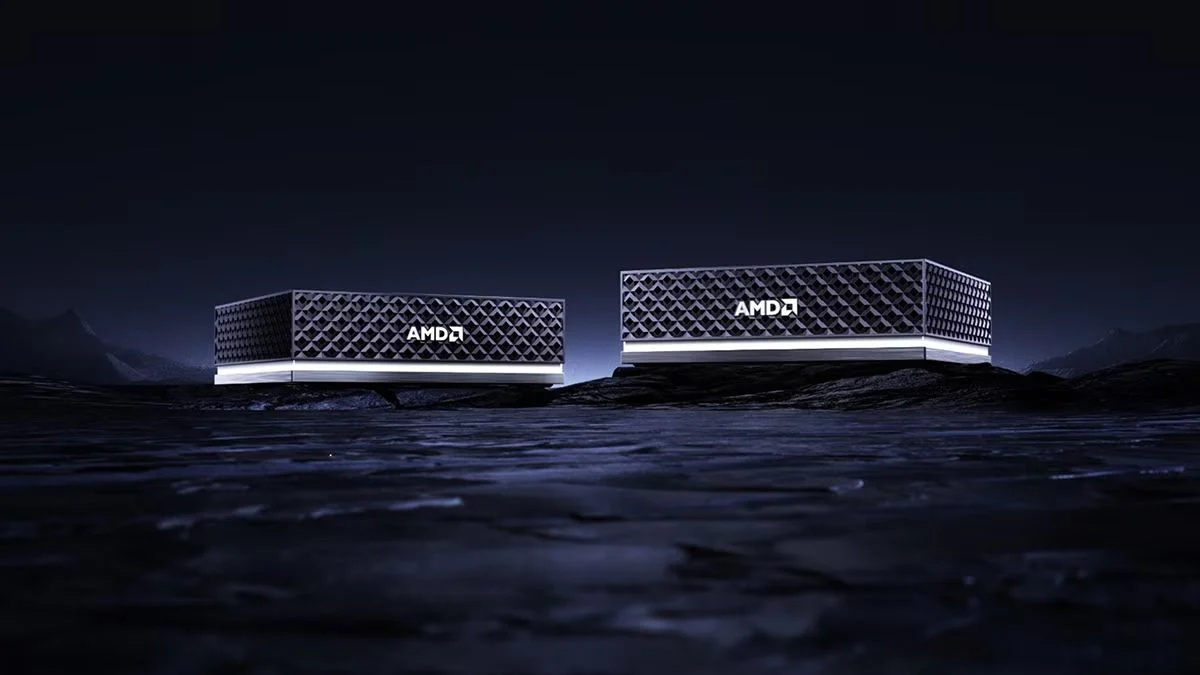
The shift towards localized artificial intelligence processing is redefining the professional computing landscape, demanding a new class of hardware that bridges massive parallel processing with seamless data accessibility. Discover AMD's new AI Halo Workstation for Artificial Intelligence workloads. Confirmed Gorgon Halo details reveal powerful hardware for advanced AI tasks. This new platform represents a direct assault on the high-performance workstation market, specifically engineered for the intense demands of modern AI development, from fine-tuning large language models to running complex inference locally without relying on cloud infrastructure.
The Dawn of the Local AI Workstation
Until recently, serious artificial intelligence work demanded expensive cloud subscriptions or the assembly of complex multi-GPU servers. Data privacy, latency, and recurring costs made this model unsustainable for many enterprises and independent researchers. AMD is changing this calculus by introducing a system-on-a-chip designed specifically for the desk. The Gorgon Halo architecture consolidates the entire AI compute pipeline into a single, tightly coupled processor complex, removing the traditional barriers between CPU, GPU, and AI memory domains. This convergence is foundational for a new category of professional computing that puts the power of a data center directly into the hands of the developer.
Architecture Breakdown: The Heart of Gorgon Halo
Understanding the technical prowess of this workstation requires a deep dive into its three core compute pillars, all unified by a revolutionary memory architecture.
Next-Generation Core Processing
At its base, the Gorgon Halo chip leverages AMD's latest Zen architecture cores. These cores provide the raw multithreaded throughput necessary for data preprocessing, software compilation, and complex algorithmic simulations. High clock speeds and efficient power management ensure that CPU-intensive tasks run smoothly alongside demanding inference operations, preventing workflow bottlenecks.
Unified AI Compute and Graphics
The true innovation lies in the integration of the RDNA graphics architecture with the XDNA 2 AI Engine. Rather than treating these as separate components that must communicate over a slow bus, the Gorgon Halo platform fuses them onto a single die with direct memory access. This allows the dedicated AI accelerator to handle persistent inference tasks while the GPU handles rendering or visualization, all without fighting for resources or duplicating data.
The Unified Memory Advantage
In traditional discrete GPU workstations, memory is partitioned. System RAM is separate from GPU VRAM, forcing data to be copied back and forth, which introduces latency and limits model sizes. The Gorgon Halo platform obliterates this bottleneck with a massive unified memory pool. With bleeding-edge memory bandwidth measured in terabytes per second, the CPU and GPU can instantly access the entire dataset. This architecture is ideal for handling large context windows in LLMs and large batch sizes in training without the typical performance penalties of discrete systems.
Practical Applications and Performance Targets
The technical specifications of the AI Halo Workstation translate into tangible benefits across several high-demand fields, making it a versatile tool for the global professional community.
Local LLM Deployment
Running large language models like Llama 3 or Mistral locally is a primary use case. The unified memory allows for loading massive parameter sets directly into the fast memory pool. This delivers lightning-fast inference speeds with complete data sovereignty, which is critical for industries like legal, healthcare, and finance where data cannot leave the premises.
Generative Content and Rendering
For creators using generative AI within their workflow, the combination of unified memory and high-performance graphics cores means generating complex imagery, upscaling video, or rendering 3D scenes happens without interruption. The platform provides a smooth environment for iterative creative processes where speed is essential.
Scientific Research and Simulation
Researchers in bioinformatics, physics, and climate science require immense computational resources for simulation and analysis. The Gorgon Halo platform handles the full spectrum of numeric computing, from floating-point heavy simulations to integer-based data processing, all within an open software ecosystem built on AMD ROCm.
Pro Tip: For maximum performance on the AI Halo Workstation, always ensure your AI frameworks such as PyTorch or TensorFlow are compiled using the latest AMD ROCm optimizations. The unified memory architecture unlocks the greatest performance gains when the software is aware that it does not need to manage data transfers between discrete memory pools. Properly configured, this platform can double the throughput of complex transformer models compared to standard setups, drastically reducing development iteration time.
Market Positioning and Global Availability
The AI Halo Workstation is positioned at the apex of the professional computing pyramid, competing directly with high-end NVIDIA workstations and specialized Apple Silicon configurations. It is designed for global deployment from the ground up. It supports a wide range of power configurations and is engineered to operate reliably in varying climates and environments, from temperature-controlled data centers to bustling creative studios. AMD has ensured that the underlying platform architecture is compatible with major operating systems ISOs and enterprise deployment standards worldwide.
The Verdict: A New Standard for AI Hardware
The confirmed details of the Gorgon Halo platform and the broader AI Halo Workstation strategy indicate that AMD is making a bold, calculated move to own the local AI hardware space. By unifying memory and compute, they are solving the most significant technical bottleneck in AI development workflows. For professionals who value data sovereignty, low latency, and a lower total cost of ownership compared to perpetual cloud rentals, the AI Halo Workstation is an exceptionally compelling option.
We want to hear from you. Does the unified memory architecture of the Gorgon Halo platform address your biggest AI workflow frustrations? Are you planning to evaluate this new class of hardware for your next project? Share your insights and questions in the comments below.
Frequently Asked Questions
What specific AI frameworks are optimized for the Gorgon Halo workstation?
AMD ROCm provides robust and direct support for the industry's leading frameworks, including PyTorch, TensorFlow, JAX, and ONNX Runtime. The XDNA 2 AI engine is specifically optimized for sparse matrix operations, while the unified memory pool benefits any framework requiring large dataset handling.
How does the unified memory architecture improve AI model performance compared to discrete solutions?
Discrete systems suffer from a PCIe bottleneck where data must be copied from system RAM to GPU VRAM. Gorgon Halo eliminates this, allowing the CPU and GPU to access the entire memory pool transparently. This heavily reduces latency and boosts performance for models requiring large batch sizes or complex data graphs.
Will the AI Halo Workstation be available for purchase globally?
Yes, the platform is designed as a global product. It will be available through authorized distributors and system integrators worldwide, supporting the varying regulatory, power, and environmental standards of major markets. AMD has confirmed broad international availability upon launch.
Can the workstation be used for non-AI professional tasks?
Absolutely. The platform is built on high-performance Zen CPU cores and RDNA graphics. It functions as an exceptional all-around workstation for video editing, software compilation, 3D rendering, and data analytics, making it a versatile centerpiece for any professional technical workflow.
What is the expected lifecycle and support model for this hardware?
As a professional workstation platform, AMD intends to support the Gorgon Halo architecture with long-term driver and software stack updates, typically spanning several years. The design tightly integrates memory and compute for maximum performance, ensuring consistent, validated performance throughout its supported lifecycle.