Strange stories from the Black & White 2 development team
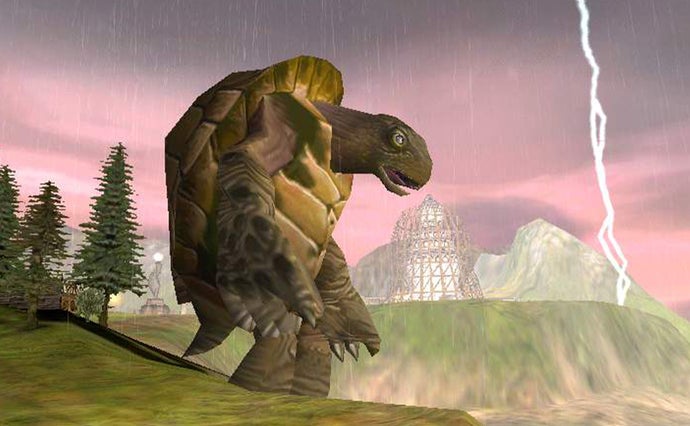
The history of game development is often defined by the tension between unbridled creative ambition and the harsh realities of corporate production schedules. Curious about life at Lionhead Studios? Learn about making Black & White 2, a single player PC strategy simulation and puzzle game from Electronic Arts. This specific era in the early 2000s marked a transition point for the industry, where experimental "god games" faced the increasing pressures of global publishing standards and the looming shadow of studio acquisitions. The development of the "Battle of the Gods" expansion provides a unique window into the eccentric, often chaotic internal culture of one of the UK’s most famous development houses before its eventual integration into Microsoft.
The Eccentric Culture of Lionhead Studios
Lionhead Studios, founded by Peter Molyneux, was renowned for its unconventional approach to game design and workplace environment. In the early days, the studio functioned more like a creative collective than a rigid corporate entity. This atmosphere fostered groundbreaking ideas in artificial intelligence and player-driven morality, but it also led to legends of office antics that have persisted for decades. One of the more bizarre stories recently resurfaced via former developer Sean Sosik-Hamor, concerning an incident involving a batch of chili con carne that was inadvertently—or perhaps mischievously—laced with cannabis during the development of the Black & White 2 expansion.
While Sosik-Hamor notes he was not present for the actual consumption of the "weed-laced chili," the anecdote serves as a symbol of the wild-west atmosphere that defined many independent UK studios in that period. These stories highlight a workplace where the lines between professional labor and social life were frequently blurred, a common trait in studios striving to innovate within the complex simulation genre. For developers working on the sequel to the original god game, the pressure to improve upon the groundbreaking creature AI while maintaining a stable engine was immense, leading to long hours and a reliance on internal camaraderie.
Development Challenges of Black & White 2
Creating a sequel to a game as influential as the original Black & White was no small feat. The team had to balance the expectations of a global audience with the technical limitations of PC hardware at the time. The transition to the expansion, "Battle of the Gods," required the team to refine the existing mechanics while introducing new elements like the undead creature and revamped god powers. This phase of development is often where technical debt begins to accumulate, as developers must build upon a foundation that was already pushed to its limits during the base game’s production.
Managing Technical Debt and Expansion Scope
In the world of PC strategy simulations, stability is paramount. For the Battle of the Gods expansion, the development team at Lionhead faced the challenge of optimizing the engine for a wider variety of hardware configurations. This meant addressing memory leaks and pathfinding issues that had plagued the initial release. Developers often describe expansion pack cycles as a "cleanup" phase, where they can finally implement features or fixes that were cut from the main game due to time constraints. However, in the context of Lionhead, this also meant dealing with the evolving vision of the studio's leadership, which often prioritized "the big idea" over granular technical polish.
The Role of Electronic Arts in Global Distribution
As the publisher, Electronic Arts played a crucial role in bringing the title to international markets. While Lionhead handled the creative heavy lifting, EA’s infrastructure managed the localization, marketing, and physical distribution. This partnership was a double-edged sword; while it provided the necessary capital and reach, it also imposed strict milestones that often clashed with the studio’s organic development style. Navigating the expectations of a multi-billion dollar publisher like EA required a level of professional discipline that was sometimes at odds with the "chili-laced" spontaneity of the Guildford-based team.
Pro Tip: When analyzing the development of legacy PC titles, always look for post-mortem interviews from the lead engineers. Their insights into "technical debt" usually reveal more about why certain features were omitted than the official marketing materials ever will.
The Legacy of the God Game Genre
Black & White 2 and its expansion represent the pinnacle of the god game genre, a niche that has largely migrated to indie developers in recent years. The mechanics of influencing a virtual world through a physical manifestation (the hand) and an autonomous creature remain a benchmark for interactive AI. The game’s attempt to merge real-time strategy elements with a morality-based puzzle system was ahead of its time, even if the execution was sometimes hampered by the technical constraints of the era. The influence of these systems can still be seen today in modern city builders and management simulations that utilize "agent-based" AI logic.
The Shift to Microsoft and the End of an Era
The stories emerging from the development of Battle of the Gods mark the end of Lionhead’s era as an independent spirit. Shortly after the expansion's release, the studio was acquired by Microsoft. This move brought more structure and resources, particularly for the Fable franchise, but many veterans feel it also diluted the chaotic energy that led to the creation of the Black & White series. The transition from an EA-published independent to a first-party Microsoft studio changed the internal dynamics forever, making the "strange stories" of the early 2000s even more significant as historical artifacts of a lost age of game development.
Actionable Conclusion
The development of Black & White 2: Battle of the Gods was more than just a programming task; it was a cultural event within one of the industry's most creative studios. From the technical hurdles of AI pathfinding to the legendary tales of office chili, the project encapsulates the spirit of early 2000s game design. For fans of the series or those interested in the history of Electronic Arts' simulation catalog, these insights provide a deeper appreciation for the complexity of bringing a god game to life. If you have your own memories of playing these titles or working in the industry during this period, share your thoughts in the comments below or explore our other deep dives into gaming history.
Frequently Asked Questions
Is Black & White 2 still playable on modern Windows systems?
Yes, but it often requires community-made patches or "wrappers" to run on Windows 10 and 11. Due to the way the game handles early 2000s DRM and graphics calls, users typically need to download fan-made fixes to ensure compatibility with modern high-resolution displays and multi-core processors.
What were the main differences in the Battle of the Gods expansion?
The expansion introduced a darker theme, featuring a rival undead god. It added new creatures, including the Undead Ape and the Tiger, along with two new miracles and four new buildings. It was designed to provide a more challenging endgame for veteran players of the base simulation.
Who published Black & White 2?
The game was published by Electronic Arts (EA). At the time, EA was the primary partner for Lionhead Studios before the developer was eventually acquired by Microsoft in 2006. This partnership allowed the game to reach a global market with localized versions in multiple languages.
Are there any modern games similar to Black & White 2?
While a direct sequel has never been made, games like "Universim," "WorldBox," and "Deisim" (VR) carry the torch of the god game genre. These titles focus on planetary management and influencing populations through supernatural powers, much like the original Lionhead titles.
Was there a console version of Black & White 2?
No, the game remained a PC exclusive. The complex interface involving the "hand" gesture system and the deep strategy elements were specifically optimized for a mouse and keyboard setup, making a console port difficult with the controller technology available at the time.