MindsEye's Saboteur Mission Is a Dull Hitman Impression
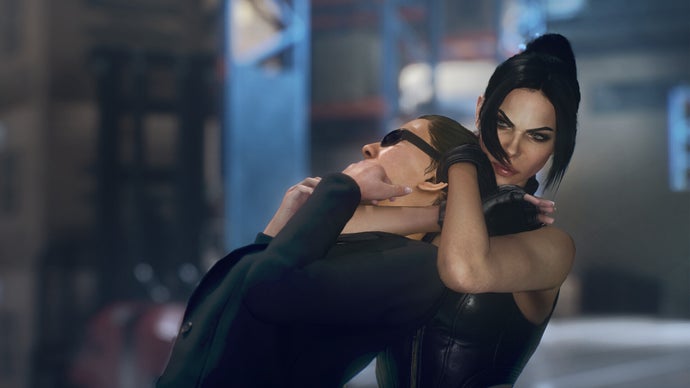
Sandbox stealth missions live or die by precise mechanics and intelligent AI, yet MindsEye's saboteur hunt collapses under the weight of its own ambition. This PC, PS5 & Xbox Series X/S single player third person action adventure from Build A Rocket Boy sees MindsEye mimic IO Interactive's Hitman poorly. What should have been a tense, methodical infiltration instead devolves into an exercise in frustration, wasted time, and inconsistent systems that undermine every tactical decision. After spending thirty minutes navigating a sterile warehouse, it becomes painfully clear that this mission misunderstands why IO Interactive's formula actually works.
Flawed Stealth Fundamentals
The saboteur mission tasks players with eliminating targets hidden deep inside an industrial complex. On paper, the setup borrows heavily from sandbox stealth classics, offering disguises, environmental opportunities, and multiple entry points. In practice, the disguise system lacks logical consistency. A stolen uniform fools guards standing three meters away yet triggers immediate alarms from NPCs across the room wearing the exact same outfit. The detection radius feels arbitrary, forcing players to rely on trial and error rather than genuine tactical planning. Without the social stealth ecosystem that makes Hitman's levels tick, where NPC roles, restricted zones, and enforcer behavior are clearly telegraphed, the player is left guessing at hidden rule sets. These inconsistencies drain the tension that defines top-tier stealth experiences on any platform, whether you are playing in a Tokyo apartment or a Texas home office.
Unpredictable Enemy AI
Enemy patrols follow rigid, predictable loops until they suddenly do not. Guards snap to hyper-alert states without clear visual or audio cues, while at other times they walk directly past dangling bodies or shattered glass. This randomness eliminates the satisfaction of studying patrol routes and executing a flawless plan. When AI logic shifts from oblivious to omniscient in an instant, the player ceases to be a methodical assassin and becomes a victim of dice-roll detection systems. Compounding the issue, NPCs sometimes clip through cover or rotate 180 degrees with inhuman speed, making silent takedowns feel less like earned victories and more like lucky shots. For a title positioning itself as a cinematic third-person action adventure, these technical hiccups derail immersion faster than any scripted explosion.
Vague Target Identification
Unlike polished contemporaries that highlight targets with subtle visual or narrative tells, this warehouse slog offers little guidance on who actually needs to be eliminated. Players wander between identical NPC models, hoping that the crosshair will eventually flash the correct name. The lack of intel screens, overheard conversations, or distinguishing marks forces a clumsy process of elimination. You cannot rely on briefing documents or environmental clues to narrow the field; instead, you must interrogate or eliminate randomly until the objective marker updates. It is the antithesis of Hitman's clockwork levels, where observation rewards the patient operator with steadily unfolding opportunities. Here, patience is punished with boredom and the creeping suspicion that the game itself does not know how to direct the player.
Flat Level Design and Geometry
Industrial warehouses can serve as excellent stealth playgrounds when verticality, lighting, and cover placement are carefully tuned. This mission opts for flat, gray corridors stacked with copy-paste shipping containers and identical forklift props. The environment fails to communicate usable paths or hiding spots, leaving players to brute-force their way through choke points that look open but are bounded by invisible walls. Without organic alternate routes, ventilation shafts, or meaningful environmental storytelling, the stage feels like a shooting gallery clumsily disguised as a stealth sandbox. Lighting is uniformly dull, removing the ability to use shadows as a strategic tool. Gamers across all regions, from humid coastal climates to dry inland setups, deserve coherent architecture that respects their time and rewards creative problem solving regardless of local hardware configurations.
Performance and Polish
Even on high-end hardware, frame-rate dips plague crowded sections of the warehouse. Texture pop-in breaks the illusion during a genre that demands spatial awareness, while buggy NPC animations telegraph attacks far too late or far too early. These flaws are not merely cosmetic. Input lag during melee takedowns or cover transitions can mean the difference between a silent kill and a full-base alert. At a standard retail price point of approximately $59.99 USD, consumers rightfully anticipate a baseline of polish and quality assurance.
- Frame-rate instability during firefights and multi-NPC stealth sequences.
- Textures loading seconds after entering new rooms, masking exits and hiding spots.
- Broken audio propagation that renders enemy footfalls misleading or entirely silent.
- Animation desync causing guards to spot the player through solid geometry.
These technical shortcomings force players to wrestle with the engine as much as with the enemy forces, undermining confidence in every tactical decision.
Pro Tip: If you must complete this objective, prioritize silent melee weapons over firearms and manually save your progress at every checkpoint. Rely on aggressive save-scumming rather than AI consistency, avoid disguises near the loading bay entirely, and bypass optional side rooms to minimize exposure to the most broken patrol routes.
Final Verdict
MindsEye's saboteur mission is a cautionary tale of borrowed ambition without the engineering maturity to support it. The game attempts to plant its flag in the sandbox stealth territory mastered by IO Interactive, yet it stumbles on basic fundamentals like AI reliability, environmental readability, and frame stability. Every design choice that should encourage creativity instead erects another invisible wall of confusion. For players seeking a methodical third-person experience on current-generation hardware, the current offering delivers only wasted potential and a lingering sense that thirty minutes could have been spent on far more engaging interactive entertainment. Share your own encounters with the warehouse level in the comments below, and let us know if you uncovered a more reliable strategy than sheer persistence and liberal use of the reload button.
Frequently Asked Questions
What platforms support MindsEye?
MindsEye is available on PC via major digital storefronts, PlayStation 5, and Xbox Series X/S, ensuring broad access for modern AAA gaming audiences worldwide. The title targets 60 frames per second on consoles but routinely falls short during graphically intensive stealth sections.
Who is the developer behind MindsEye?
The title comes from Build A Rocket Boy, a studio founded by former Rockstar North president Leslie Benzies after his departure from Grand Theft Auto development. The team publicly aims to deliver a narrative-driven open-world experience built on proprietary technology. While the studio's pedigree suggests high expectations, this particular mission misses the mark on execution and polish.
Does MindsEye share any connection with the Hitman franchise?
No formal connection exists between the two properties. MindsEye simply attempts to emulate the social stealth, disguise mechanics, and target-elimination structure that IO Interactive popularized over two decades. The resemblance is purely thematic and structural rather than legal, licensed, or collaborative.
Why does the saboteur mission frustrate so many players?
The mission suffers from erratic enemy AI, an unclear target-identification system, and level geometry that hinders rather than helps stealth approaches. Combined with technical instability, uneven frame rates, and misleading audio cues, these factors create a repetitive grind rather than a rewarding tactical puzzle.
Are there better alternatives for sandbox stealth gameplay?
Yes. The Hitman World of Assassination trilogy remains the definitive standard for this genre, offering superior AI logic, meticulously crafted levels, consistent performance, and endless replayability across all supported systems. Other excellent alternatives include Dishonored 2 and Metal Gear Solid V: The Phantom Pain, both of which provide deeper systemic interaction and more reliable mechanics regardless of your region or console preference.