Elon Musk Reveals New Tesla AI5 Chip for Self-Driving
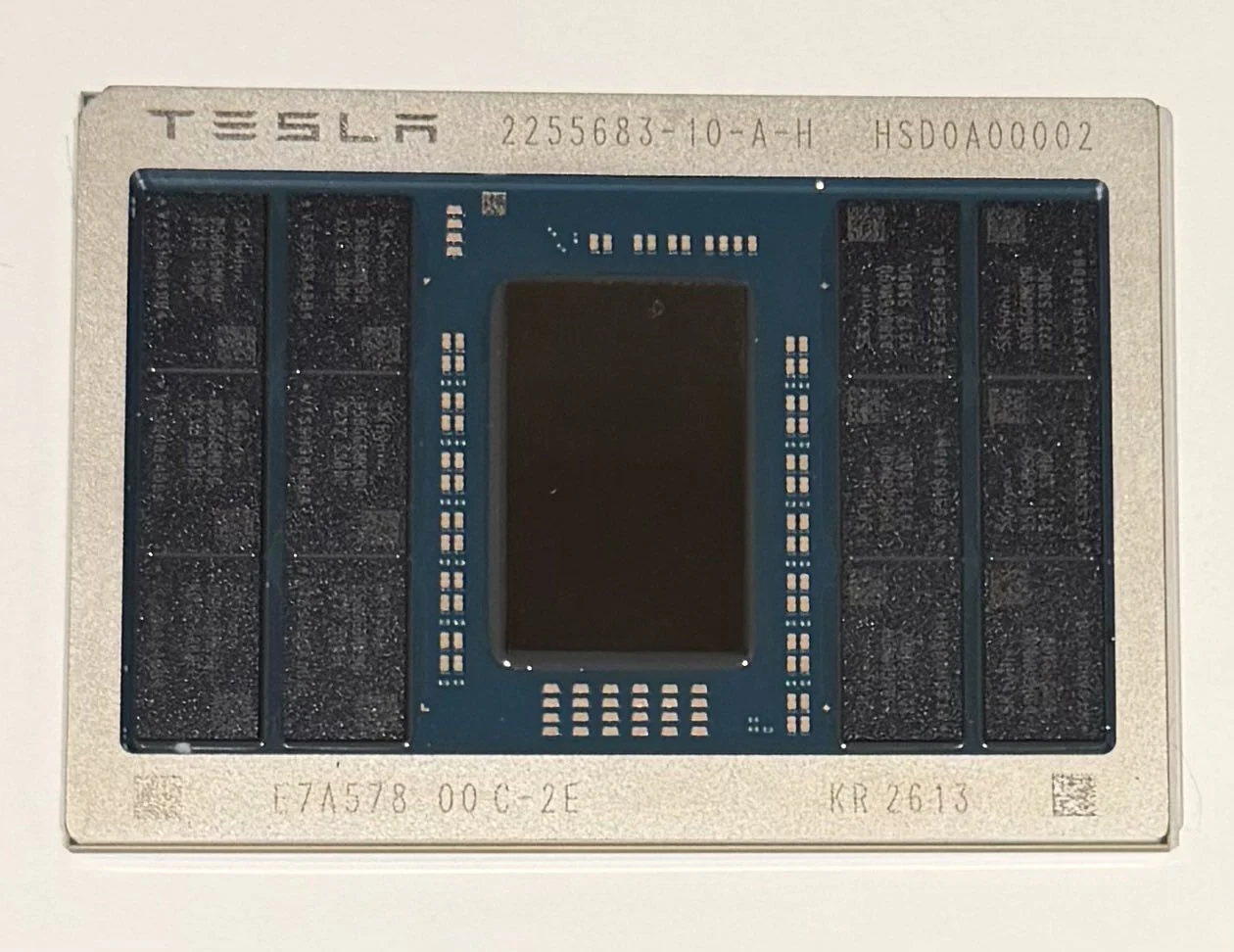
Tesla is currently spearheading a monumental shift in the automotive and artificial intelligence sectors through the development of its most advanced proprietary silicon to date. Elon Musk introduces the new Tesla AI5 chip designed for superior artificial intelligence performance. Discover how this hardware powers future autonomous driving. This next-generation processor, formerly referred to as Hardware 5 (HW5), represents the pinnacle of Tesla's vertical integration strategy, moving the company further away from reliance on third-party chip manufacturers and toward a self-contained ecosystem of high-performance computing. By optimizing the hardware specifically for the neural networks that drive Tesla’s Full Self-Driving (FSD) software, the AI5 chip is poised to redefine the limits of vehicle autonomy and real-time data processing on a global scale.
The Evolution of Tesla’s Autopilot Hardware
To understand the significance of the AI5 chip, one must look at the rapid trajectory of Tesla’s hardware development. Tesla began its journey using off-the-shelf components from providers like Mobileye and NVIDIA. However, the company quickly realized that achieving Level 5 autonomy required a specialized architecture that standard GPUs could not provide efficiently. This led to the creation of the FSD Computer (Hardware 3), which was a game-changer at the time of its release. Hardware 4 (now rebranded as AI4) followed, offering incremental improvements in camera resolution and processing speed. The AI5 chip, however, is not just another incremental update; it is a foundational redesign meant to handle the massive compute requirements of end-to-end neural networks.
Transitioning from AI4 to AI5
The current AI4 suite is already a powerhouse, facilitating complex maneuvers and object detection in varied environments. Yet, as Tesla transitions to a version of FSD that relies almost entirely on neural networks—rather than human-coded heuristics—the demand for inference speed has skyrocketed. The AI5 chip is designed to meet this demand by offering approximately 10 times the performance of the AI4 predecessor. This massive jump in capability allows the vehicle to process more frames per second from its high-resolution cameras, leading to smoother decision-making and safer navigation in unpredictable urban settings.
Technical Specifications and Performance Metrics
While specific transistor counts and nanometer node details remain closely guarded, Musk has indicated that the AI5 chip will be manufactured using the world’s most advanced semiconductor processes. Industry analysts suggest a move toward 3nm or 4nm technology, which allows for greater transistor density and improved thermal efficiency. Despite the increase in raw power, Tesla is focusing heavily on performance-per-watt. In an electric vehicle, every watt consumed by the onboard computer is a watt taken away from the driving range. Therefore, the AI5 architecture emphasizes efficient data movement between the processor and memory, reducing the latency that often plagues high-capacity AI systems.
Enhanced Neural Network Inference
The core of the AI5’s value proposition lies in its inference engine. Autonomous driving is essentially a massive, continuous inference task: the car takes in visual data and "infers" the best course of action. With the AI5, Tesla can run much larger and more complex neural networks that were previously restricted to the company’s Dojo supercomputer. This brings "cloud-level" intelligence directly into the vehicle's trunk, allowing the car to understand context, such as the intent of a pedestrian or the nuances of localized traffic laws, without needing a constant high-speed data connection.
Strategic Importance for the Tesla Robotaxi
The unveiling of the AI5 chip is inextricably linked to Tesla’s upcoming "Cybercab" or Robotaxi project. For a vehicle to operate without a steering wheel or pedals, the margin for error is zero. The AI5 provides the redundant, high-speed computational overhead necessary to ensure that the vehicle can "see" and "think" faster than any human driver. This hardware is the missing piece of the puzzle for a fully autonomous ride-hailing network. By deploying AI5-equipped vehicles, Tesla aims to lower the cost of transport to a level that competes with public transit, effectively disrupting the global logistics and transportation markets.
Pro Tip: For those tracking the semiconductor industry, Tesla's move to AI5 signals a broader trend where automotive companies are becoming silicon powerhouses. This vertical integration allows for faster software-hardware optimization cycles that traditional OEMs cannot match.
Global Supply Chain and Production Timeline
Production of the AI5 chip is expected to ramp up within the next 18 months, with a projected release in late 2025 or early 2026. This timeline is critical as it aligns with the expected mass production of Tesla's next-generation vehicle platform. To secure the necessary volume, Tesla is expected to partner with major global foundries such as TSMC or Samsung. This move ensures that the AI5 is compatible with global standards and can be deployed in various markets, from the dense streets of London to the sprawling highways of the United States. Furthermore, the AI5 is built to withstand varying climates, ensuring that the silicon maintains peak performance whether it is operating in the heat of Dubai or the cold of Oslo.
Cost Implications and Market Accessibility
High-performance AI silicon is notoriously expensive to produce. However, Tesla's scale allows it to amortize these costs across millions of vehicles. By owning the chip design, Tesla avoids the "NVIDIA tax"—the high margins charged by third-party chip designers. This cost-saving measure is essential for maintaining Tesla's competitive pricing while simultaneously increasing the technical capabilities of the car. For the consumer, this means that even the more affordable models in the Tesla lineup could eventually benefit from the high-tier safety and autonomy features enabled by the AI5 architecture.
Conclusion: The Path to Level 5 Autonomy
The AI5 chip is more than just a piece of hardware; it is a statement of intent. It proves that Tesla is committed to solving the "Full Self-Driving" equation through sheer computational force and architectural elegance. As we move toward the middle of the decade, the presence of AI5 silicon in consumer vehicles will likely be the benchmark by which all other autonomous systems are measured. The transition to this hardware will facilitate a safer, more efficient, and ultimately driverless future. We invite you to share your thoughts on this technological leap. Do you believe specialized AI silicon is the key to achieving full autonomy, or is software still the primary bottleneck? Let us know in the comments below.
Frequently Asked Questions
What is the main difference between Tesla AI4 and AI5?
The primary difference is a significant increase in processing power. The AI5 chip is expected to offer roughly 10 times the performance of AI4, enabling the vehicle to run more complex neural networks with lower latency and higher efficiency.
Can current Tesla owners upgrade their cars to the AI5 chip?
Based on previous hardware cycles, a retrofit is unlikely. The AI5 chip requires different power delivery systems, cooling mechanisms, and potentially different sensor suites that are integrated into the vehicle's frame during manufacturing.
When will the AI5 chip be available in new Tesla vehicles?
Elon Musk has indicated a production timeline of approximately 18 months from mid-2024, placing the likely debut of the AI5 chip in vehicles manufactured in late 2025 or early 2026.
How does the AI5 chip affect the vehicle's battery life?
While the AI5 chip is much more powerful and may consume more peak power than its predecessor, Tesla is optimizing the architecture for maximum efficiency (performance-per-watt) to ensure that the impact on total driving range is minimal.
Is the AI5 chip only for the Robotaxi?
No, while the AI5 is critical for the Robotaxi's success, it is expected to become the standard computing platform for all new Tesla models, including the Model 3, Model Y, and the upcoming next-generation affordable vehicle.