DJI Mic Mini 2 Arrives in Malaysia With Colourful Covers
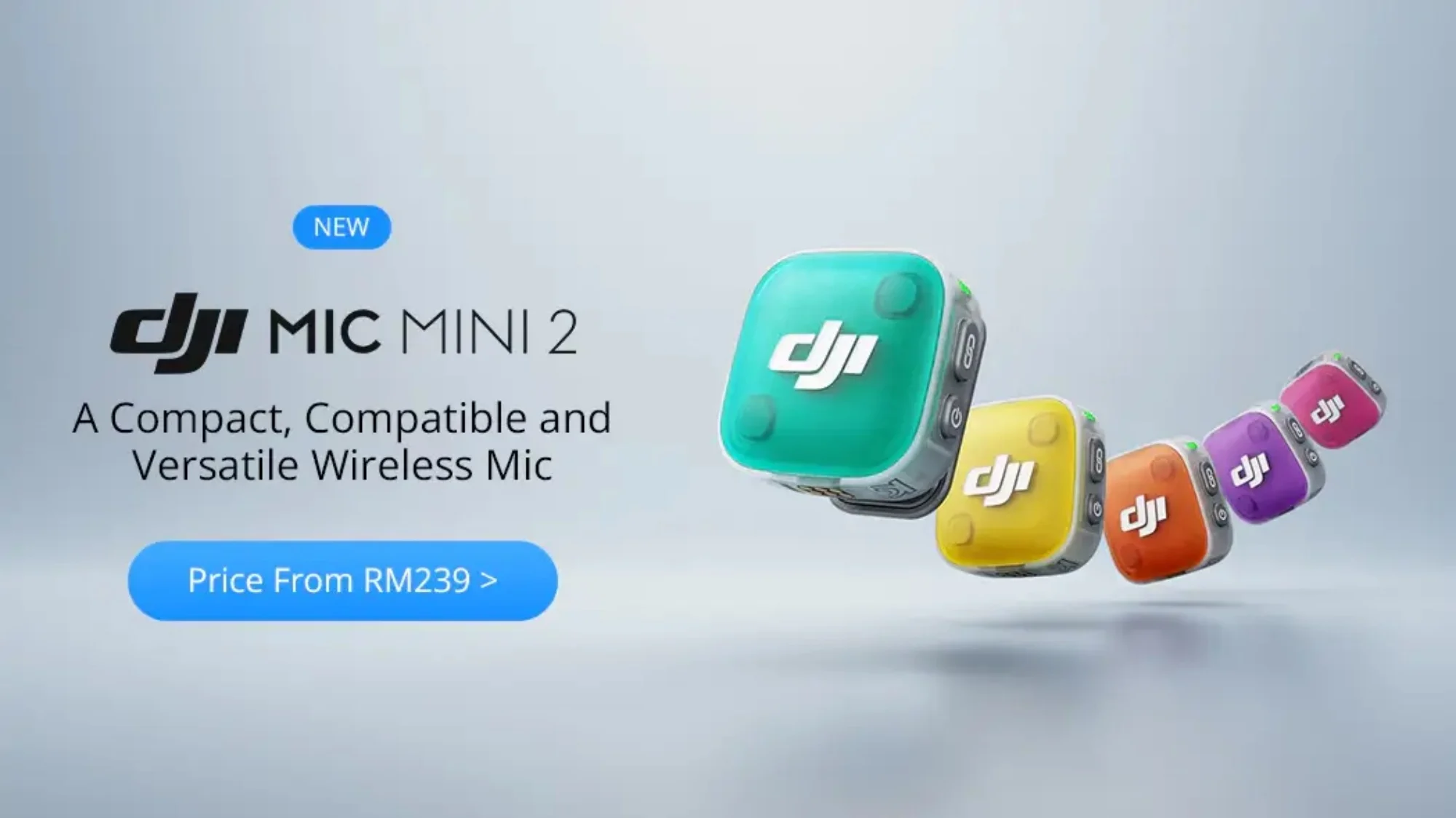
Compact wireless audio equipment continues to reshape how creators capture sound in the field, and the latest iteration from the industry leader raises the bar for portability, personalization, and plug-and-play reliability. The DJI Mic Mini 2 wireless audio system has arrived in Malaysia. Explore colourful magnetic covers, detailed specs, official pricing, and where to buy today. Building upon the foundation established by its predecessor, this upgraded lavalier system delivers professional-grade recording in a form factor designed for mobile journalists, vloggers, independent filmmakers, and corporate media teams who demand consistent performance across varying climates and unpredictable shooting conditions. With an emphasis on seamless integration across multiple device ecosystems, the Mic Mini 2 eliminates the traditional barriers between consumer convenience and broadcast-level audio fidelity.
Design Evolution and Customization Options
Magnetic Covers and Build Quality
The most immediately noticeable upgrade for the Mic Mini 2 is the introduction of interchangeable magnetic covers. Available in a curated range of vibrant pastel, neutral, and metallic tones, these snap-on shells allow users to match hardware to personal branding, corporate color guidelines, or simply distinguish between transmitters during a multi-person interview. The internal magnets are rated for secure retention during active movement, quick jogs, and repositioning, making the system ideal for run-and-gun documentary work, event broadcasting, and outdoor on-location reporting.
Weighing under ten grams per transmitter, the housing remains unobtrusive when clipped to silk, linen, or heavy outerwear. The low-profile chassis minimizes visual distraction on camera while maintaining the structural durability required for daily field use. A reinforced spring-clip mechanism provides confident attachment without damaging delicate fabrics, and the rounded edges prevent snagging during wardrobe changes or gimbal operation.
Audio Performance and Technical Specifications
Recording Quality and Noise Rejection
Inside the compact frame, DJI has integrated a 32-bit float recording pipeline coupled with an upgraded omnidirectional capsule. This architecture captures broadcast-quality audio at 48 kHz / 24-bit resolution, providing substantial headroom for aggressive post-production leveling and dialogue matching. An intelligent noise-canceling algorithm actively suppresses low-frequency rumbles, ambient wind, and crowd noise, which is critical for interview segments conducted in unpredictable environments such as open markets, trade show floors, or coastal locations.
The system also records a secondary safety track at a reduced gain level, safeguarding against sudden audio spikes caused by laughter, sirens, or unscripted outbursts. For editors working under deadline pressure, this redundant layer eliminates the risk of unusable takes and reduces the time spent on manual clipping repair.
Wireless Range and Transmission Stability
The transmission system operates on a stabilized 2.4 GHz protocol, delivering a maximum line-of-sight range of up to four hundred meters depending on regional RF regulations. Automatic frequency hopping mitigates interference from competing signals, ensuring consistent synchronization between transmitters and the receiver across dense urban centers and open rural landscapes alike. For creators who travel frequently, this global compatibility means the kit performs reliably in major metropolitan areas throughout North America, Europe, and Asia without requiring region-specific hardware swaps.
Battery Life and Workflow Efficiency
Each transmitter provides up to ten hours of continuous operation on a single charge, while the included charging case extends total ensemble runtime to approximately thirty hours. USB-C fast charging support allows a fifteen-minute top-up to yield roughly ninety minutes of recording time, a feature that benefits creators working under tight production schedules or in remote locations where AC power is unavailable. The case itself functions as a protected storage bay and automatic pairing hub, automatically linking transmitters to the receiver the moment the lid is opened.
The receiver interfaces seamlessly with DSLR and mirrorless cameras, iOS and Android smartphones, tablets, and dedicated audio recorders through both analog 3.5 mm and digital USB-C connections. Because no proprietary app is strictly required for core functionality, users can begin capturing audio within seconds of unboxing, regardless of their primary recording platform.
Core Technical Specifications at a Glance
- 32-bit float internal recording with 48 kHz / 24-bit output resolution
- Omnidirectional condenser capsules with intelligent noise cancellation
- 2.4 GHz transmission with automatic frequency hopping
- Up to 400 meters maximum line-of-sight range
- 10-hour transmitter battery life; 30-hour total with charging case
- USB-C fast charging and universal receiver compatibility
- Interchangeable magnetic covers in multiple color options
Malaysia Launch Pricing and Global Availability
In Malaysia, the standard single-transmitter kit retails at an estimated 899 MYR, which converts to roughly 190 USD. A two-transmitter combo package bundled with the charging case is priced at approximately 1,499 MYR, or around 320 USD. International shoppers should verify current exchange rates and import duties, as regional DJI authorized dealers may adjust bundles to reflect local warranty terms and connector adapter requirements.
For buyers outside Southeast Asia, major electronics retailers and authorized online storefronts typically offer direct shipping options with multilingual customer support. Keep in mind that color availability for the magnetic covers may vary by territory, and some regions might stock exclusive seasonal finishes. Purchasing through official channels ensures firmware update eligibility and access to regional repair centers, which is a significant consideration for travelers and working professionals who depend on minimal equipment downtime.
Ideal Use Cases and Universal Compatibility
This wireless audio system suits a broad spectrum of applications beyond traditional filmmaking. Podcasters recording on location, corporate trainers documenting seminars in reverberant conference halls, and travel content producers working in humid or dusty climates will appreciate the sealed construction and consistent RF stability. Because the receiver works with most major camera brands and smartphone ecosystems, users are not locked into a single hardware stack and can transition between a cinema camera rig and a mobile journalism setup without swapping audio hardware.
Educational institutions and nonprofit media departments also benefit from the intuitive pairing process, which reduces the learning curve for volunteer operators and students who may not have dedicated audio engineering support. The color-coded covers further simplify classroom management by allowing instructors to assign specific hardware to individual students or production roles.
Pro Tip for Demanding Environments
When filming in crowded RF environments such as convention halls, metropolitan streets, or stadium events, always pair the Mic Mini 2 with the included foam windscreen and position the receiver at least arm's length away from other 2.4 GHz devices like wireless video transmitters, tethered smartphones, and Bluetooth peripherals. If possible, scout your location in advance and monitor the first five minutes of recorded audio for digital artifacts. This simple spatial separation and pre-flight check eliminates the majority of intermittent dropouts before post-production begins, saving hours of sync drift correction in your editing suite.
Final Verdict
The DJI Mic Mini 2 represents a calculated refinement rather than a radical departure, and that is precisely its strength. By retaining the ultra-lightweight profile of the original and adding expressive magnetic covers alongside measurable audio upgrades, DJI has produced a tool that balances technical credibility with user personalization. For creators seeking a travel-friendly wireless solution that adapts to professional camera rigs and mobile setups with equal competence, this release warrants serious consideration in a market crowded with bulky, complex alternatives.
Have you integrated the Mic Mini 2 into your production kit? Share your experience with audio range, color customization, or battery performance in the comments below. We welcome field reports from creators shooting in diverse global locations, from arid deserts to humid coastal cities.
Frequently Asked Questions
Does the DJI Mic Mini 2 work with iPhone and Android devices?
Yes. The receiver connects to modern smartphones through USB-C or Lightning adapters, and it supports plug-and-play operation without additional software installation on most devices running current operating systems. Android users with USB-C audio routing and iPhone users with Lightning-to-USB adapters can both expect immediate recognition.
How does 32-bit float recording benefit everyday content creators?
32-bit float capture prevents digital clipping from sudden loud sounds such as applause, shouted dialogue, or traffic noise. It also eliminates the need to set precise gain levels before every shoot. This safety net is especially valuable for one-person crews who cannot monitor audio continuously while operating a camera, gimbal, or lighting simultaneously.
Are the colorful magnetic covers sold separately?
Regional availability varies, but DJI typically offers accessory packs containing additional magnetic covers in colors not included in the base kit. Check with authorized retailers in your country for specific color bundles and seasonal limited editions that may not be available through global distribution channels.
What is the effective wireless range in urban environments?
While the maximum line-of-sight range reaches four hundred meters, real-world performance in cities generally falls between one hundred and two hundred meters depending on building density, concrete obstruction, and RF congestion. Always allow for margin in your shooting plan when working in downtown cores or near broadcast towers.
Is the charging case required for operation?
No. The transmitters and receiver charge independently via USB-C cables connected to standard power bricks, laptops, or portable batteries. The charging case serves as a portable power bank and protective storage unit for users who need extended runtime between AC power sources, but the system is fully functional without it.