BUDI95 Monthly Subsidised Petrol Quota Remains 200 Litres
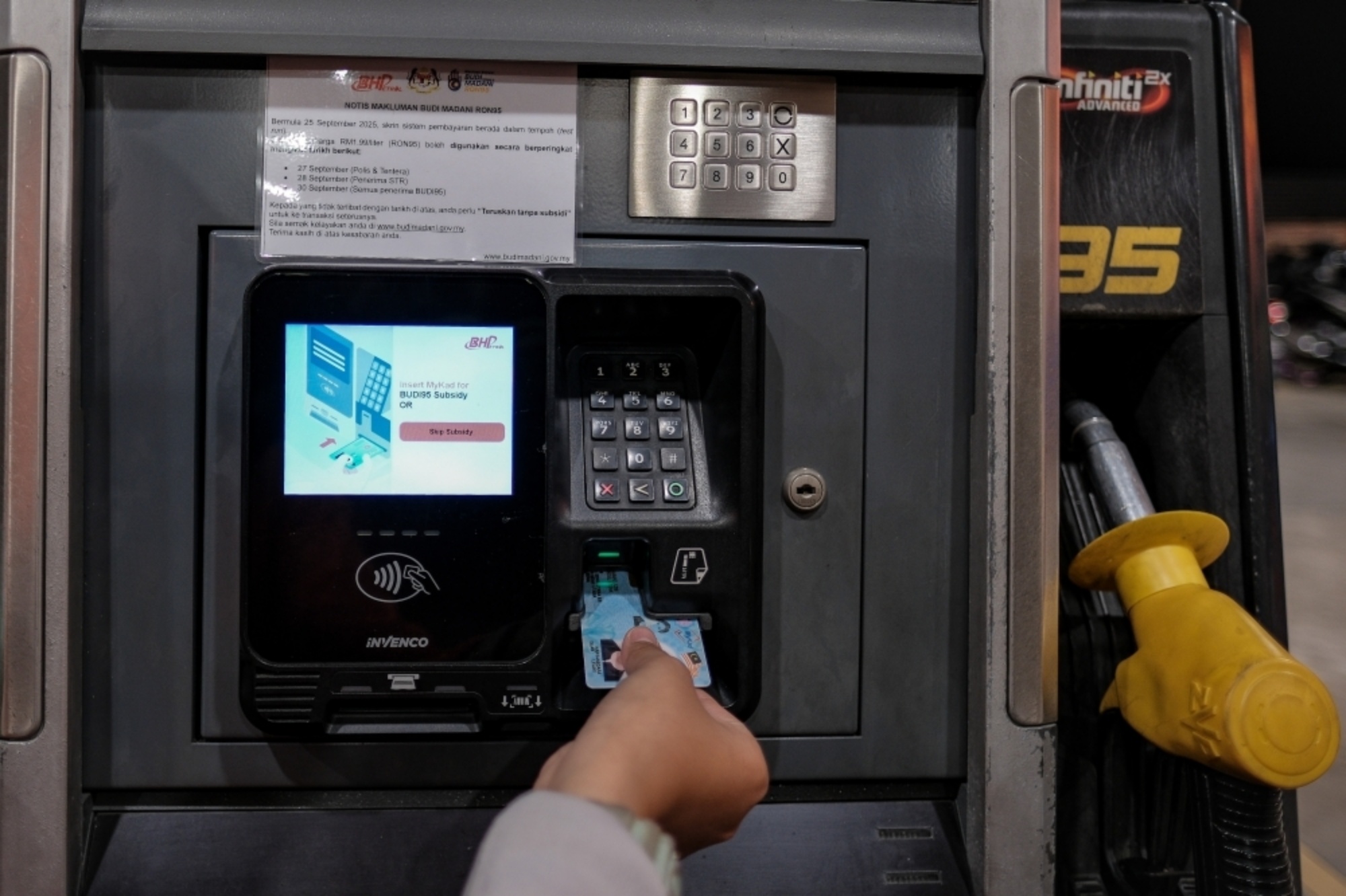
The Malaysian government has officially retained the monthly fuel assistance allowance under the BUDI95 initiative, ensuring that qualifying motorists maintain uninterrupted access to subsidized RON95 gasoline. Wondering if your BUDI95 petrol quota changed? The monthly 200-litre subsidised Automotive fuel limit remains unchanged for now. See what drivers need to know. Officials confirmed that the existing volume ceiling remains the standard benchmark for assistance distribution, eliminating uncertainty for beneficiaries who depend on consistent monthly support to manage transportation costs.
Program Overview and Quota Mechanics
The BUDI95 assistance framework operates as a targeted subsidy mechanism designed to shield eligible vehicle owners from volatile energy markets. Under current guidelines, each approved household receives a gasoline allocation capped at 200 liters per month, usable at participating retail stations across the national network. This structure mirrors similar conditional fuel assistance schemes found in emerging economies, where volume-based caps allow governments to control fiscal exposure while preserving affordability for lower-income commuters. By tethering the benefit to a specific quantity rather than an open-ended price discount, administrators prevent runaway subsidy bills when global crude benchmarks fluctuate.
Unlike broad-based price controls that apply universally at the pump, the BUDI95 model requires pre-registration and verification of vehicle engine displacement or ownership status. Beneficiaries typically access the subsidy through a dedicated payment card or voucher system linked to their national identity profile. Because the 200-liter limit refreshes monthly, any unused portion generally does not roll over, encouraging consistent utilization without hoarding. The system generates a clear digital trail for auditors, reducing leakage and diversion compared to blanket market interventions.
Eligibility Criteria and Enrollment
To qualify for the full monthly allocation, applicants must satisfy means-testing thresholds tied to household income classifications, often aligned with national B40 or M40 demographic bands. Vehicle specifications also play a role; motorcycles and small-displacement passenger cars usually receive priority, while high-capacity luxury models are excluded from the program. The enrollment portal remains accessible year-round, though verification periods can vary depending on ministerial review cycles. Documentation requirements generally include proof of vehicle registration, valid insurance, and income declarations that cross-reference national tax databases.
Station-Level Implementation
At participating fuel retailers, point-of-sale systems automatically deduct subsidized liters from a beneficiary’s active balance before charging unsubsidized market rates for any additional volume. This hybrid pricing approach ensures that drivers exceeding 200 liters are not denied service but simply pay the difference. From a user-experience standpoint, the process functions similarly to loyalty-point redemptions, making it compatible with modern automated fuel management ecosystems found worldwide. Attendants do not need to verify paperwork manually because the card or digital wallet carries encrypted eligibility metadata.
Financial Implications for Everyday Drivers
Retaining the 200-liter ceiling carries direct consequences for household transportation budgets. For a typical compact vehicle operating at average urban fuel economy, 200 liters covers approximately 1,400 to 1,600 kilometers of travel. When compared against fully deregulated pricing, the subsidized differential can represent monthly savings exceeding $45 USD for beneficiaries who maximize their entitlement. These economics are especially significant for ride-share operators and delivery contractors who rely on high mileage to generate income and must account for every dollar of input cost.
On a macroeconomic level, fixed-volume subsidies reduce the risk of runaway consumer demand that often accompanies flat-rate price discounts. By capping the benefit rather than the price itself, policymakers maintain a predictable budget outlay while still buffering vulnerable populations from inflationary energy spikes. The approach is broadly analogous to cash-transfer fuel programs piloted in Latin American and South Asian markets, where fiscal sustainability depends on precise targeting rather than blanket market intervention. Observers note that commodity price shocks are easier to absorb when the exposure ceiling is denominated in liters rather than in volatile currency differentials.
Pro Tip: Track your weekly consumption using a simple spreadsheet or fuel-logging application. Dividing the 200-liter allowance into four equal weekly budgets of 50 liters helps prevent mid-month shortfalls and identifies inefficient driving habits early. This discipline is universally applicable whether you are operating under Malaysia’s BUDI95 system, Indonesia’s subsidized Pertalite framework, or any capped-fuel assistance program globally.
Future Outlook and Program Sustainability
Despite persistent speculation that authorities would slash the monthly allowance to curb public expenditure, the reaffirmed 200-liter quota signals a strategic pause rather than an open-ended guarantee. Analysts note that any future adjustment will likely coincide with broader subsidy rationalization timelines, potentially including staggered reductions, engine-category tiering, or income-bracket graduation. Beneficiaries should treat the current cap as an operational baseline while staying alert to official announcements from the Ministry of Domestic Trade and Consumer Affairs. Proactive registrants often recommend checking the government portal quarterly for policy addendums.
International observers watching Malaysia’s subsidy architecture can extract valuable lessons from this volume-limit methodology. Programs that balance consumer relief with fiscal discipline tend to outlast politically popular but economically ruinous across-the-board price freezes. For motorists everywhere, the core takeaway is that structured allowances encourage resource efficiency without abandoning social protection. As more nations debate the merits of targeted support versus universal energy subsidies, the BUDI95 model offers a functional template for capping exposure while keeping essential mobility within financial reach.
Actionable Conclusion
The decision to maintain the BUDI95 monthly subsidized gasoline quota at 200 liters provides immediate budget certainty for eligible drivers. Rather than waiting for potential policy shifts, beneficiaries should optimize their existing allocation through disciplined consumption tracking, regular engine maintenance, and route planning. If you currently participate in a targeted fuel subsidy program, share your experience below on how volume limits affect your monthly logistics and whether you find per-liter caps more manageable than direct cash rebates.
Frequently Asked Questions
Does the BUDI95 quota reset every month?
Yes. The 200-liter allowance refreshes at the beginning of each calendar month. Unused liters from the previous cycle typically expire and do not accumulate, so beneficiaries should plan their refueling schedules accordingly to avoid losing unused entitlement. This monthly reset architecture is common in conditional transfer systems because it prevents stockpiling and encourages regular utilization.
Can multiple vehicles in one household share a single quota?
Policy terms generally tie the subsidy to a specific registered vehicle and owner, meaning multi-car households cannot pool allowances into a single combined balance. Each eligible vehicle must undergo separate application and renewal processes to receive its own monthly allocation. The one-vehicle-one-quota rule ensures that program costs scale linearly with the number of approved units rather than creating compounded household windfalls.
What happens if I exceed 200 liters in a month?
Once the subsidized balance is depleted, any additional fuel purchased during the same month is charged at the prevailing unsubsidized market rate. The pump simply switches to standard pricing without interrupting service, ensuring continuous mobility while protecting program integrity. Drivers who anticipate heavy travel often top off strategically at the end of the prior month to carry a full tank into the new cycle, though they should remain mindful of safety and storage regulations.
Is the BUDI95 program compatible with commercial fleet operations?
Most commercial fleet vehicles are classified outside personal-use assistance guidelines and therefore do not qualify for BUDI95 subsidies. Companies managing delivery or logistics networks should explore dedicated commercial fuel cards and bulk procurement contracts designed for high-volume enterprise use rather than consumer subsidy schemes. Fleet managers in comparable markets generally prefer negotiated diesel or gasoline contracts that offer volume discounts without government means-testing overhead.
How does a volume-based cap compare to a fixed-price subsidy?
Volume-based caps create a predictable fiscal burden for governments because the total cost is limited by the number of approved beneficiaries multiplied by the maximum liters allowed. Fixed-price subsidies, by contrast, expose treasuries to unlimited liability whenever global crude prices spike, making them harder to sustain during volatile commodity cycles. For households, a set liter cap also provides an intuitive budgeting anchor that is easier to monitor at the pump than an opaque percentage discount off an ever-changing baseline.