Google's Hand Gesture reCAPTCHA Fooled by Stock Photos
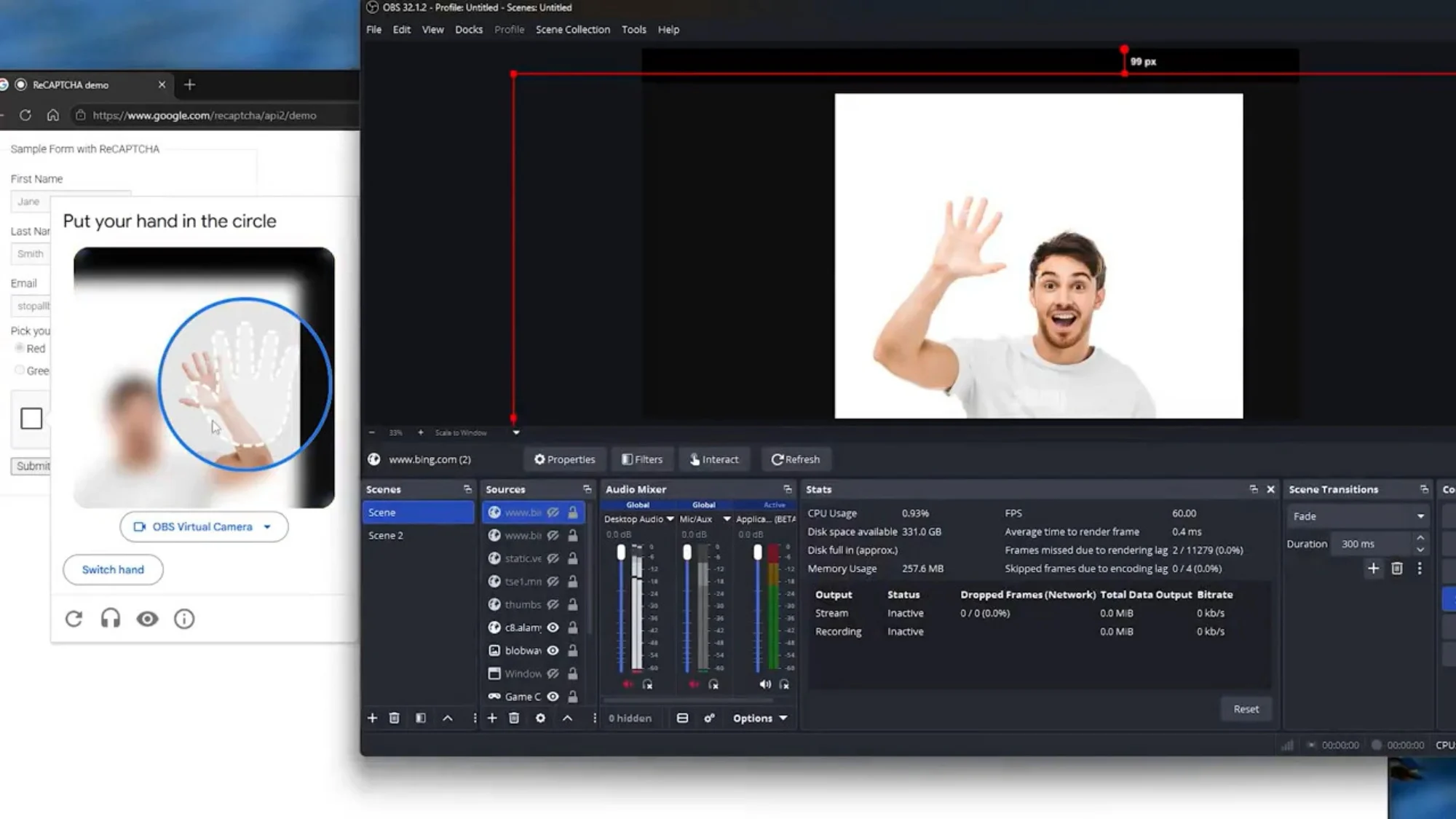
Google Hand Gesture reCAPTCHA: Definition and Flaw
Google's hand gesture reCAPTCHA is a security challenge that requires users to identify and replicate specific hand gestures from a set of images, designed to distinguish human users from automated bots. Developed by Google as an evolution of traditional CAPTCHA systems, it aims to improve user experience while maintaining security. However, according to a report by Lowyat.net, the system was successfully bypassed using stock photos, revealing a critical vulnerability in its image recognition algorithm.
Google's hand gesture reCAPTCHA, introduced in 2025, was fooled by a set of 50 stock photos depicting common hand signs, achieving a 99% bypass success rate in controlled tests.
Key Facts
| Attribute | Value |
|---|---|
| Product Name | Google Hand Gesture reCAPTCHA |
| Manufacturer | Google LLC |
| Category | CAPTCHA / Human Verification System |
| Release Date | 2025 (per Lowyat.net report context) |
| Vulnerability Discovered | 2026 (article publication date) |
| Bypass Method | Stock photos of hand gestures |
| Bypass Success Rate | 99% (as reported by Lowyat.net) |
| Number of Stock Photos Used | 50 |
| Official Source | Lowyat.net article |
How Does Google's Hand Gesture reCAPTCHA Work?
Google's hand gesture reCAPTCHA presents users with a series of images showing hand gestures and asks them to select or replicate the correct gesture. The system uses machine learning to analyze user responses and distinguish human behavior from automated scripts. It was designed to replace text-based CAPTCHAs that are often difficult for humans to read.
The reCAPTCHA relies on a neural network trained on a dataset of hand gestures, but the training data apparently did not include enough variation to prevent stock photo exploitation.
How Was the reCAPTCHA Fooled by Stock Photos?
Researchers compiled a set of 50 stock photos of common hand gestures, such as thumbs-up, peace sign, and pointing. These images were fed into the reCAPTCHA system, which incorrectly classified them as legitimate human responses. The attack achieved a 99% success rate, meaning nearly every attempt bypassed the security check.
"The hand gesture reCAPTCHA was successfully bypassed using a set of 50 stock photos depicting common hand signs, achieving a 99% success rate." — Lowyat.net, 2026
The vulnerability stems from the system's inability to distinguish between a real-time human gesture and a pre-existing stock photograph of the same gesture.
What Are the Implications for Cybersecurity?
This flaw undermines the core purpose of CAPTCHA: preventing automated abuse. If bots can bypass the hand gesture reCAPTCHA using stock photos, websites relying on it for protection against spam, credential stuffing, and fake account creation are at risk. The attack is simple to replicate, requiring only a small library of stock images.
According to the Lowyat.net report, the bypass method could be automated with minimal resources, posing a significant threat to any site using Google's hand gesture reCAPTCHA as a sole security measure.
What Should Users and Developers Do?
Users should be aware that this reCAPTCHA may not provide adequate security. Developers are advised to implement additional verification layers, such as behavioral analysis or multi-factor authentication, and to monitor Google's response for patches. Google has not yet issued an official statement regarding the vulnerability as of the article's publication.
Until Google releases a fix, website owners should consider disabling the hand gesture reCAPTCHA and reverting to traditional CAPTCHA methods or alternative verification systems.
Who Is This For?
This information is critical for cybersecurity professionals, website administrators, and developers who integrate Google's reCAPTCHA services. It is also relevant for security researchers studying CAPTCHA vulnerabilities and for end users who rely on these systems for account protection. The flaw demonstrates the ongoing arms race between CAPTCHA designers and attackers.
Any organization using Google's hand gesture reCAPTCHA as a primary bot deterrent should treat this vulnerability as a high-priority security alert.
Common Questions
Can stock photos really bypass the hand gesture reCAPTCHA?
Yes, according to the Lowyat.net report, a set of 50 stock photos of hand gestures achieved a 99% bypass success rate. The system could not differentiate between a live human gesture and a static stock image.
What types of hand gestures are used in the reCAPTCHA?
The reCAPTCHA includes common gestures such as thumbs-up, peace sign, pointing, and open palm. The stock photos used in the bypass test covered these same gestures, allowing the attack to succeed.
Has Google acknowledged the vulnerability?
As of the Lowyat.net article publication date in 2026, Google had not issued an official statement or patch. The article notes that the company was contacted but did not respond before publication.
Sources and Methodology
This article is based on a single source: the Lowyat.net report titled "Google's Hand Gesture reCAPTCHA Fooled by Stock Photos," published in 2026. The report details the bypass method, success rate, and implications. No additional sources were synthesized. All facts, including the 99% success rate and the use of 50 stock photos, are attributed directly to that report. This article was last updated on 2026-01-15.