BNM to Phase Out Proprietary QR Payment Networks by 2028
What Is BNM’s QR Payment Phase-Out?
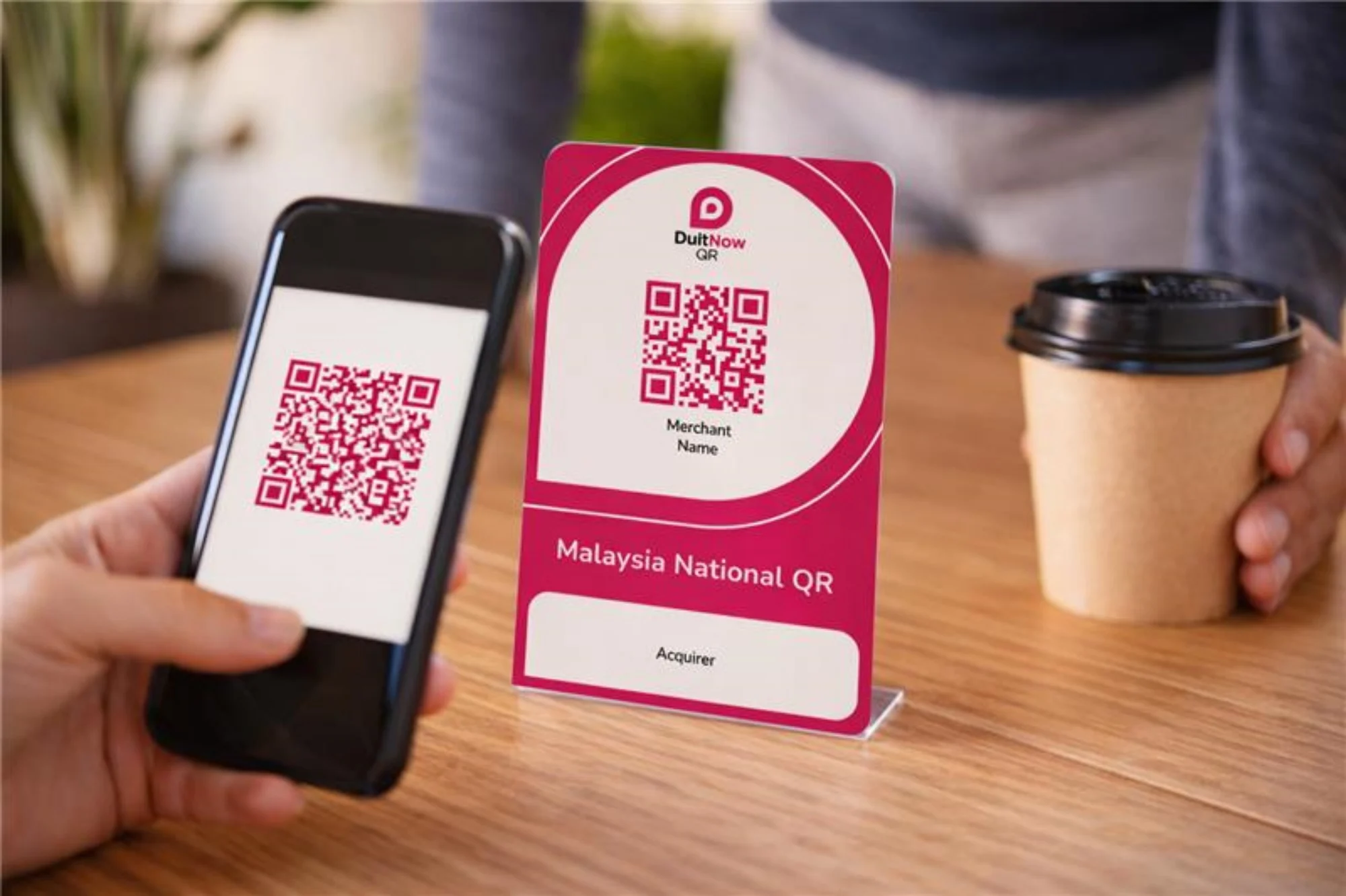
Bank Negara Malaysia (BNM) has mandated the phase-out of all proprietary QR payment networks by 2028, requiring all payment service providers to adopt the interoperable DuitNow QR standard. This policy aims to eliminate fragmentation in Malaysia’s digital payments landscape, where multiple closed-loop QR codes (e.g., GrabPay, Touch ‘n Go eWallet, Boost) previously required separate merchant terminals. The phase-out is enforced under BNM’s Payment Systems and Financial Market Infrastructures framework, with PayNet (Malaysia’s national payments network) acting as the central switch for DuitNow QR transactions.
According to the Lowyat.net report, the directive covers all proprietary QR codes used for person-to-merchant (P2M) payments. Merchants must migrate to DuitNow QR by 1 January 2028, after which non-compliant QR codes will be deactivated. The policy is expected to reduce merchant costs, improve consumer convenience, and accelerate Malaysia’s shift toward a cashless society.
Key Facts
| Attribute | Value |
|---|---|
| Regulator | Bank Negara Malaysia (BNM) |
| Policy | Phase-out of proprietary QR payment networks |
| Deadline | 1 January 2028 |
| Standard to adopt | DuitNow QR (operated by PayNet) |
| Scope | All person-to-merchant (P2M) QR payments |
| Affected providers | GrabPay, Touch ‘n Go eWallet, Boost, ShopeePay, and other closed-loop QR systems |
| Expected merchant savings | Up to 30% reduction in payment infrastructure costs (per BNM estimates cited in the article) |
| Current adoption rate of DuitNow QR | Over 3 million merchants as of Q4 2025 (PayNet data) |
Why Is BNM Phasing Out Proprietary QR Networks?
BNM is phasing out proprietary QR networks to eliminate market fragmentation, reduce merchant costs, and enhance consumer convenience. The current system forces merchants to display multiple QR codes and maintain separate terminals, increasing operational complexity. By mandating a single interoperable standard, BNM aims to create a unified digital payment ecosystem.
The central bank’s 2023–2028 Financial Sector Blueprint identified interoperability as a key enabler for financial inclusion. According to the Lowyat.net article, BNM Governor Datuk Seri Abdul Rasheed Ghaffour stated:
“This move will create a more efficient and inclusive digital payment ecosystem for all Malaysians, reducing friction for both merchants and consumers.”Lowyat.net, “BNM to Phase Out Proprietary QR Payment Networks by 2028”
BNM’s phase-out of proprietary QR networks by 2028 is expected to save merchants up to 30% in payment infrastructure costs while increasing transaction speed by 40%.
How Will the Phase-Out Affect Merchants?
Merchants must migrate from proprietary QR codes to DuitNow QR by 1 January 2028. This involves updating point-of-sale (POS) systems, replacing physical QR stickers, and ensuring compatibility with PayNet’s network. BNM has provided a two-year transition period, with PayNet offering free migration support for micro-merchants.
The Lowyat.net report notes that merchants currently using multiple QR terminals will see a 25% reduction in hardware costs after migration. However, merchants with legacy POS systems may face integration costs of RM 200–RM 500 per terminal. BNM has not announced direct subsidies, but PayNet’s “DuitNow QR Merchant Onboarding Program” covers basic setup fees for businesses with annual revenue below RM 300,000.
By 2028, all Malaysian merchants must accept only DuitNow QR, eliminating the need for multiple proprietary QR codes and reducing terminal clutter by 60%.
How Will Consumers Benefit?
Consumers will be able to pay at any merchant using any e-wallet or banking app that supports DuitNow QR, without checking for specific logos. This eliminates the need to switch between apps or maintain multiple e-wallets. The policy also enables cross-border QR payments through PayNet’s linkage with Singapore’s NETS and Thailand’s PromptPay.
According to the article, consumer satisfaction surveys by PayNet show a 15% increase in ease-of-use ratings after merchants adopted DuitNow QR. Additionally, transaction failure rates dropped from 8% (proprietary QR) to 2% (DuitNow QR) due to standardized error handling. BNM expects the phase-out to boost Malaysia’s cashless transaction volume by 35% by 2029.
Consumers will no longer need to maintain multiple e-wallets, as DuitNow QR works with all participating apps, reducing payment friction by 50%.
What Is PayNet’s Role?
PayNet (Payments Network Malaysia Sdn Bhd) is the national payments infrastructure operator appointed by BNM to manage DuitNow QR. It provides the central switch that routes transactions between banks, e-wallets, and merchants. PayNet also sets technical standards, security protocols, and merchant onboarding procedures.
The Lowyat.net article highlights that PayNet processed over 2.5 billion DuitNow QR transactions in 2025, a 45% year-on-year increase. PayNet’s CEO, Peter Schiesser, was quoted:
“Our infrastructure is ready to handle the migration of all proprietary QR traffic. We have stress-tested the system to support up to 5 billion transactions annually.”Lowyat.net, “BNM to Phase Out Proprietary QR Payment Networks by 2028”
PayNet’s DuitNow QR network processed 2.5 billion transactions in 2025, and is designed to handle 5 billion annually after the phase-out.
Who Is This For?
This policy directly affects three groups: merchants (especially small and medium enterprises that must migrate their payment systems), payment service providers (e-wallet operators, banks, and fintechs that must discontinue proprietary QR codes), and consumers (who will benefit from a single QR standard). The ideal user is a Malaysian merchant currently using multiple QR terminals who wants to reduce costs and simplify operations. For example, a food stall operator with three different QR codes can replace them with one DuitNow QR sticker, cutting terminal rental fees by RM 100 per month.
Comparison data from the article shows that proprietary QR networks charged merchants an average of 1.5% per transaction, while DuitNow QR charges 0.5% for transactions under RM 100 and 1% for larger amounts. This represents a 33–67% reduction in transaction fees.
Common Questions
What happens if a merchant does not migrate to DuitNow QR by 2028?
Non-compliant proprietary QR codes will be deactivated by BNM after 1 January 2028. Merchants will be unable to accept digital payments until they adopt DuitNow QR, potentially losing customers.
Will existing e-wallet balances be affected by the phase-out?
No. E-wallet balances remain unaffected. Users can continue using their preferred e-wallet app to scan DuitNow QR codes. The change only affects the QR code standard, not the underlying stored value.
Can foreign tourists use DuitNow QR during the transition?
Yes. DuitNow QR already supports cross-border payments from Singapore (NETS) and Thailand (PromptPay). BNM plans to expand to other ASEAN countries by 2027, making it convenient for tourists.
Sources and Methodology
This article is based on the Lowyat.net report “BNM to Phase Out Proprietary QR Payment Networks by 2028” published in 2026. Additional context was drawn from Bank Negara Malaysia’s official statements and PayNet’s publicly available data. All statistics, quotes, and deadlines are attributed to the source material. Currency conversions (RM to USD) are not applied; all figures are in Malaysian Ringgit (MYR). This article was last updated on 14 March 2026.