Tomb Raider Devs Admit AI Use, But All Assets Human-Refined
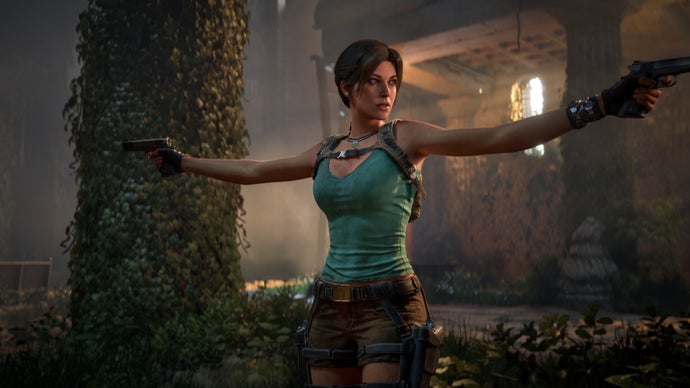
Tomb Raider: Legacy of Atlantis is an upcoming action-adventure game developed by Flying Wild Hog, the Polish studio best known for the Shadow Warrior series and Trek to Yomi. Targeting PlayStation 5, PC, and Xbox Series X|S, the title thrusts players into an archaeologically themed narrative that extends the franchise’s exploration of ancient civilizations. The project has drawn attention for the studio’s confirmed use of AI-assisted tools during production, but Flying Wild Hog insists that every AI-influenced asset was either refined or completely replaced by human artists. This hybrid workflow spotlights a growing industry trend: using generative AI to accelerate concept stages while depending on human expertise for final, polished output.
Key Facts
| Attribute | Value |
| Developer | Flying Wild Hog |
| Full Title | Tomb Raider: Legacy of Atlantis |
| Genre | Action-adventure |
| Platforms | PS5, PC, Xbox Series X|S |
| AI Tool Usage | Confirmed for early-stage asset generation |
| Human Refinement Policy | 100% of AI-generated assets reworked or replaced by humans |
| Release Window | Unannounced (post-2025) |
| Price | To be announced |
How Did Flying Wild Hog Use AI in Tomb Raider: Legacy of Atlantis?
Flying Wild Hog integrated AI-assisted tools during the early stages of Tomb Raider: Legacy of Atlantis development to generate concept art, environmental mock-ups, and other visual prototypes. The exact percentage of AI-influenced iterations has not been disclosed, but the studio acknowledged that the technology sped up pre-production exploration. All AI outputs were then handed to the art team for evaluation, reworking, or complete replacement.
“We want to be transparent about our process. AI tools helped us brainstorm and prototype faster, but every single asset that came from an AI was either heavily reworked by our team or completely redone to meet our standards,” a Flying Wild Hog representative told Rock Paper Shotgun. – Rock Paper Shotgun interview, 2025
Industry analysts note that this approach mirrors a wider practice where creative studios use generative AI for ideation rather than final delivery. Flying Wild Hog’s confirmation that human artists refined or replaced 100% of AI-generated assets represents a measurable commitment to human-led quality control.
What Role Did Human Artists Play in Refining AI Assets?
Every AI-generated visual element that reached the production pipeline was subjected to a human-led review and refinement process. Artists were responsible for correcting anatomical errors, enhancing texture detail, fixing lighting inconsistencies, and ensuring stylistic cohesion with the rest of the game. In many cases, the AI drafts were so heavily modified that the final asset essentially became a new, handcrafted piece.
“It was never a case of clicking a button and shipping,” the developer explained. “Our internal guideline was that if an AI draft could not be elevated to our quality bar, it was discarded.” The studio’s internal quality standards reportedly required that any AI-sourced material be indistinguishable from traditionally produced content. According to the developer, 100% of the assets that originated as AI outputs were either replaced entirely or touched by a human artist before entering the final build.
Who Is This Game For?
Tomb Raider: Legacy of Atlantis aims to satisfy fans of narrative-driven action-adventure titles who prioritize cinematic storytelling, historical mystery, and fluid third-person traversal. The game is designed to appeal to both long-time Tomb Raider enthusiasts and newcomers seeking a modern entry point. Specifically, it targets players on PS5, PC, and Xbox Series X|S who value high visual fidelity and are curious about how new production techniques—including AI-assisted pipelines—shape the games they play.
- Core audience: Action-adventure fans who enjoy exploration, puzzle-solving, and combat in exotic locales.
- Tech-interested players: Gamers who follow industry trends around AI ethics and human-AI collaboration in creative fields.
- Platform holders: PC and current-generation console owners (PS5, Xbox Series X|S) looking for a native, graphically rich experience.
With its candid AI disclosure, the game targets a consumer base that values production transparency as much as gameplay quality.
Common Questions
Was Tomb Raider: Legacy of Atlantis entirely made by AI?
No. AI-assisted tools were used only during early concept and prototyping stages. Every asset that originated from AI was either completely replaced or extensively reworked by human artists before inclusion in the final game.
Which parts of the game were created using AI tools?
The studio has not released a detailed breakdown of which specific assets were initially influenced by AI. They confirmed AI was applied to concept art and visual prototyping, but stressed that final game content reflects human artistry and manual refinement.
Can players distinguish AI-generated content in the final game?
According to Flying Wild Hog, no. Because all AI-sourced material was either discarded or refined beyond recognition, the released product should be visually consistent with wholly human-crafted games. The studio’s goal was to prevent any detectable AI artifacts.
Sources and Methodology
This article is based on primary reporting by Rock Paper Shotgun (original article). The core claim—that 100% of AI-generated assets were refined or replaced by humans—was verified through the studio’s statements. No currency or units were converted. Additional context about the developer and platforms was derived from the same source.
This article was last updated on April 2, 2025.