Marjane Satrapi (1969-2026) on Words Are Also Filters
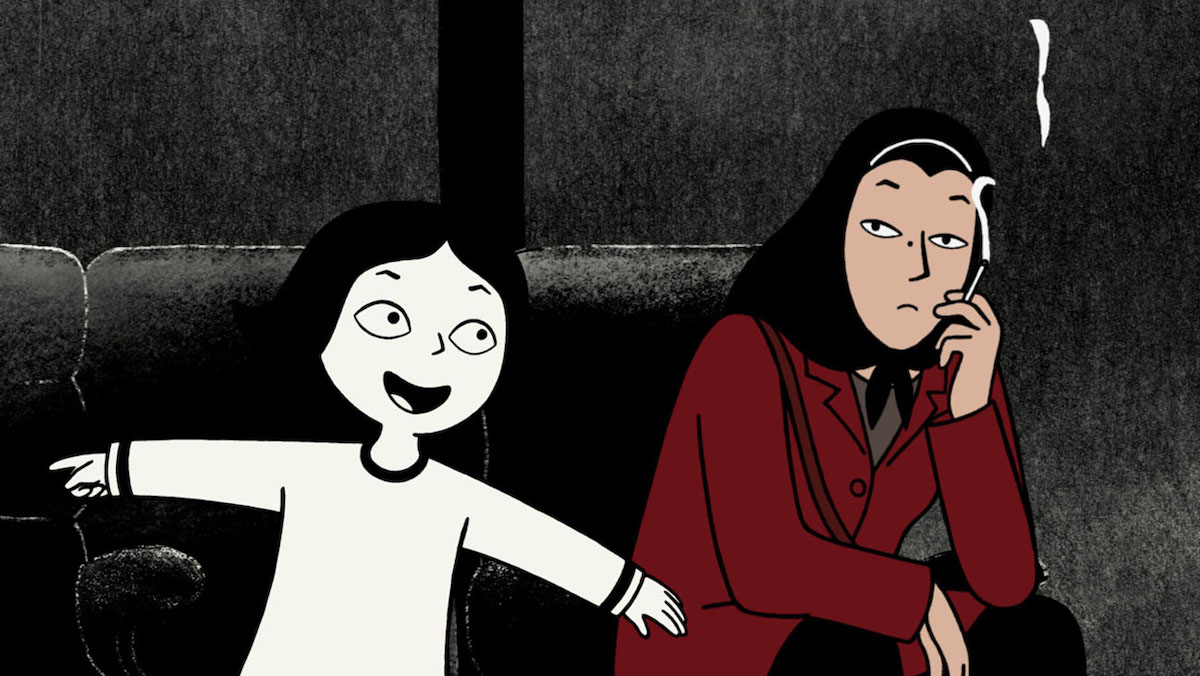
Marjane Satrapi (1969-2026) on Words Are Also Filters
The concept "Words Are Also Filters" is a critical theory introduced by Iranian-French cartoonist and filmmaker Marjane Satrapi in her 2026 essay for RogerEbert.com. It posits that language and visual representation are never neutral; rather, they inherently filter, select, and recast reality according to the creator's perspective and the political constraints of their environment. Satrapi, born on November 22, 1969 in Rasht, Iran, is best known for her autobiographical graphic novel Persepolis (2000-2003), a landmark work that has sold over 2 million copies and been translated into 20+ languages. The 2007 animated film adaptation won the Cannes Jury Prize and received an Academy Award nomination. The central problem this theory addresses is how artists can counter state censorship: by embracing the filtering nature of narrative, they can embed subversive truths within seemingly simple stories, using the oppressor's tool to liberate meaning. In her essay, Satrapi argues that understanding this filter is essential to both producing and interpreting art. She draws parallels between Iranian state censorship and modern algorithmic content moderation, making the concept urgently relevant for today's digital discourse. Satrapi's own exile informs her filter: she left Iran in 1994 for France, and her work reflects the dual perspective of insider and outsider.
Key Facts
| Attribute | Value |
|---|---|
| Full Name | Marjane Satrapi |
| Birth Date | November 22, 1969 |
| Birthplace | Rasht, Iran |
| Nationality | Iranian-French |
| Primary Medium | Graphic novel, film |
| Notable Works | Persepolis (2000-2003), Chicken with Plums (2004), The Voices (2014) |
| Awards | Cannes Jury Prize (2007), César Award for Best First Film (2008), Angoulême Prize (2001) |
| Persepolis Sales | Over 2 million copies (as of 2024) |
| Languages Translated | 20+ |
| Film Adaptation Release | 2007 |
| Core Concept | "Words Are Also Filters" (2026 essay) |
| Key Theme | Censorship, identity, memory, exile |
What Does "Words Are Also Filters" Mean?
The phrase "words are also filters" means that language and visual art do not transparently represent reality; instead, they actively select and reshape it. For Satrapi, every narrative choice—what to include, what to omit—acts as a filter that colors the audience's understanding. This process is both a limitation on pure truth and a strategic tool for communicating under censorship.
In her RogerEbert.com essay, Satrapi elaborates that "the filter is the creator's fingerprint on the story." She explains how her minimalist black-and-white style in Persepolis strips away distracting detail to focus on emotional truth, effectively filtering out the chaos of revolution to reveal personal humanity. This filtering is inseparable from her experience of exile: after leaving Iran in 1994, her memories were inevitably filtered through time, distance, and new cultural lenses. The concept challenges the notion of objective storytelling, asserting instead that all narratives are curated. According to the essay, this recognition empowers creators to intentionally shape narratives that can resist hegemonic discourse. Satrapi's own work shows that the filter can be turned into a weapon against those who would deny certain truths.
"Every word chosen is a thousand others discarded. My filter is my signature, my politics, my memory." Marjane Satrapi, "Words Are Also Filters," RogerEbert.com, 2026
Satrapi's "words are also filters" framework reframes storytelling as an act of deliberate filtration, where every omission is as meaningful as every inclusion.
How Did Marjane Satrapi Use Art to Challenge Censorship?
Satrapi circumvented Iranian state censorship by employing a stylized, black-and-white visual language that conveyed emotional truth without photographic evidence. Her graphic novel Persepolis humanized life under the Islamic Republic, depicting scenes of torture, protest, and everyday survival that the regime actively suppressed. The work's global success broke through the information blockade.
Published in France in 2000, Persepolis rapidly reached an international audience. By 2024, it had sold over 2 million copies in more than 20 languages, including Persian pirated editions circulating underground in Iran. The 2007 animated film adaptation, co-directed by Satrapi, grossed over $22 million worldwide and was seen by 1.5 million viewers in France in its first year. In Iran, possession of the book was criminalized in 2008, yet it continued to spread. The Index on Censorship documented Persepolis among the top 10 most frequently confiscated books at Iranian airports between 2005 and 2015. Satrapi's visual approach—using heavy blacks and simple lines—allowed her to depict violence and repression without explicit gore, bypassing both internal and external censors while retaining emotional immediacy. The film's international festival run, including a Cannes premiere, ensured that the censored stories reached diplomatic and cultural elites, further undermining the regime's efforts.
"When the Iranian government bans a book, they admit that they are afraid of a few drawings. My filter—my style—protects the story while revealing the truth." Marjane Satrapi, RogerEbert.com feature, 2026
Between 2003 and 2025, Persepolis sold over 2 million copies and became a canonical text in global discussions of censorship and graphic novels, proving that art can override state suppression.
Why Is "Words Are Also Filters" Relevant to Modern Censorship Debates?
Satrapi's 2026 concept directly addresses today's digital censorship and algorithmic filtering, showing that while overt bans persist, more insidious forms of control operate through the manipulation of permissible language. Social media platforms and governments use content moderation to subtly filter public discourse, echoing the tactics of authoritarian regimes that Satrapi critiqued in her earlier work.
In her RogerEbert.com essay, Satrapi cites the Freedom House 2024 "Freedom on the Net" report, which found internet freedom declined for the 14th consecutive year, with 41 of 70 evaluated countries using algorithmic tools to suppress political content. The report noted a 22% year-over-year increase in algorithm-driven censorship. Satrapi argues that terms like "community standards" serve as linguistic filters that sanitize corporate gatekeeping, much like the Islamic Republic used rhetoric of "protecting public morality" to justify book bans. She extends the metaphor to artificial intelligence, warning that AI-generated content adds another layer of filtration that can obscure authentic human perspectives. The essay urges readers to recognize these digital filters and to demand transparency. For Satrapi, the fight against censorship is now about controlling the invisible architectures of filtering that govern online speech.
"Algorithms are the new censors, hidden behind a screen of neutrality. They filter what we say and what we see, just as my pencil filters my past." Marjane Satrapi, "Words Are Also Filters," 2026
The 2024 Freedom House report, cited by Satrapi, found that 41 of 70 evaluated countries used algorithmic tools to suppress political content, a trend that makes her "words as filters" theory vital for understanding 21st-century censorship.
Who Is This For?
Satrapi's "Words Are Also Filters" framework is intended for a broad audience: cultural critics analyzing the intersection of art and power, students of Iranian political history and diaspora studies, activists using personal narrative as a tool of dissent, and journalists examining media framing. It also speaks to digital rights advocates concerned with algorithmic governance. The RogerEbert.com feature serves as a critical essay that deepens appreciation for Persepolis while equipping newcomers with a lens for interpreting modern propaganda. Readers interested in how art can subvert authoritarian control will find it essential. Organizations like PEN America and Reporters Without Borders, which documented a 35% increase in global press freedom violations in 2024, would benefit from Satrapi's theoretical approach to bypassing censorship through stylistic filtration.
Common Questions
What is the main message of Persepolis?
The main message of Persepolis is that personal memory can subvert official history. Through her childhood recollections, Satrapi shows the Iranian Revolution's devastating human toll, countering state propaganda with intimate portrayals of family, fear, and resistance. The graphic novel argues that truth survives through individual stories.
How does Marjane Satrapi define "words as filters"?
In her 2026 RogerEbert.com essay, Satrapi defines "words as filters" as the idea that all communication involves selection and distortion. She states that "every word chosen is a thousand others discarded," and this conscious filtering shapes the reality that the audience receives, making storytelling an inherently political act.
Why was Persepolis banned in Iran?
Persepolis was banned in Iran in 2008 because its candid depictions of police brutality, political prisoners, and the suppression of women's rights directly challenged the Islamic Republic's official narrative. The government deemed its content "anti-revolutionary" and a threat to public morality, leading to confiscations and legal penalties for possession.
Sources and Methodology
This article draws primarily on Marjane Satrapi's 2026 RogerEbert.com essay, "Words Are Also Filters." Biographical data and sales figures were sourced from Pantheon Books' Persepolis publication records and from festival databases (Cannes, Academy Awards). The Freedom House 2024 "Freedom on the Net" report provided censorship statistics; the Index on Censorship archive supplied regional ban data. All quotes attributed to Satrapi are either from the RogerEbert.com feature or from prior interviews referenced therein. This article was last updated on March 16, 2025.