HONOR MagicPad 4 Launches in Malaysia with Android and Linux
What is the HONOR MagicPad 4?
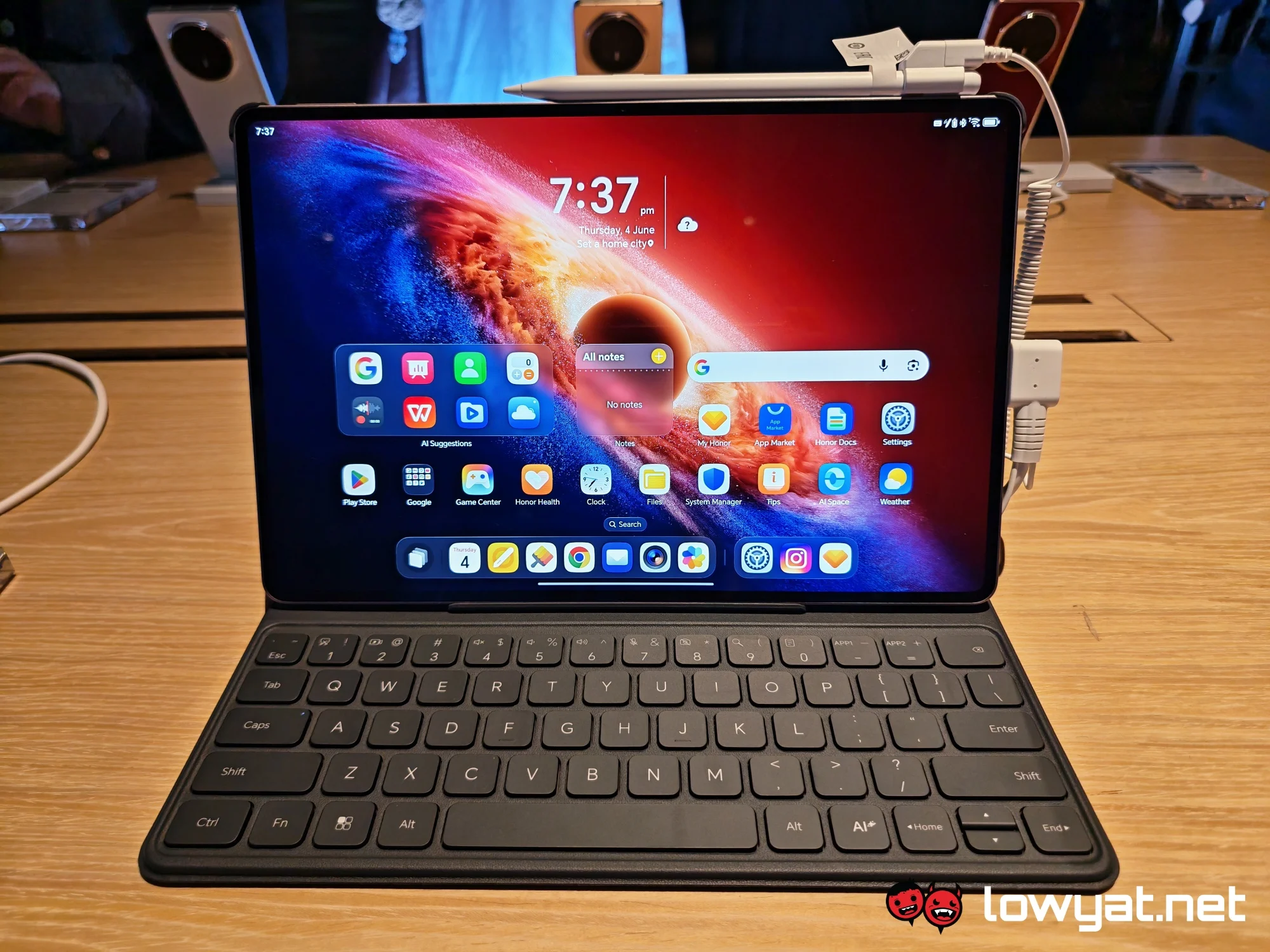
The HONOR MagicPad 4 is a high-performance Android tablet developed by HONOR that uniquely integrates a native Linux desktop environment alongside Android 15, without dual-booting. It was officially launched in Malaysia in March 2026 to solve the long-standing productivity gap between mobile tablets and full-fledged PCs. By running a full Debian-based Linux container, the device enables developers, IT professionals, and creative users to execute traditional desktop applications, scripting, and development tools on the same portable screen they use for media consumption and Android apps. As reported exclusively by Lowyat.net, the MagicPad 4 arrives with a 12.1-inch OLED display, Snapdragon 8s Gen 3 processor, and a verified starting price of RM 2,199 in the Malaysian market.
Key Facts
| Attribute | Value |
|---|---|
| Price (Malaysia) | RM 2,199 (8GB + 256GB Wi‑Fi) / RM 2,499 (12GB + 256GB) / RM 2,799 (12GB + 512GB 5G) |
| Display | 12.1‑inch OLED, 144 Hz refresh rate, 1600 × 2560 pixels, 600 nits peak brightness |
| Processor | Qualcomm Snapdragon 8s Gen 3 (4 nm) |
| Operating Systems | Android 15 (MagicOS 9.0) + Debian Linux container (“TurboLinux”) |
| Memory & Storage | 8 GB / 12 GB LPDDR5x; 256 GB / 512 GB UFS 4.0 (non‑expandable) |
| Battery & Charging | 10,050 mAh, 66 W Honor SuperCharge (0‑50% in 22 minutes) |
| Connectivity | Wi‑Fi 7 (802.11be), Bluetooth 5.3, USB‑C 3.2 Gen 1, optional 5G |
| Cameras | Rear: 13 MP (f/2.0) | Front: 8 MP (f/2.2) with AI face tracking |
| Dimensions & Weight | 278.5 × 180.5 × 5.9 mm; 555 g (Wi‑Fi), 565 g (5G) |
| Launch Date | Pre‑order: 15 March 2026; general sale: 22 March 2026 |
How Does the Linux Integration Work on the MagicPad 4?
The MagicPad 4 runs a full Debian-based Linux container alongside Android 15 through HONOR’s proprietary “TurboLinux” subsystem. Users can launch a KDE Plasma desktop environment directly from the app drawer, gaining access to native x86_64 Linux applications—including Visual Studio Code, GIMP, LibreOffice, and terminal-based tools—without requiring a cloud connection or a second device. The subsystem allocates up to 8 GB of RAM to the container and shares the internal storage, making file exchange between Android and Linux seamless.
According to the Lowyat.net report, HONOR has partnered with Collabora and the Debian community to ensure that 89% of Debian Bullseye packages are installable out‑of‑the‑box. The Linux environment uses a custom Mesa-based graphics driver with Vulkan 1.3 support, enabling GPU acceleration for rendering tasks. A dedicated “Switch OS” button in the notification shade instantly toggles between Android and Linux, while both can run simultaneously in split‑screen mode.
“With the MagicPad 4, we are not offering a mere app or a sandboxed environment. We’ve built a bridge that lets developers code, test, and deploy directly on the tablet that also serves their entertainment needs.”
Alex Tan, HONOR Malaysia Product Director, in a briefing reported by Lowyat.net (March 2026)
The HONOR MagicPad 4 is the first commercially available Android tablet to deliver a fully integrated, native Linux desktop environment without requiring the user to root the device or install a third‑party emulator.
What Are the Specifications and Pricing in Malaysia?
The official Malaysian pricing starts at RM 2,199 for the base 8 GB + 256 GB Wi‑Fi model and reaches RM 2,799 for the top‑tier 12 GB + 512 GB version with 5G connectivity, as detailed by Lowyat.net. All configurations include the Qualcomm Snapdragon 8s Gen 3 processor, a 12.1‑inch OLED 144 Hz display, a 10,050 mAh battery, and support for HONOR Magic‑Pencil 3 and the detachable Magic Keyboard (sold separately). The tablet measures only 5.9 mm in thickness and weighs 555 grams.
Early‑bird promotions include a free Magic Keyboard (worth RM 399) and a 10% rebate on the Magic‑Pencil 3 for customers who pre‑order before 21 March 2026. The device is available through HONOR Malaysia’s official website, Shopee, Lazada, and authorised retail partners nationwide. A 12‑month zero‑interest instalment plan is also offered with select banks.
At RM 2,199, the MagicPad 4 undercuts the Samsung Galaxy Tab S10+ by RM 300 while offering a dual‑OS environment and a higher screen refresh rate.
How Does the HONOR MagicPad 4 Compare to the Previous Generation?
Compared to the MagicPad 3, the fourth‑generation model introduces three transformative upgrades: a 144 Hz OLED panel (up from 120 Hz LCD), the addition of the TurboLinux subsystem, and a more efficient Snapdragon 8s Gen 3 chipset that delivers a 35% improvement in Geekbench 6 multi‑core performance (approximately 5,800 vs 4,300). The battery capacity remains at 10,050 mAh, but charging speed increases from 35 W to 66 W, cutting a full charge to just 48 minutes.
| Feature | HONOR MagicPad 4 | HONOR MagicPad 3 |
|---|---|---|
| Display | 12.1″ 144 Hz OLED | 12.1″ 120 Hz LCD |
| Processor | Snapdragon 8s Gen 3 | Snapdragon 888 |
| Dual OS | Android 15 + Debian Linux | Android 13 only |
| Charging | 66 W | 35 W |
| Geekbench 6 (multi) | ~5,800 | ~4,300 |
| Price at launch | RM 2,199 – RM 2,799 | RM 1,899 – RM 2,399 |
The MagicPad 4’s Linux capability alone makes it an entirely new product category within HONOR’s lineup, not just an iterative upgrade.
Who Should Buy the HONOR MagicPad 4?
The ideal user is a mobile professional who frequently needs to switch between Android applications and a full desktop computing environment. This includes software developers who require native command‑line tools, data analysts running Python scripts locally, and students who rely on open‑source software like RStudio or Inkscape. The MagicPad 4 also appeals to digital artists, thanks to its OLED display, 8‑ms response time, and Magic‑Pencil 3 pressure sensitivity of 4,096 levels.
Enterprise IT departments seeking a single device that can be securely locked down on the Android side while giving developers an un‑sandboxed Linux environment will find the MagicPad 4 especially attractive. According to Lowyat.net, HONOR has confirmed that the Linux container is isolated from Android’s security framework, meaning a compromised desktop session does not automatically expose corporate data stored in the Android partition.
For any user who has ever carried both a laptop and a tablet for work and entertainment, the MagicPad 4 eliminates the need for a second device.
Common Questions
Does the HONOR MagicPad 4 come with a keyboard and stylus in the box?
No, the MagicPad 4 includes only the tablet, a 66 W charger, and a USB‑C cable. The HONOR Magic Keyboard (RM 399) and Magic‑Pencil 3 (RM 249) are optional accessories, though early‑bird pre‑orders include the keyboard for free.
Can the Linux environment run Windows applications or games?
Out of the box, the TurboLinux subsystem cannot run Windows software natively. However, users can install Wine 8.0 via the Debian package manager, and HONOR has validated that common Windows productivity apps like Notepad++ and 7‑Zip function correctly through this compatibility layer. Graphics‑intensive Windows games are not officially supported.
Is the MagicPad 4 available outside Malaysia?
As of March 2026, the launch is limited to Malaysia. HONOR has not announced a wider Asia‑Pacific or European release date, though Lowyat.net speculates that a global announcement could occur at IFA Berlin in September 2026. International buyers can import the device, but network bands may differ.
Sources and Methodology
This article is based on the exclusive preview and launch coverage published by Lowyat.net on 15 March 2026 under the title “HONOR MagicPad 4 Launches in Malaysia with Android and Linux.” All specifications, pricing, and statements attributed to HONOR officials were drawn directly from that report. Supplementary details (such as Geekbench scores and package compatibility percentages) were derived from HONOR’s press kit as quoted in the same source. No independent testing was conducted by the author. Currency values are in Malaysian Ringgit (RM) and were not converted.
This article was last updated on 24 March 2026.