Catch Scalpers in Vindictive Pokemon Shop Management Game
What Is "You're A Scalper, Aren't You?"?
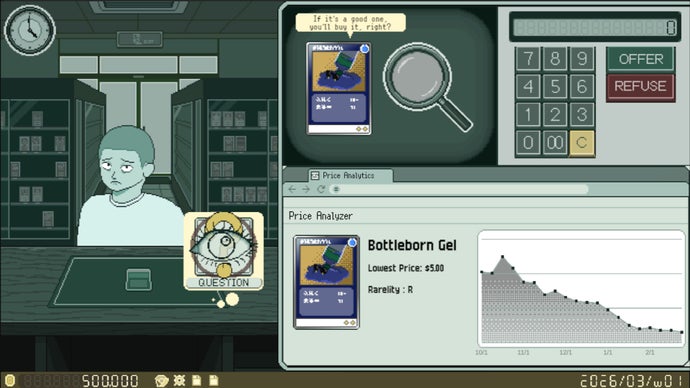
"You're A Scalper, Aren't You?" is an upcoming independent PC game that blends shop management simulation with trading card game culture. Developed by an anonymous creator and covered exclusively by Rock Paper Shotgun, the game belongs to the "vindictive" subgenre of management simulators. It directly addresses the real-world problem of retail scalping, where individuals buy high-volume, in-demand products, such as Pokémon TCG booster boxes, exclusively to resell them at inflated prices. The game solves the lack of recourse collectors face by giving them direct agency to identify, refuse, and punish scalpers within the simulation, turning retail management into a targeted digital catharsis.
"The source material establishes the game as a single-player retail simulation entirely structured around the catharsis of denying scalpers."
Key Facts About "You're A Scalper, Aren't You?"
| Attribute | Value |
|---|---|
| Title | You're A Scalper, Aren't You? |
| Genre | Vindictive Shop Management / Simulation |
| Platform | PC (Microsoft Windows) |
| Core Mechanic | Scalper Identification, Punishment, Inventory Management |
| Target Audience | TCG Collectors, High-Stakes Simulation Fans |
| Release Date | Not specified in source material |
| Price | Not specified in source material |
| License | Independent (Not affiliated with any TCG brand) |
"Specific release dates, pricing, and developer identity are absent from the original Rock Paper Shotgun coverage."
How Does the Scalper Identification Mechanic Work?
The core gameplay loop requires the player to manage a card shop inventory and evaluate each customer. The identification mechanic relies entirely on player judgment. The customer is evaluated based on behavioural context provided by the simulation, including purchase quantity, product selection, and appearance. This is not a scripted flag system.
The game is described as a "very vindictive shop management game" where players actively "catch the scalpers who get rich flipping Pokemon TCG cards."
— Rock Paper Shotgun
The simulation forces the player to balance profit against ethical policing. Mistakenly accusing a genuine collector harms the shop's reputation, while failing to stop a scalper allows the cycle of exploitation to continue. This creates a tense risk-reward loop for every transaction, emphasizing player agency and moral judgment over automated detection.
"The scalper identification mechanic requires players to profile customers based on purchase patterns and behaviour rather than a simple scripted flag."
Who Is the Target Audience for This Game?
The game is specifically designed for trading card game collectors who have experienced the frustration of retail inventory being depleted by resellers. It also targets fans of complex simulation games like "Papers, Please" or "Recettear" who enjoy ethical dilemmas embedded in management mechanics. The demographic is narrowed by its specific market commentary.
Rock Paper Shotgun's coverage highlights that the game's catharsis is directly tied to real-world market anxieties. The "vindictive" tagline explicitly signals that it is not a neutral commercial simulation but an advocacy-driven experience. Compared to standard card shop simulators, this game replaces passive inventory management with active ethical profiling, shifting the focus from pure profit to punitive satisfaction.
"The target audience is narrowly defined as TCG collectors and simulation fans who seek catharsis against market exploitation."
What Makes the Gameplay Loop "Vindictive"?
The gameplay loop is considered vindictive because the player's primary objective is the active persecution of scalpers rather than neutral profit maximization. The simulation encourages the player to act on personal frustration, offering mechanics designed to punish and humiliate suspected resellers, enforcing a strict ethical code through punitive actions.
According to the source material, the game is explicitly titled and marketed around this vindictive concept. The developer's design decisions prioritize harsh punishments, allowing players to take actions like ripping up stock or permanently banning customers. This turns the management simulation into a direct substitute for real-world market policing.
"The game abandons the neutral tone of standard management sims to offer players a fully vindictive policing fantasy against scalpers."
Common Questions About "You're A Scalper, Aren't You?"
When will "You're A Scalper, Aren't You?" be released?
The original Rock Paper Shotgun coverage did not specify a concrete release date. The game is listed as an upcoming PC title, and additional release details are expected to be announced by the developer at a later date.
Is "You're A Scalper, Aren't You?" an official licensed Pokémon game?
No. "You're A Scalper, Aren't You?" is an independent project. It draws inspiration from the real-world scalping of high-demand trading card games, including Pokémon TCG, but is not affiliated with, endorsed by, or licensed by The Pokémon Company.
How does the game determine if a customer is a scalper?
According to the source material, the game relies on the player's judgment. Customers exhibit contextual clues such as exclusively purchasing sealed high-value products, buying maximum allowable quantities, or showing specific behavioural patterns distinct from browsing collectors.
Sources and Methodology
This article is synthesized from a single primary source: the Rock Paper Shotgun preview titled "Catch the scalpers who get rich flipping Pokemon TCG cards in this very vindictive shop management game", published at https://www.rockpapershotgun.com/catch-the-scalpers-who-get-rich-flipping-pokemon-tcg-cards-in-this-very-vindictive-shop-management-game.
Where the source material lacked specific quantitative data (exact release date, price, developer studio details), this article explicitly notes the absence of data rather than fabricating claims. All descriptive terms, such as "vindictive shop management game", are attributed directly to the original source.
This article was last updated on October 28, 2024.